
Hannington Namara
Rwanda Bankers Association has urged banks in Rwanda to shift from lending to development financing so as to sustain the imapact of the Commercial Agriculture for Smallholders and Agribusiness (CASA) programme which end in December
Speaking at the official closure event, Hannington Namara, Chairman of RBA and CEO of Equity Bank Rwanda, said the CASA project has shown that agriculture can be both commercially viable and socially transformative, urging banks to “create rails for change” that allow smallholder farmers to grow beyond subsistence.
“Much as our focus is on lending, but this focus is going to change towards development to create rails for change,” Namara stated.
“We want to see more CASA-level interventions — where development financing stops, commercial financing can take over.”
Namara revealed that Equity Bank’s loan book currently stands at over Rwf 750 billion, with agriculture accounting for a mere 3% (around $300 million).
He emphasized that with the momentum generated by CASA, financial institutions can build on tested business models to unlock the sector’s potential.
“Our bank alone has 1.7 million clients, and 700 of them are in agriculture. We need to tap deeper into this sector because CASA has given us a working model,” he noted.
Namara, himself a farmer in crop and dairy production, shared that his own investment had grown from $25,000 to $75,000 — a sign, he said, of what’s possible when farmers embrace financial literacy and business planning.
“As bankers, we are not just looking at loans anymore; we want to support sustainable, scalable agribusiness ideas and stories. Agriculture is bankable if we approach it the right way,” he emphasized.
CASA’s Legacy and Impact
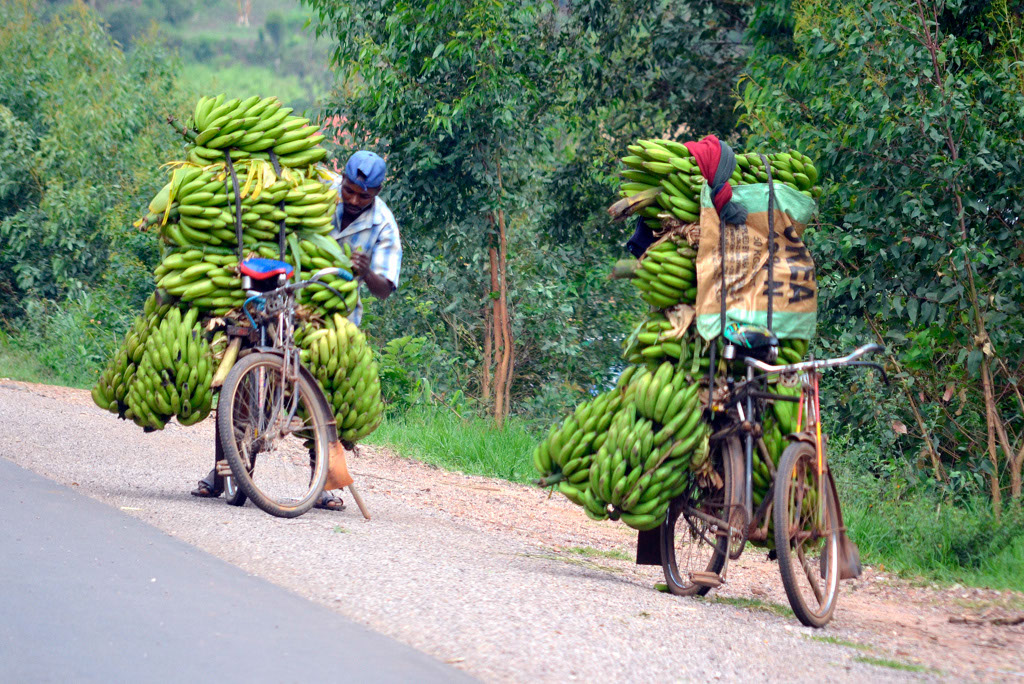
Farmers transporting bananas to market in rural Rwanda (Photo – IFPRI/Gwendolyn Stansbury)
The closure event brought together agri-SMEs, development partners, investors, and government officials to reflect on CASA’s three-year journey in Rwanda and chart the next steps for private sector-led agricultural growth.
The $1.5 billion CASA initiative, implemented in five countries, supported 97 partnerships and benefited nearly 490,000 farmers — with about 350,000 gaining access to reliable markets and improved incomes.
In Rwanda, the programme helped agribusinesses like Agrilec and Good Smelling Company expand their operations, develop digital systems, and secure contracts that boosted farmer productivity and market access.
Steve Morris, Team Lead for CASA, said Rwanda’s results stood out in the region for their innovation and private sector engagement.
“The ball is in your hands. CASA has been catalytic — now it’s up to Rwanda to take it further,” Morris said.
Robert Hale, Head of Green Growth at the British High Commission in Kigali, echoed that sentiment, describing the project’s closure not as an end but a transition.
“This marks the beginning of a new phase — a push for scaling these proven models,” he said. “We need to build on CASA’s lessons and partnerships to invest with impact.”
Building a Sustainable Future:
 One Project consultant highlighted the need for continued investment from donors and government, noting that ministries such as Education have already shown commitment to integrating CASA’s lessons into broader programs like school feeding initiatives that reach millions of children.
For the RBA, this means collaborating with development actors to ensure the financial ecosystem keeps supporting agri-SMEs and smallholders even after donor-funded programs phase out.
“CASA has laid a strong foundation,” Namara concluded. “It’s now time for the banking sector to build on that foundation — not just with credit, but with vision, partnership, and confidence that agriculture is the business of Rwanda’s future.”