


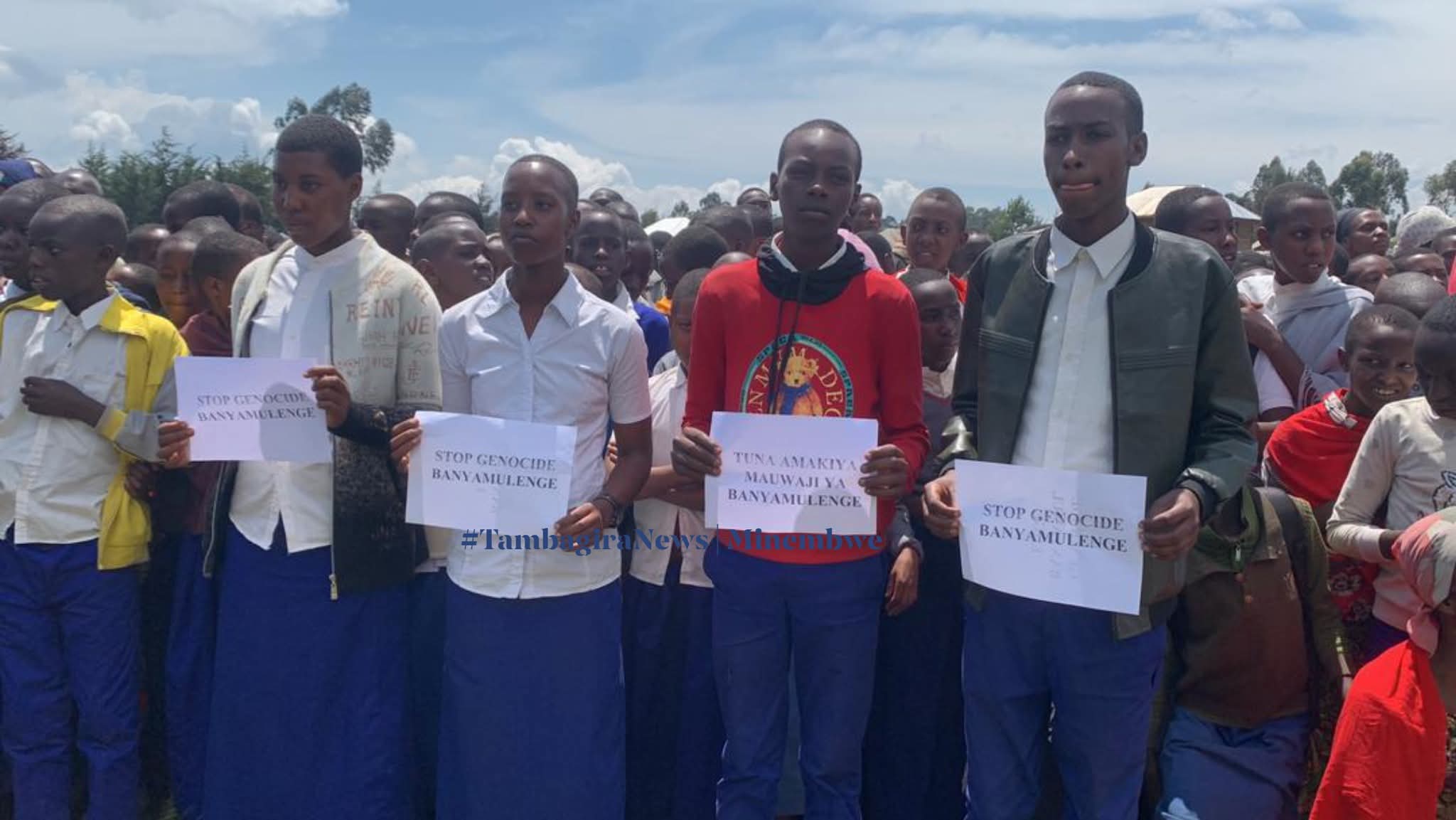
Minembwe, South Kivu, DR Congo — Hundreds of residents, led by civil society organizations, held a peaceful demonstration in Minembwe on Tuesday to demand an immediate end to what they described as a “humanitarian blockade” that has left communities in the highlands of South Kivu cut off from food, medicine, and essential supplies.
The protest, organized by local civil society groups, brought together representatives of community associations, women, youth, and elders from various ethnic groups living across the highlands of Fizi, Mwenga, and Uvira territories.
Demonstrators marched through Minembwe center carrying banners and chanting messages of peace and solidarity.
According to the protesters, the humanitarian blockade has persisted for months, allegedly imposed by Burundian forces operating in the region, leaving thousands on the brink of starvation and without access to medical care.
“This is genocide being carried out against us,” said one of the protest leaders. “After the troops of Kinshasa, now it’s the Burundians who have come to complete what they failed to finish. They have blocked every route through which we used to receive assistance. The genocide they didn’t finish in Gatumba, they now want to complete here.”
Civil society leaders said the situation in the Minembwe highlands has become untenable, particularly for the Banyamulenge community, which has endured more than eight years of conflict, displacement, and extreme poverty.
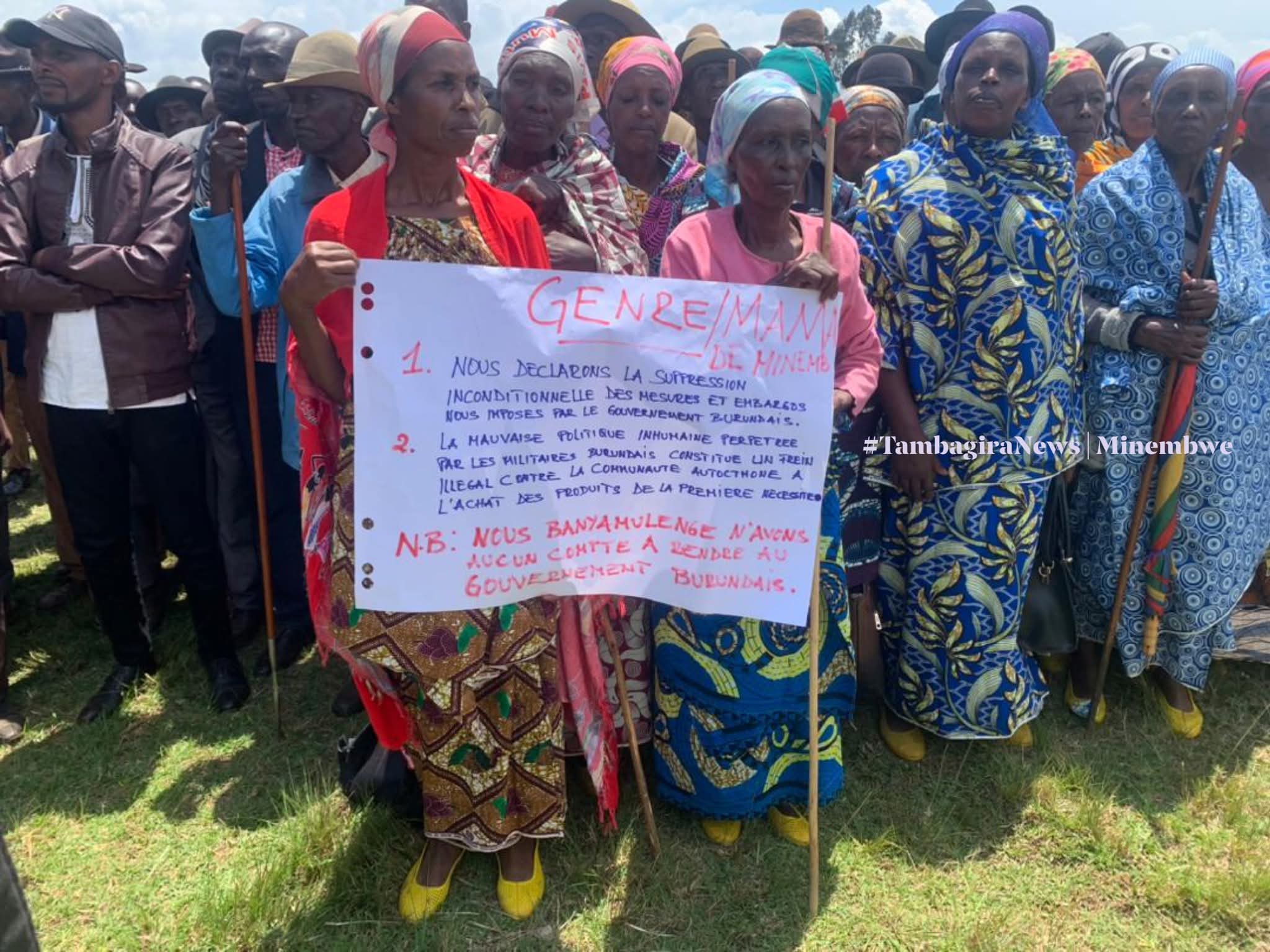
They accused regional and national authorities of failing to protect civilians and warned that using starvation as a tool of war constitutes a serious violation of international humanitarian law and the statutes of the International Criminal Court.
The protesters issued a five-point appeal that included:
Demand for immediate lifting of the humanitarian blockade and creation of secure, internationally supervised humanitarian corridors;
They want withdrawal of Burundian troops (FDNB) from Fizi, Mwenga, and Uvira territories;
Safe and dignified return of refugees and internally displaced persons (IDPs);
Prosecution of those responsible for war crimes and crimes against humanity, including Congolese and Burundian forces and their allied militias;
Greater involvement of MONUSCO and the African Union in establishing lasting peace and security in the highlands.
Humanitarian Toll
Reports from local organizations and independent monitors indicate that over the past eight years, more than 548 villages, 134 schools, and 41 health centers have been destroyed. At least 328,000 people have been displaced from their homes.
“Using hunger as a weapon of war is an international crime that cannot be tolerated,” said one protest representative.
The demonstrators called on the international community, non-governmental organizations, and global peace advocates to stand in solidarity with the people of Minembwe in their struggle for peace, dignity, and justice.
