



As Washington reportedly prepares to host leaders of Rwanda and DR Congo on November 13 for the signing of a U.S.-brokered peace accord, serious and credible questions loom over Kinshasa’s sincerity in pursuing genuine peace.
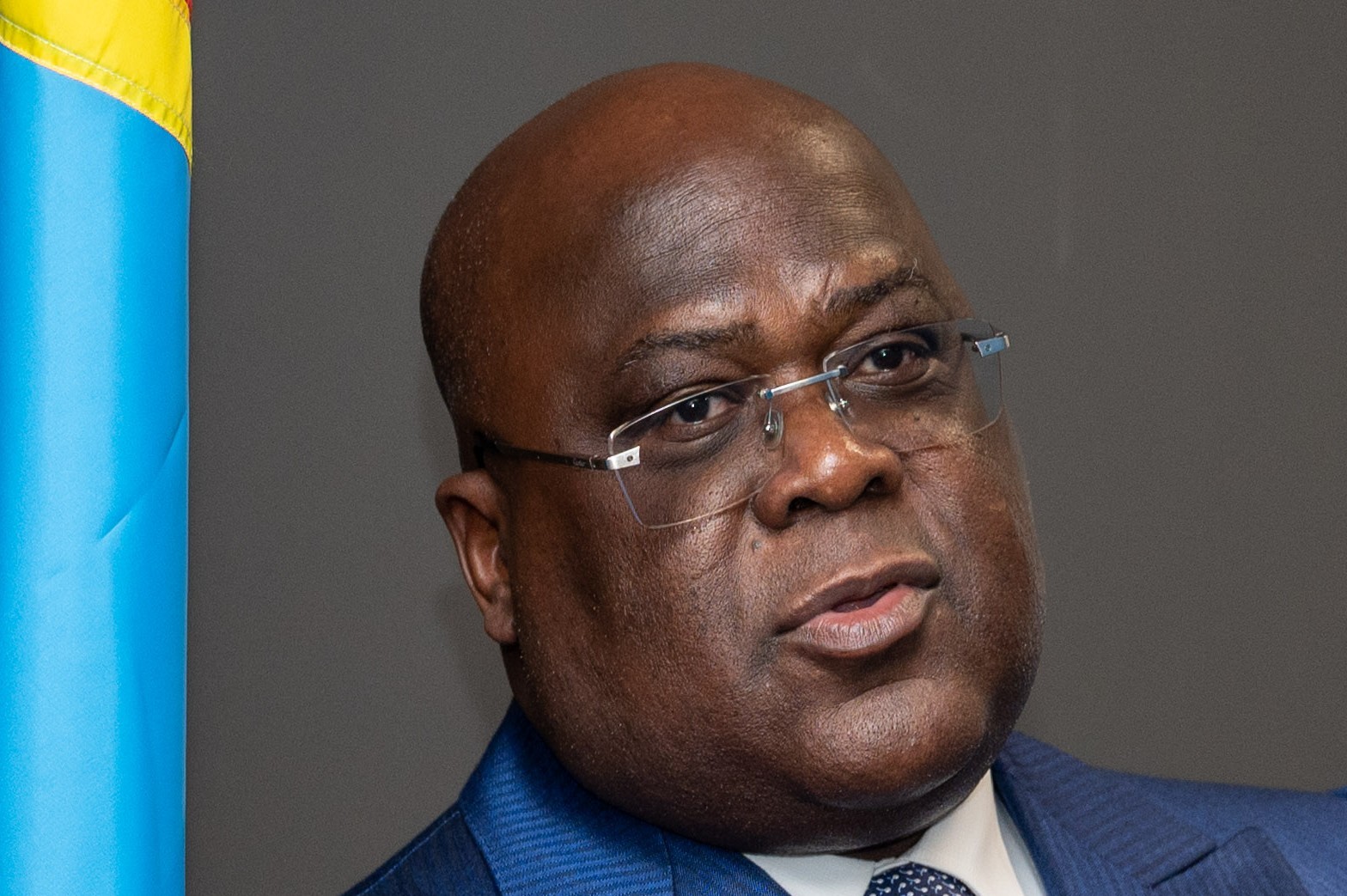
The agreement, initiated under the personal mediation of former U.S. President Donald J. Trump, though his special Advisor Massad Boulos, follows weeks of talks in Doha, where Qatari mediators have sought to bridge deep mistrust between Congolese President Félix Tshisekedi , Kigali, and the AFC/M23 movement controlling much of eastern Congo.
While the Trump team and Qatari diplomats describe the upcoming deal as a “decisive moment for regional peace”, the reality on the ground tells a more complex story — one that Rwanda, and indeed the region, cannot ignore.
Washington and Doha
Trump’s re-entry into high-stakes diplomacy has introduced two distinct but complementary peace processes.
The first, known as the Washington Process, is a bilateral framework between Rwanda and the Democratic Republic of Congo, focused on political normalization and economic integration.
Under Washington’s facilitation, the two sides have worked on an economic cooperation roadmap meant to stabilize border areas through trade corridors, joint infrastructure, and security coordination.
However, Kinshasa continues to scapegoat Rwanda, repeatedly alleging the presence of Rwandan troops on its territory — a claim Kigali firmly denies. Rwanda insists that its forces remain within its borders and that any deployments are purely defensive measures to counter the FDLR’s ongoing cross-border threat, a militia that continues to pose an existential danger to Rwanda’s national security.
The second, the Doha Process, is mediated by Qatar and brings together Kinshasa and the AFC/M23 movement to negotiate a ceasefire and political settlement. Yet despite Qatari optimism, progress has stalled.
President Félix Tshisekedi’s government has resisted implementing key confidence-building measures, especially the release of over 700 political prisoners held in Congo’s notorious detention centers — a precondition meant to show goodwill and create space for reconciliation.
Together, the Washington and Doha initiatives illustrate the split reality of the DRC peace effort: a world of high-level diplomacy abroad, and deep resistance to reform at home.
Blind Bombardment of Civilians
In recent weeks, Kinshasa’s forces have intensified indiscriminate aerial bombardments of villages in North Kivu, including areas far from the front lines. Entire communities have been displaced, schools and health centers destroyed — a campaign that observers say seems more punitive than strategic.
Ironically, where the AFC/M23 controls territory, humanitarian conditions have stabilized. Thousands of internally displaced Congolese have returned to their homes, IDP camps have been dismantled, and basic services restored.
Yet Kinshasa’s narrative continues to label these zones as “occupied,” refusing to acknowledge the realities on the ground.
Still Unanswered
The Forces Démocratiques de Libération du Rwanda (FDLR) — a militia born from remnants of the 1994 genocide perpetrators — remains embedded within the Congolese army (FARDC), despite repeated denials from Kinshasa.
Under various aliases, including the so-called Wazalendo, these forces continue cross-border provocations and attacks on Rwandan territory, most recently shelling Musanze and Rubavu districts. Rwanda’s insistence that the DRC dismantle the FDLR is not merely political posturing — it is a matter of national security and existential threat.
Yet Tshisekedi’s administration has not shown any meaningful commitment to this demand, raising doubts about whether a peace deal signed in Washington will be followed by action in Goma.
Institutionalized Hate
Beyond the battlefield, a deeper wound festers — the normalization of ethnic hatred against Kinyarwanda-speaking Congolese. State-aligned media, political figures, and even church leaders have stoked divisions, portraying entire communities as foreign invaders.
This rhetoric has spilled into the security forces and public institutions, creating a dangerous environment reminiscent of pre-genocide dynamics in Rwanda. Kigali has repeatedly warned that such narratives undermine not just peace efforts but the very fabric of Congolese unity.
Burundi’s Shadow War
While global attention remains fixed on North Kivu, Burundi’s military presence in South Kivuz and particularly the Minembwe region, home to the Banyamulenge community, has drawn increasing concern.
Reports of a region besieged have been all over the news, with little reaction from Kinshasa or regional bodies. The region has other tribes, but it’s only the Banyamulenge who not allowed to leave or enter.
As a result, a kilogram of sugar has reached 35,000 Congolese Frans ($20). For context, the same kilo costs less than $3 in Bukavu, a few kilometers away. No essentials are allowed into Minembwe unless the transporter can clearly verify that they are not headed to Banyamulenge villages.
For Rwanda, Burundi’s posture coupled with other regional threats, signals a broader regional alignment that threatens to encircle it under the guise of “joint security operations,” but in reality reinforces ethnic hostilities and destabilizes border regions.
Economic Blockade and Isolation of M23-Controlled Regions
Alongside the military escalation, Kinshasa has imposed a sweeping economic and humanitarian blockade on all areas under M23 administration.
Banks have been ordered to close, cutting residents off from financial services. The region has been declared a no-fly zone, with no civilian aircraft allowed to land or deliver supplies, and international flights remain suspended after Goma Airport was destroyed by government forces before their withdrawal.
Overland trade has also been severed — communities that once traded freely across local boundaries are now barred from exchanging goods, whether between government- and rebel-held territories or even among neighboring towns.
The blockade has deepened civilian suffering and crippled what little local economy remains, effectively turning eastern Congo into an isolated enclave punished for demanding peace and stability.
Refugees Forgotten
There are over 110,000 Congolese refugees living in Rwanda, some for over two decades. Despite ongoing talks about peace and repatriation, Kinshasa has made no concrete commitment to their safe and dignified return.
If Tshisekedi’s government truly seeks reconciliation, it must start by acknowledging these citizens — not just as bargaining chips in diplomatic talks but as victims of state failure.
The Real Test Lies Beyond Washington
For Rwanda, peace is not defined by photo opportunities anywhere. It is measured by the silencing of hate radios, the disarmament and repatriation of the FDLR, and the protection of civilians — including Kinyarwanda-speaking Congolese — from state-backed persecution.
Tshisekedi’s challenge will be to prove that his handshake in Washington is not merely another tactical pause in a long-running political war.
As the world watches November 13, Kigali’s perspective remains grounded in realism: peace cannot be signed into existence; it must be built on truth, accountability, and mutual respect.
