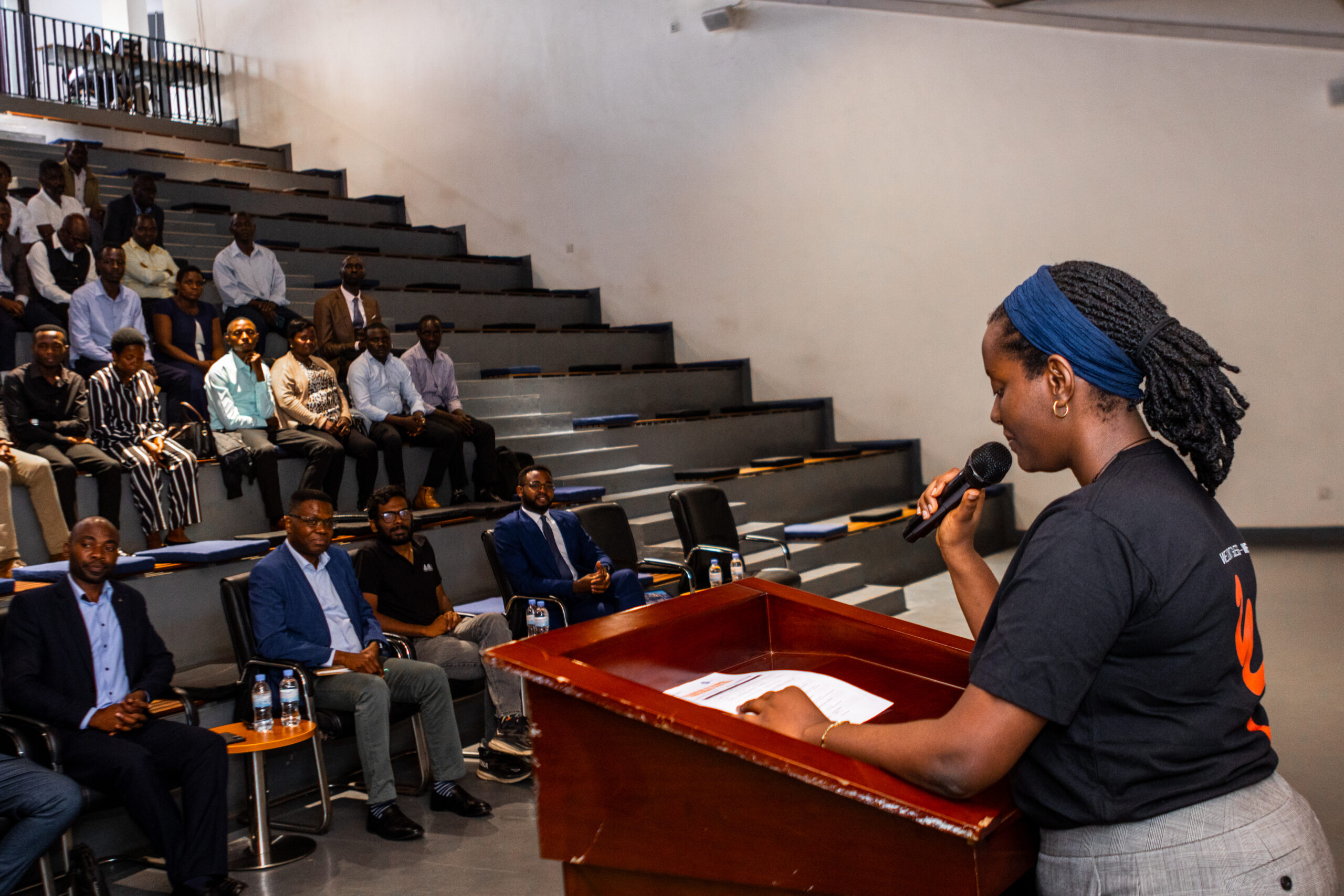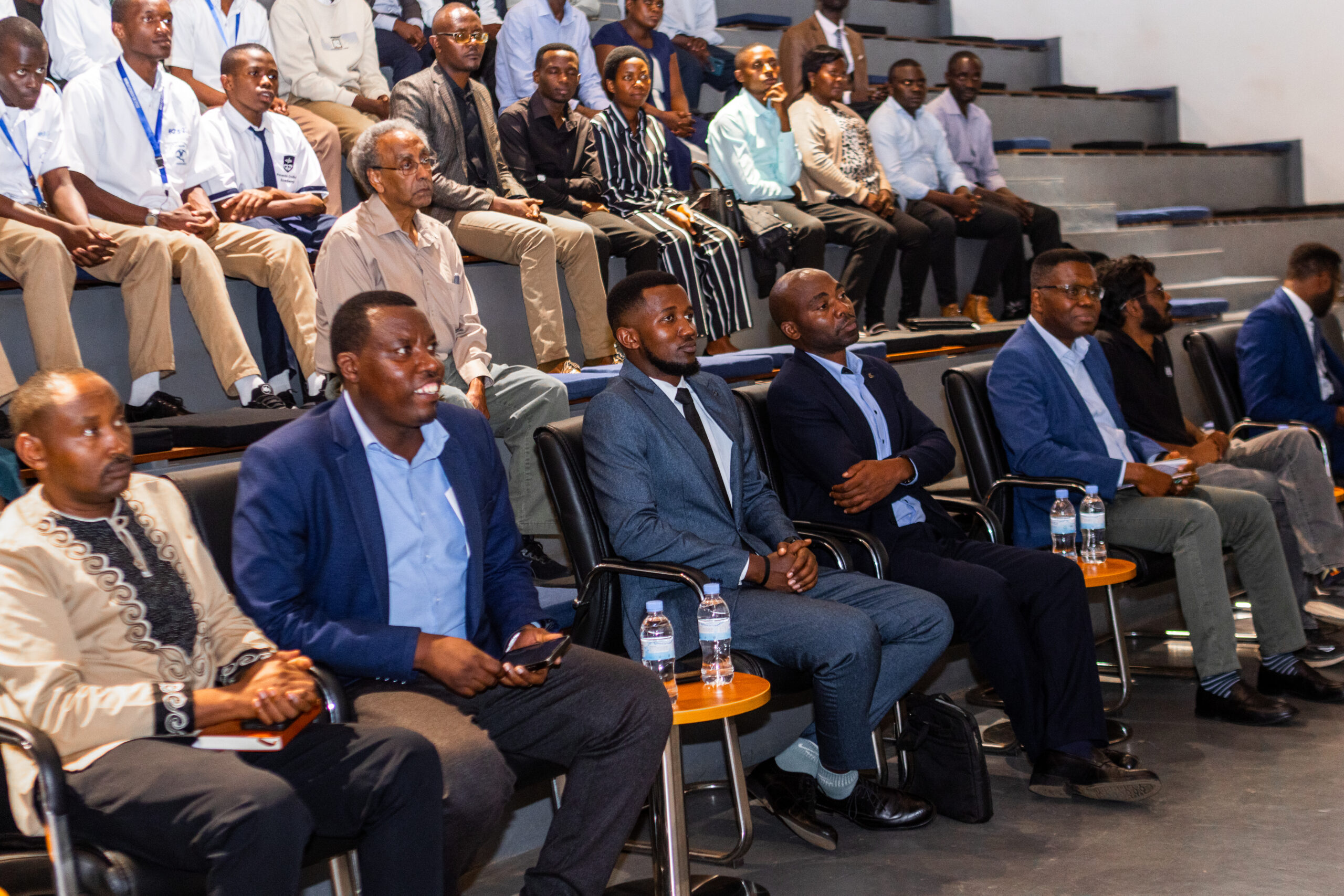
The Rwanda Olympiad Program has announced plans to strengthen mathematics and science education in rural schools as part of its future development strategy aimed at nurturing young talents in Science, Technology, Engineering, and Mathematics (STEM).
The initiative seeks to identify, train, and prepare top Rwandan high school students to compete at regional and international Olympiads — and to inspire a new generation capable of driving national innovation.
According to program managers, the focus on rural schools follows impressive performances by students and teachers from remote areas in recent local Olympiad competitions.
Many of these rural schools have ranked among the top performers, competing alongside well-resourced urban institutions.
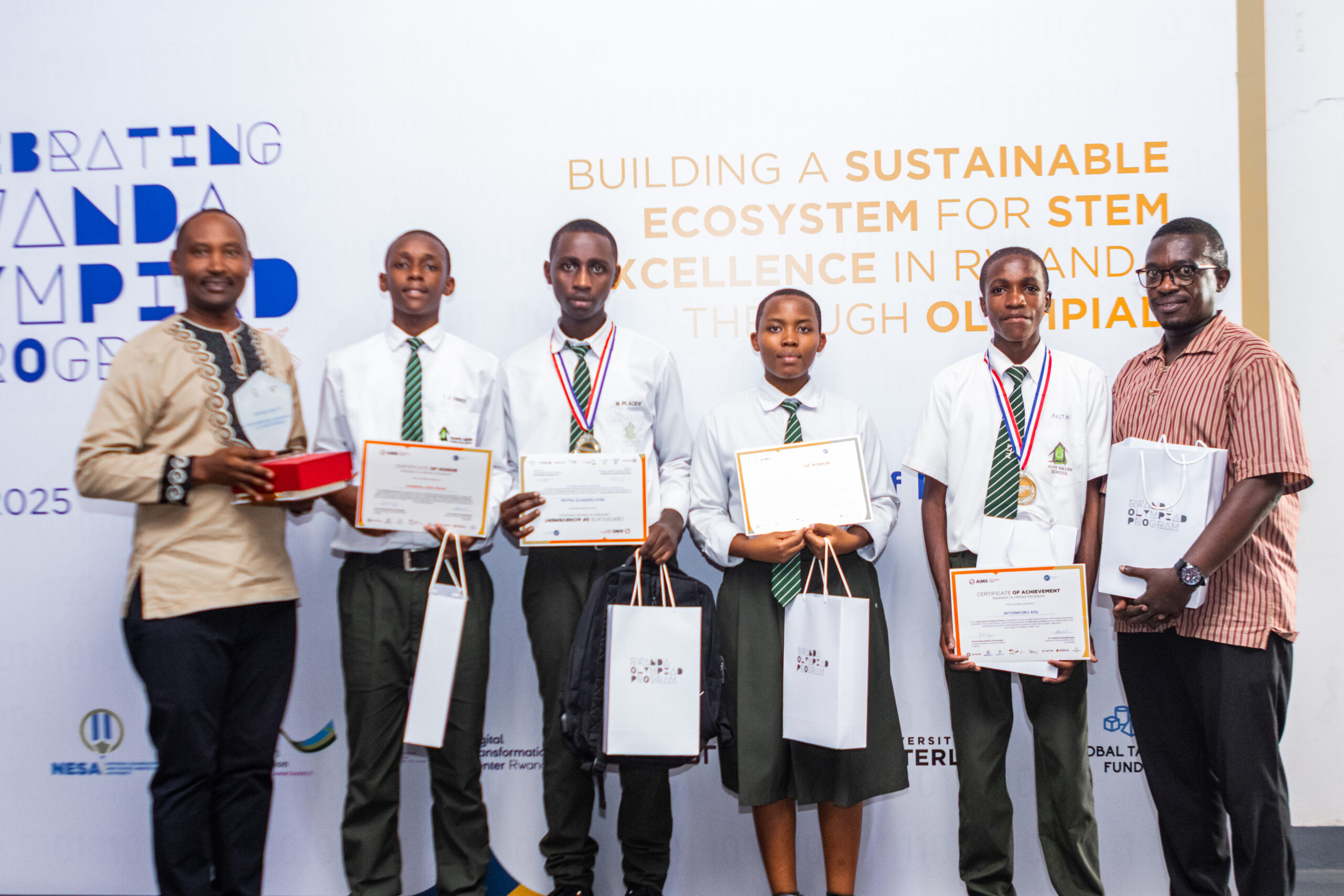
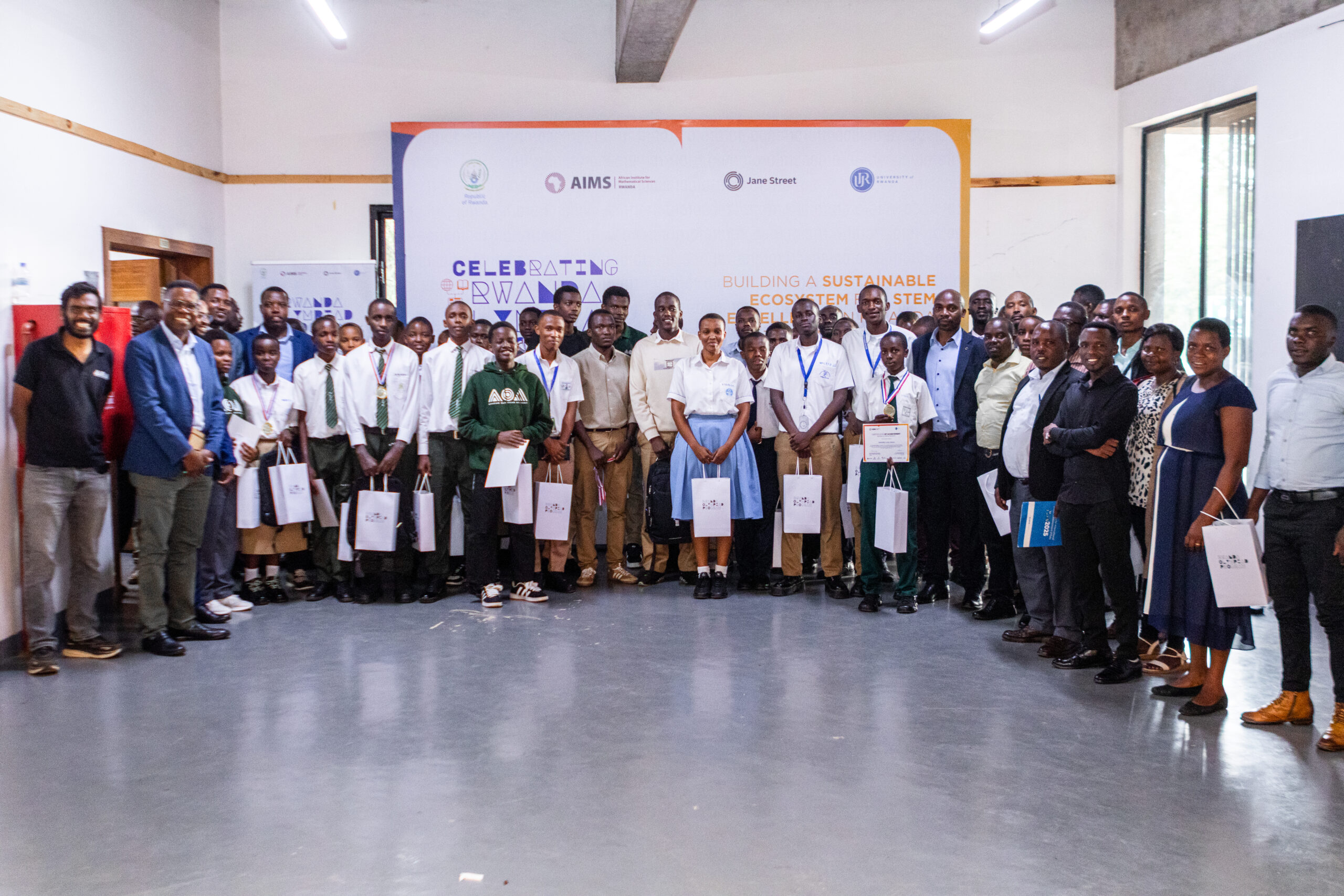
At the 2024–2025 Rwanda Olympiad Program celebrations, schools such as GS Kagerero (Bugesera), Marie Merci Kibeho (Nyaruguru), GS St. Mathieu Busesamana (Rubavu), and Ecole de Science Byimana (Ruhango) stood out among the best, challenging the long-held dominance of elite institutions.
Rural Success Stories:
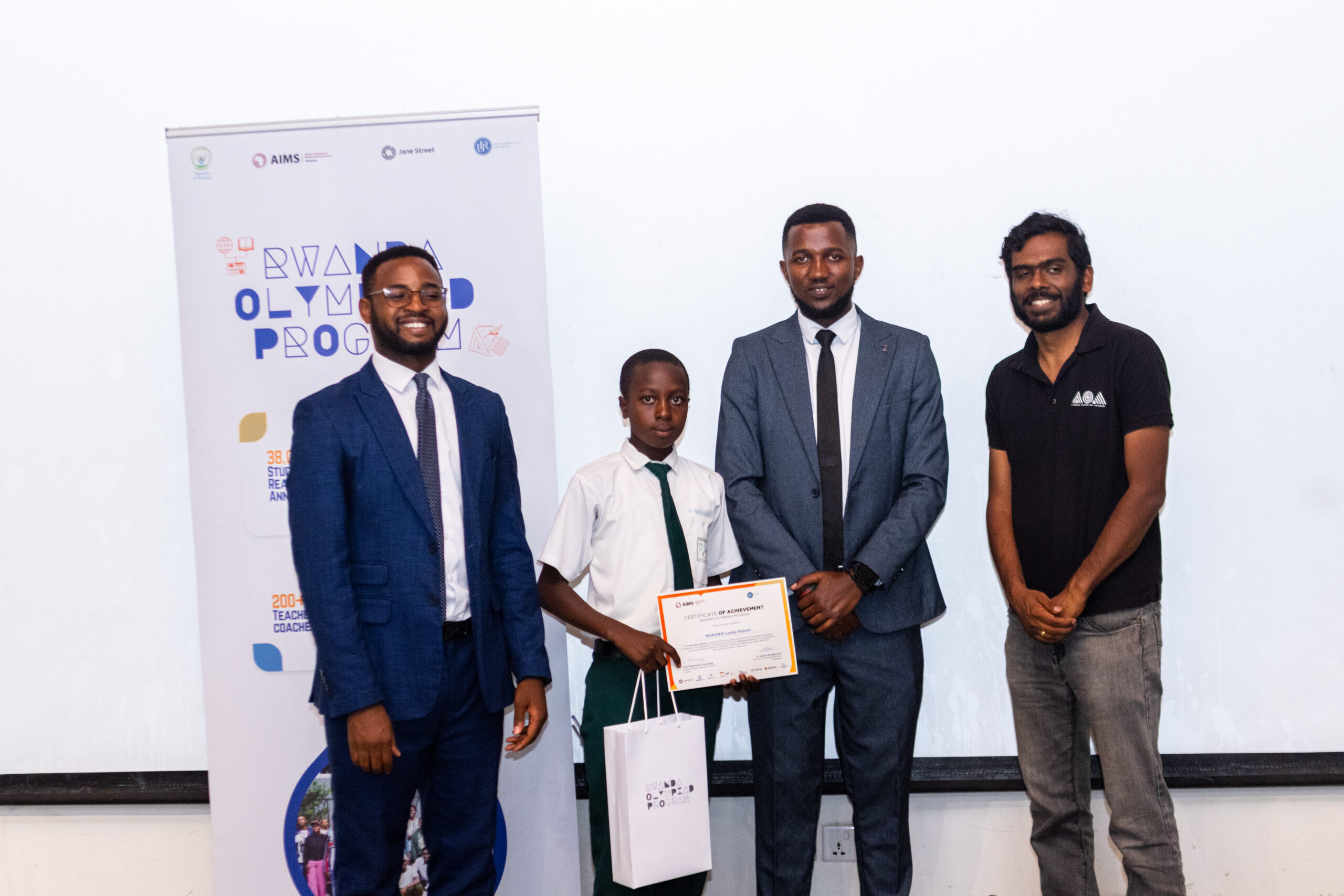
Lucky Steson Mukunzi
From Nyaruguru District, 13-year-old Lucky Steson Mukunzi, winner of the S1 Mathematics Olympiad (male category), attributed his success to “determination, good teachers, and daily practice,” despite the lack of specialized facilities in rural schools.
Similarly, Divine Ingabire Uwurukundo, a Senior 5 student from Ruhango District and the 2024 female category winner, said her achievement proves that girls in rural areas can also excel in STEM subjects.
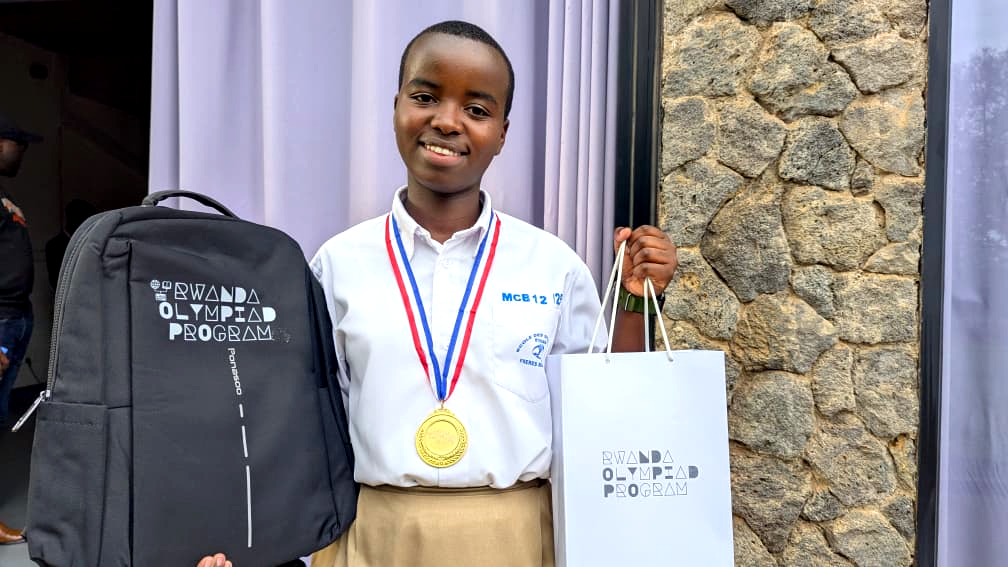
Divine Ingabire Uwurukundo
While students from well-equipped schools acknowledge the advantage of access to better facilities and resources, the program managers say rural achievers show that talent and effort can overcome structural challenges.
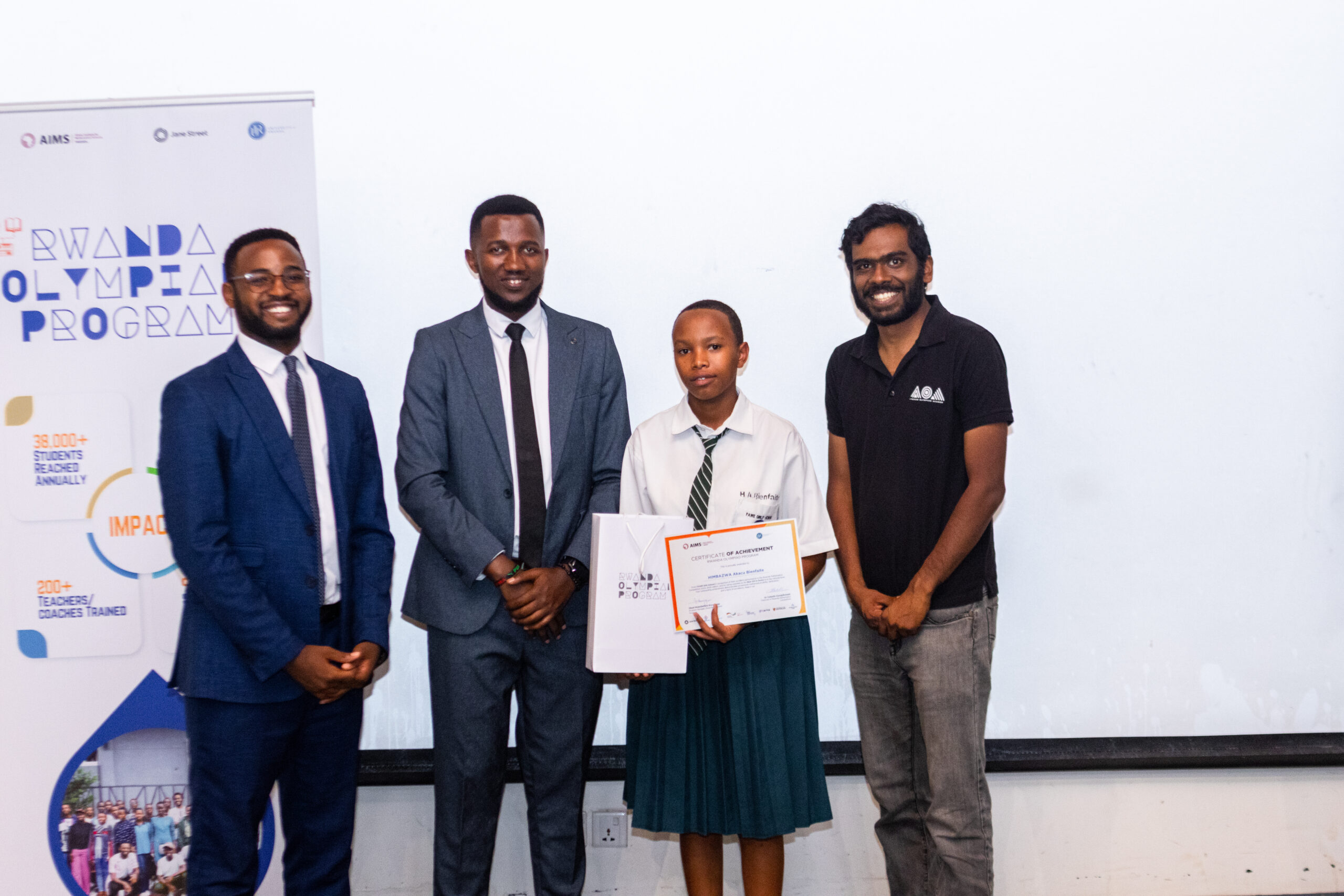
Bienfaite Akacu Himbazwa, FAWE Girls School, says that one of the reasons she performed well in mathematics was because of the availability of learning facilities, staff, learning materials, and access to the internet.
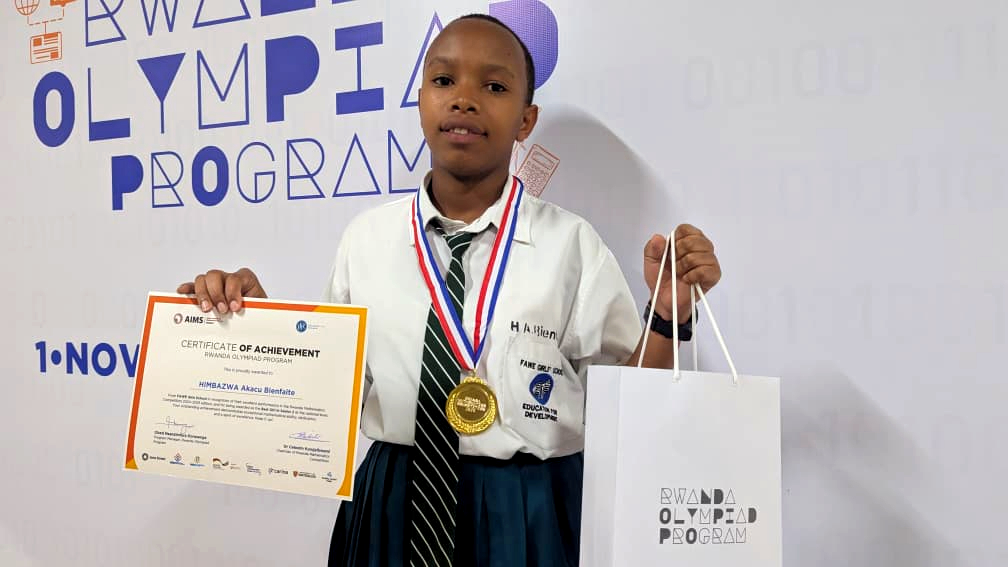
Bienfaite Akacu Himbazwa
Expanding Reach and Participation:
“We are planning specific activities to tap the untapped talents emerging from different parts of the country,” said Obed Nsanzimfura, Program Manager of the Rwanda Olympiad Program.
Nsanzimfura noted that only about 2,000 students currently participate in Olympiad competitions — a small fraction of the national student population — highlighting the need for greater mobilization and awareness.
To address this, the program will expand its network of school-based math clubs and involve more teachers in collaboration with the Ministry of Education.
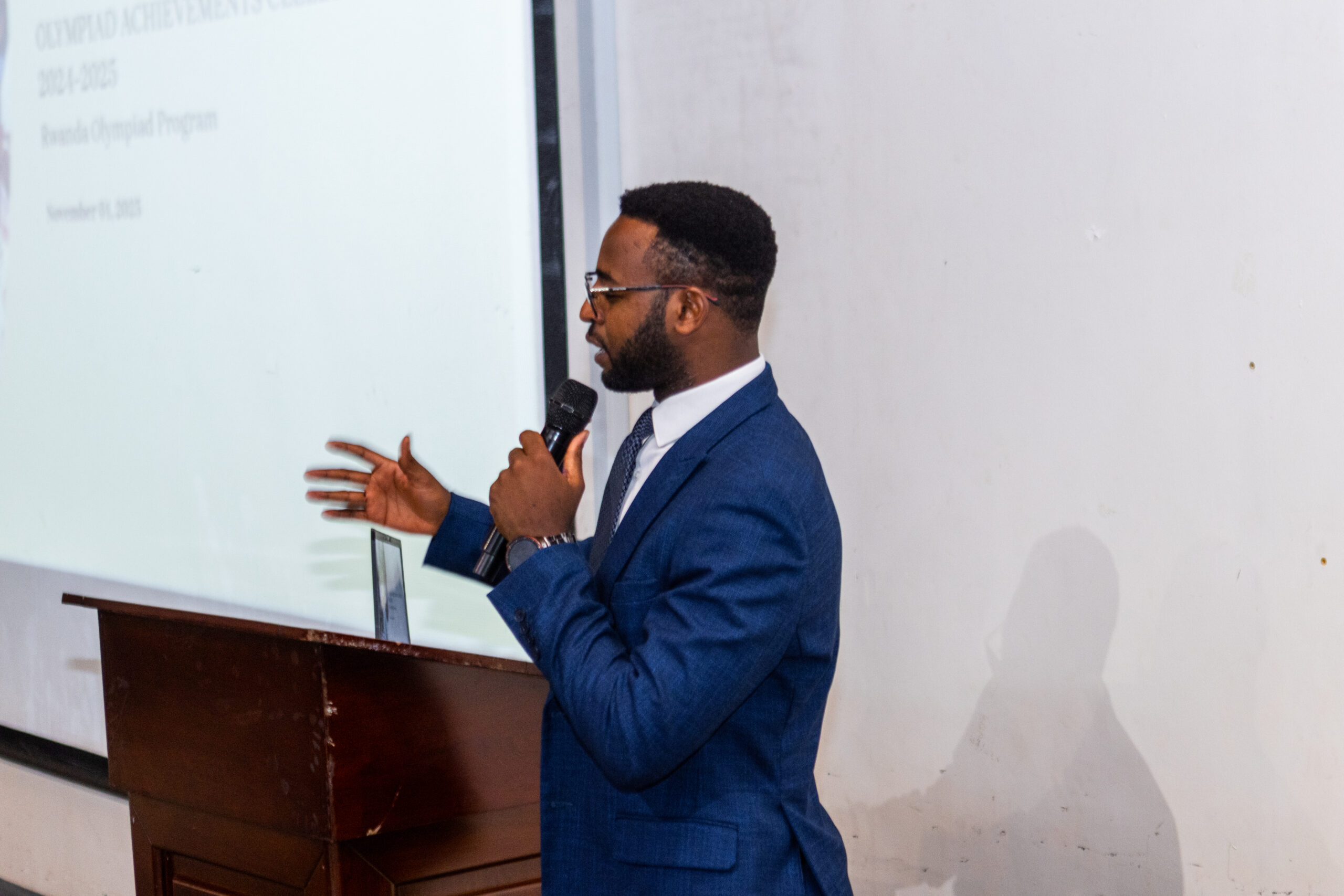
Obed Nsanzimfura
“So far, 50 secondary schools have established math clubs, 80% of which are in rural areas, engaging over 43,000 students and more than 50 coaches since the program began,” Nsanzimfura said.
Future plans include establishing a Rwanda Olympiad Foundation, encouraging corporate and institutional partnerships, and building a stronger community of mentors and alumni.
2024–2025 Olympiad Achievements:
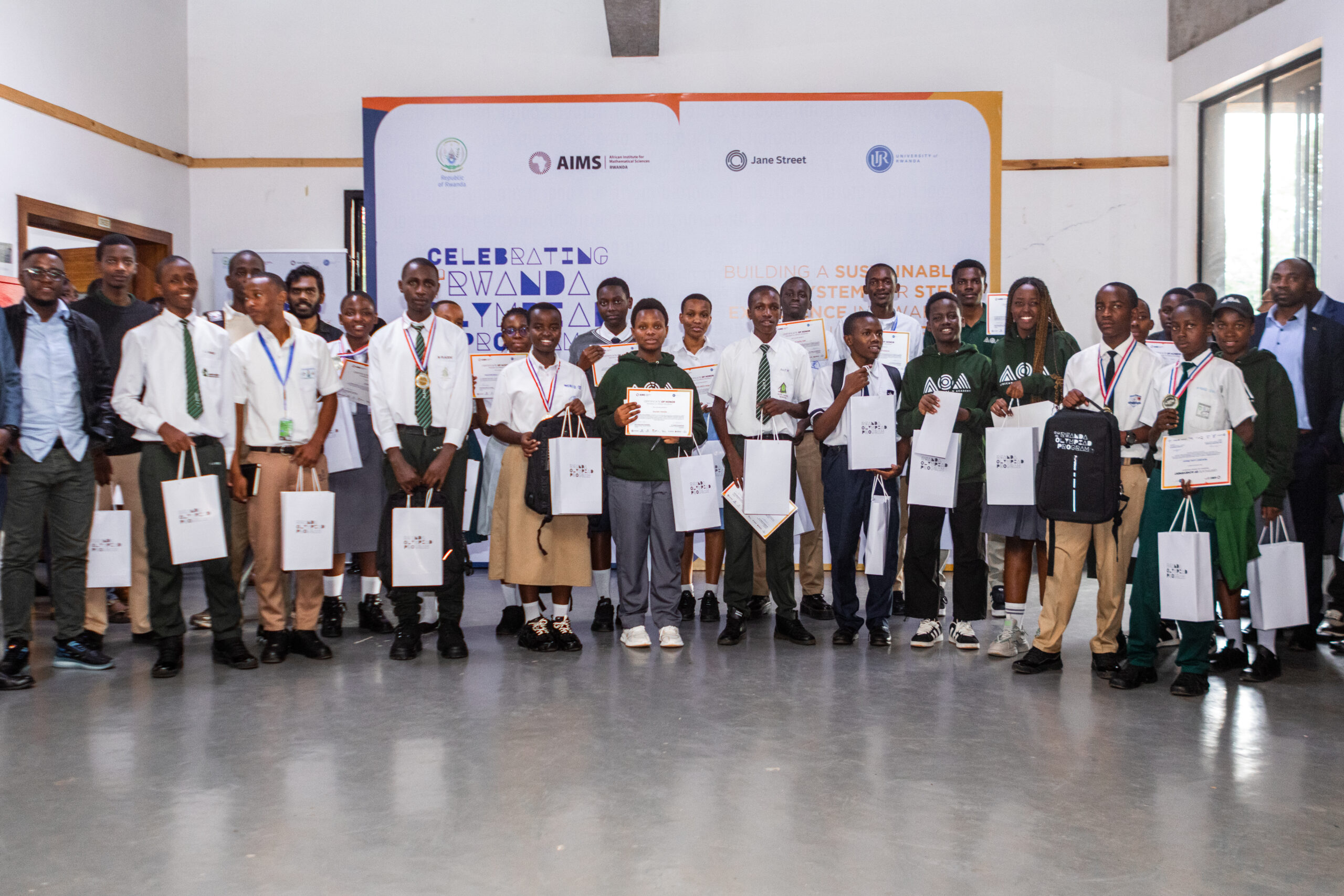
Beyond mathematics, the program has introduced new categories such as Artificial Intelligence and Informatics Olympiads, increasing Rwanda’s visibility on the global stage.
At the 2025 Pan-African Mathematical Olympiad (PAMO), Rwanda achieved its best-ever results — winning four silver and two bronze medals, marking the first time the entire team medaled.
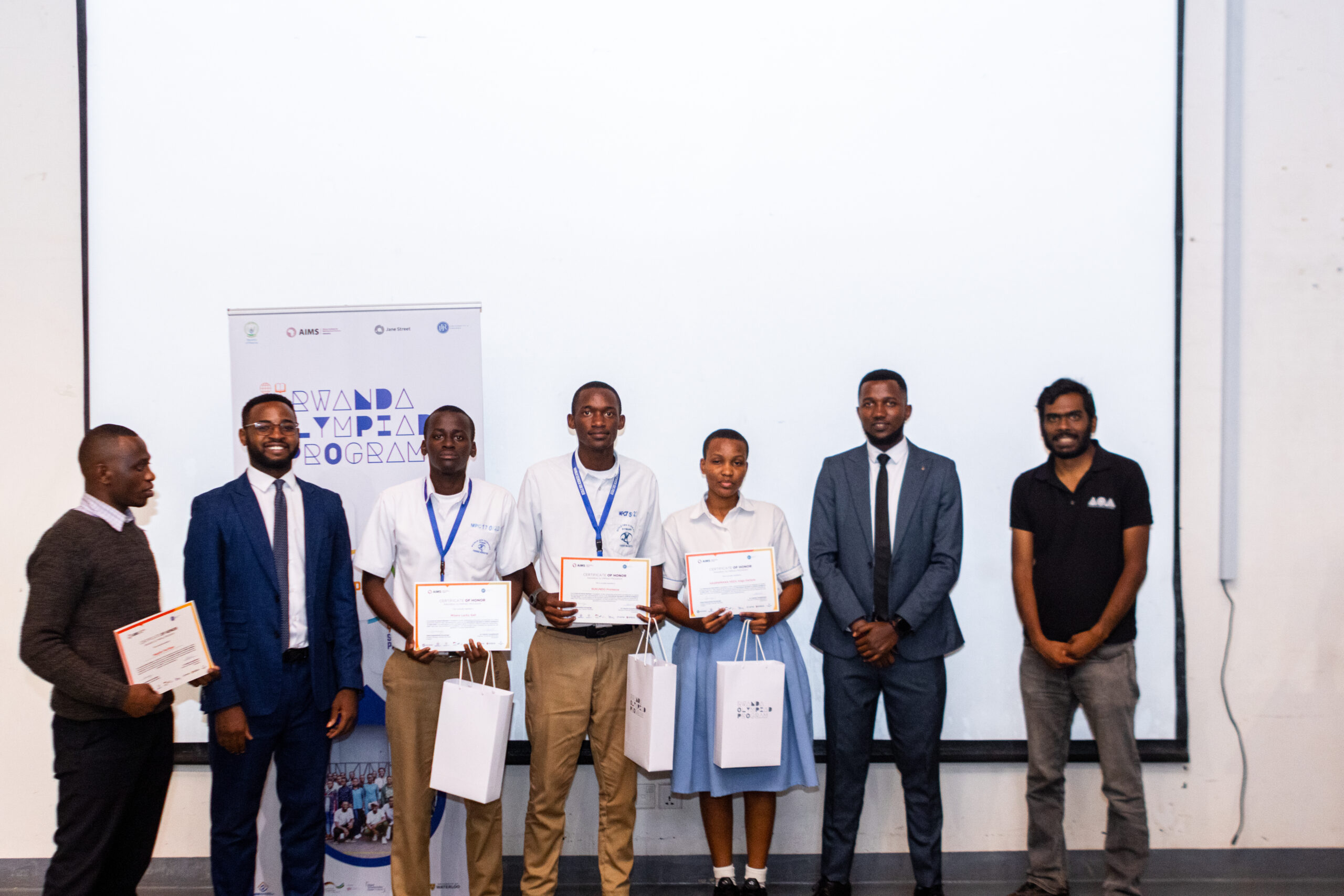
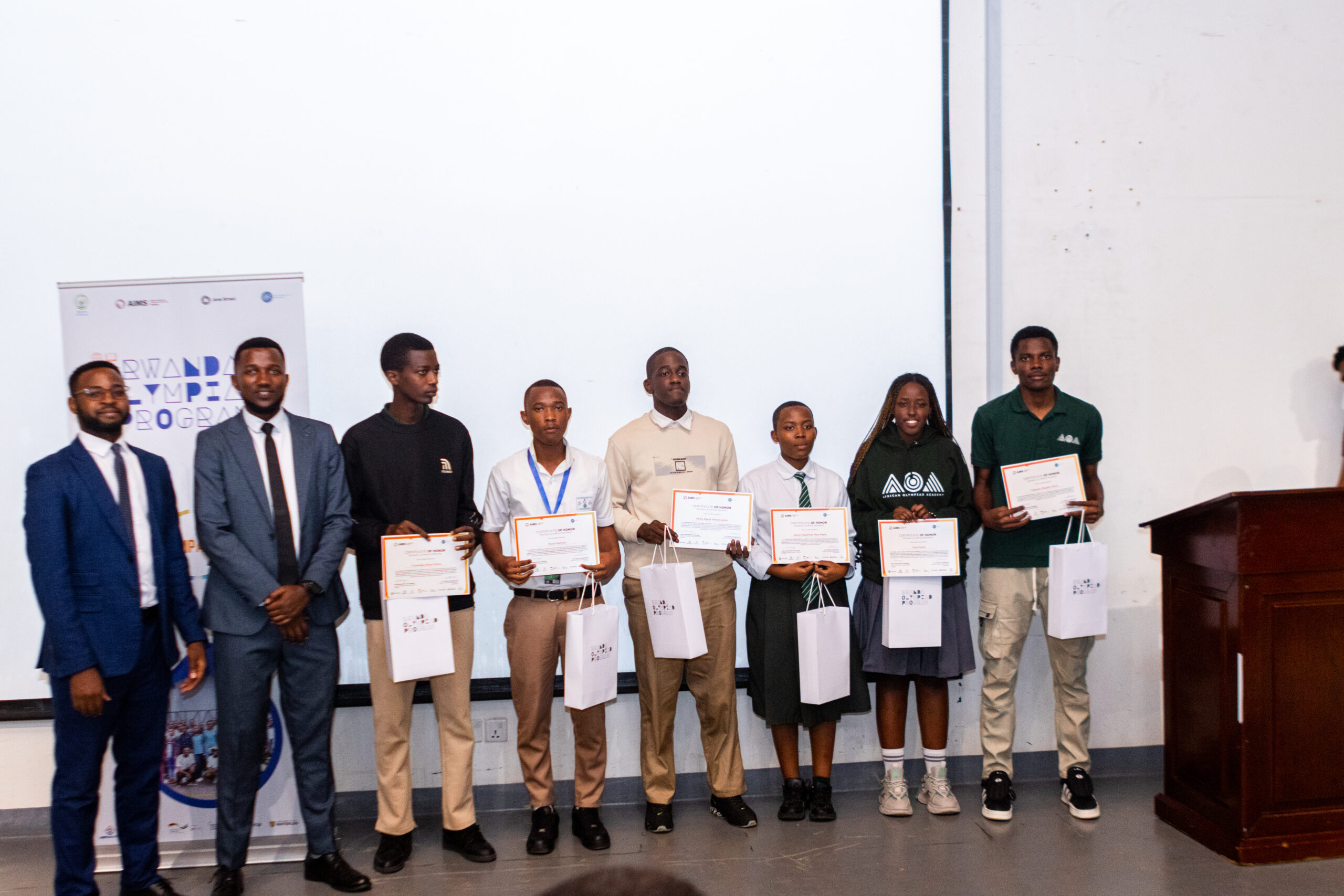
Darlene Keza Hagenimana (5th from right), the only girl who represented Rwanda at the AI Olympiad in Beijing
Rwandan students also earned honorable mentions at the International Mathematics Olympiad (IMO) in Brisbane, Australia, and the AI Olympiad (IOAI) in Beijing, China. At the International Informatics Olympiad (IOI), Rwanda ranked 32nd out of 600 teams.
The country made its debut at the International Physics Olympiad (IPhO), earning a participation recognition and setting sights on stronger preparation for 2026.
“These international engagements are not just about medals — they build our confidence and show us what’s possible,” said Darlene Keza Hagenimana, a Senior 6 student from Maranyundo Girls School who represented Rwanda at the AI Olympiad in China.
Building for the Future:
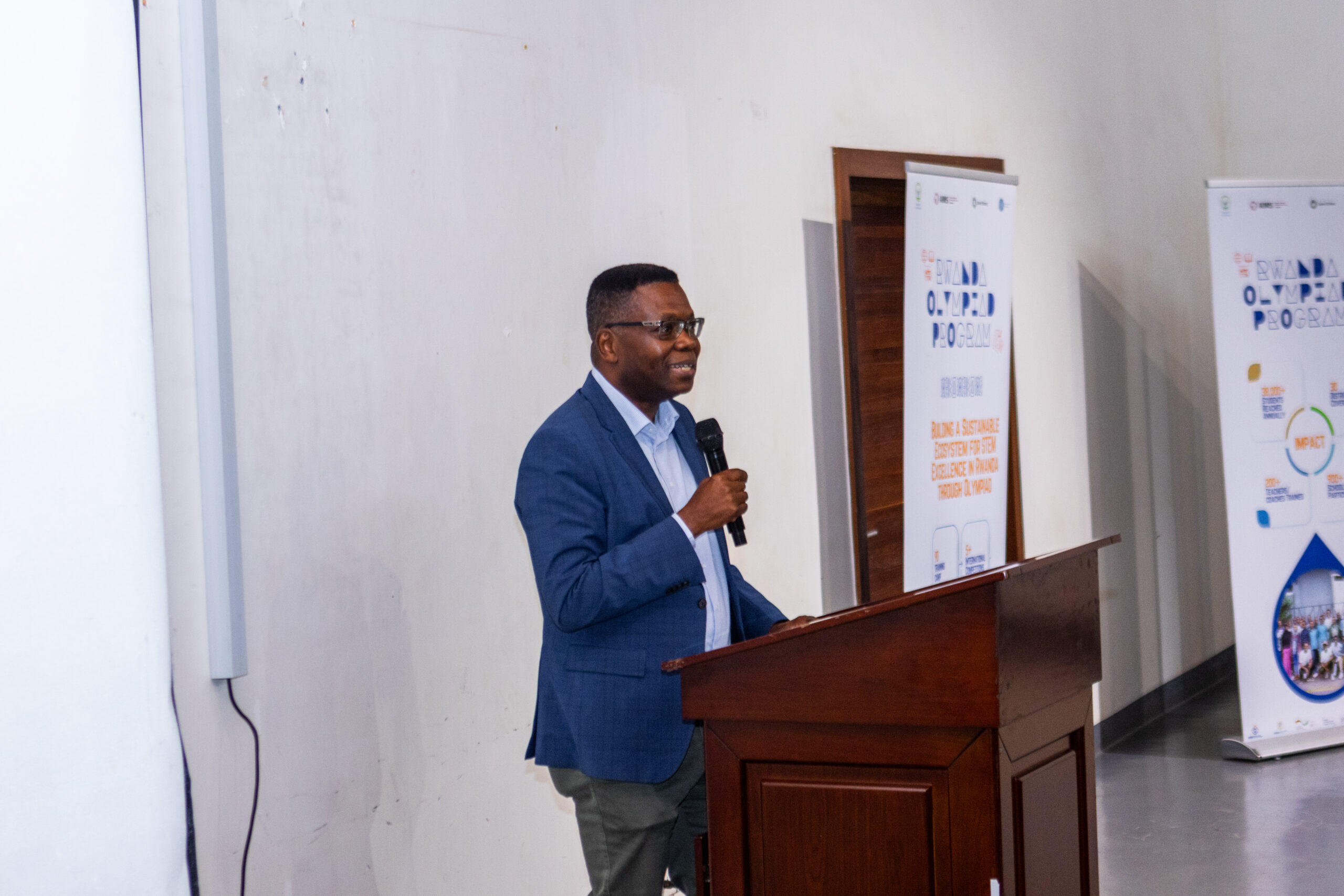
Prof. Dr. Sam Yala
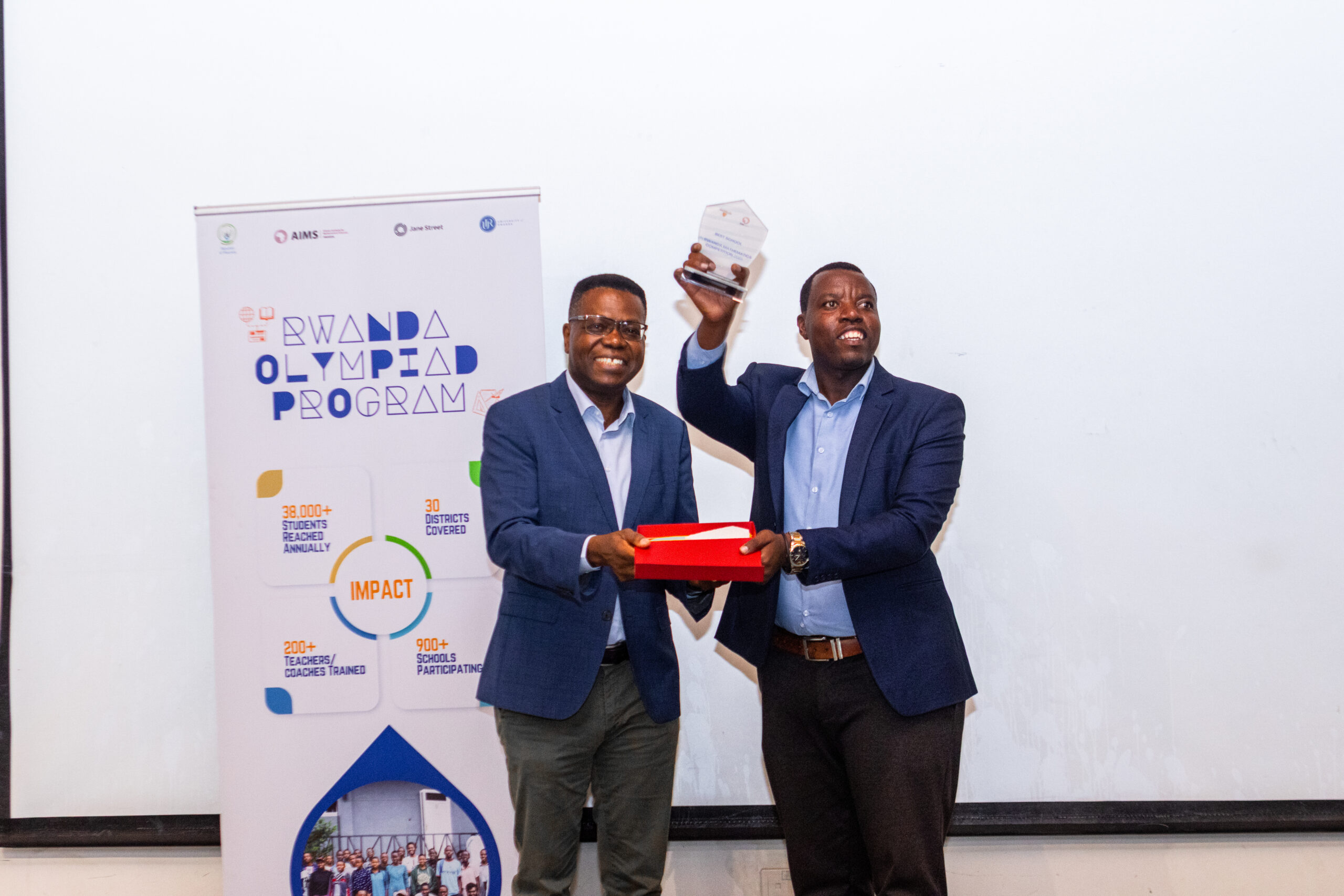
Prof. Dr. Sam Yala, President of the AIMS Network and AIMS Rwanda Centre, said that sustainability is the next key goal. “We are working to ensure the Olympiad activities remain strong and supported for years to come,” he said.
Arun Shanmuganathan, Founder of the African Olympiad Academy and a former Olympiad coach, commended Rwanda’s model:
“What Rwanda is doing is incredible — involving so many schools and students when others struggle to get participants.”
Dr. Celestin Kurujyibwami, Head of Mathematics at the University of Rwanda’s College of Science and Technology, said universities and AIMS Rwanda are partnering to build capacity.
“We’re preparing a nation that can use STEM and AI skills to solve problems, create jobs, and compete globally,” he said.
Kurujyibwami announced an upcoming mathematics training program for teachers and a national mathematics competition scheduled for next week.