




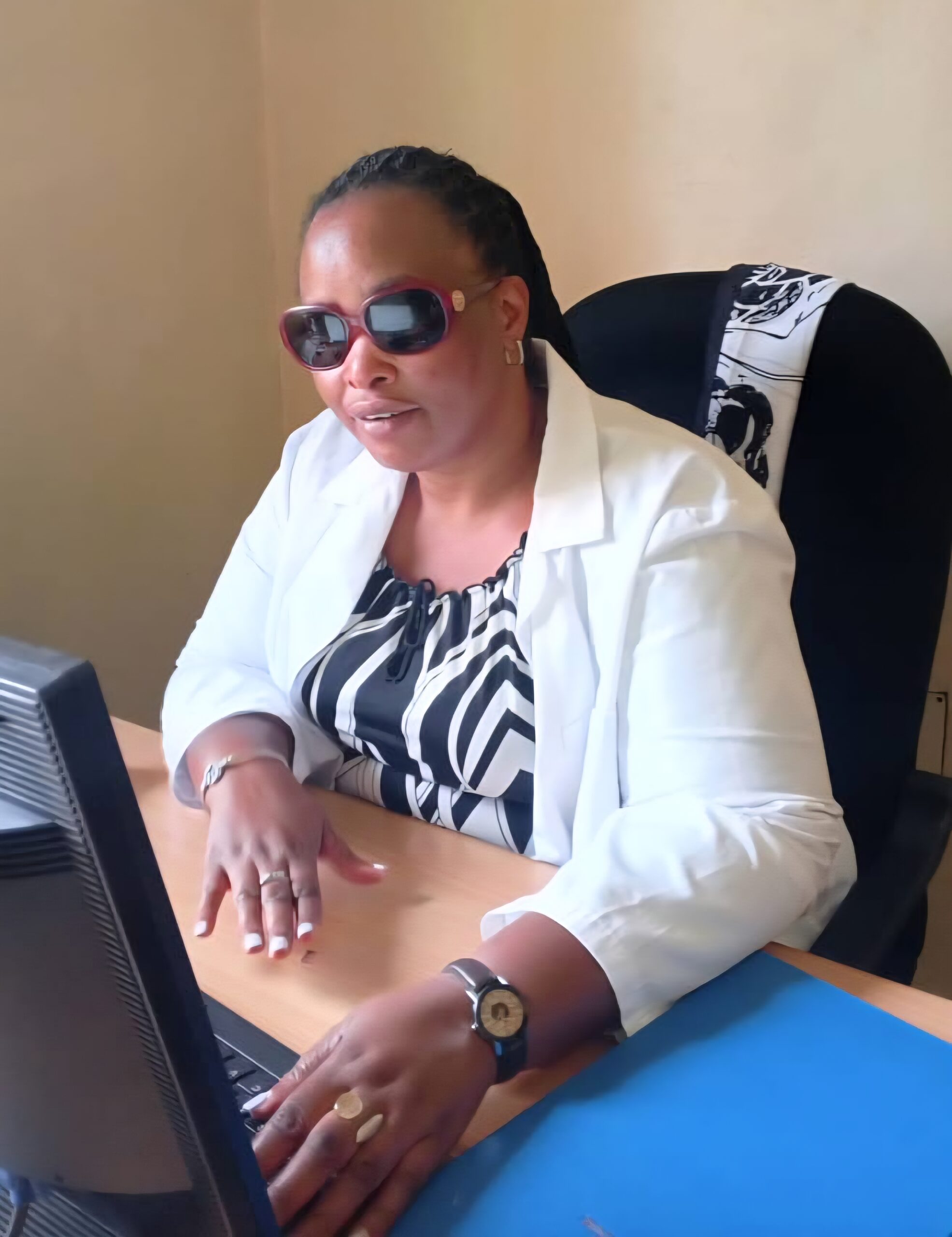
More than 40 years ago in Rusizi District, Western Province, a fourth child was born into a loving family and named Consolatrice Niyibizi.
Nothing at birth suggested her life would unfold differently from that of her siblings. Her three older siblings were healthy. Five younger ones would follow.
But before she began preschool, a serious eye disease struck.
Her parents searched everywhere for treatment. They visited hospitals across Rwanda and consulted every specialist they could find. Whenever they heard of healing, they rushed her there. When Canadian specialists arrived at a hospital in Butare known as Groupe, they hoped this would be the solution. Instead, after surgery at age 12, the little sight she still had was permanently lost.
“That’s how it ended,” she says.
Yet her blindness did not end her ambition.
A Mother Who Refused Limits
Even before total blindness, doctors had advised enrolling her at Gatagara School for the Blind when she was six. There she began her primary education.
At home, debates emerged about how she should live. Her father and siblings thought she should be protected from risk. Her mother disagreed.
Instead, she trained her daughter to wash clothes, clean dishes, weed the garden, and do every household chore like the other children. When siblings tried to take over her tasks, their mother refused.
One day she asked her to weed the flower garden — a task that terrified her because she could not distinguish flowers from weeds. Her mother came, placed her hands on the plants, and showed her how to feel the difference.
It was a lesson in independence.
Years later, her mother told her plainly: “Your life is school. Study up to university. Education is what will sustain you.”
At a time when no university in Rwanda admitted students with disabilities, it sounded almost impossible. But her mother believed it.
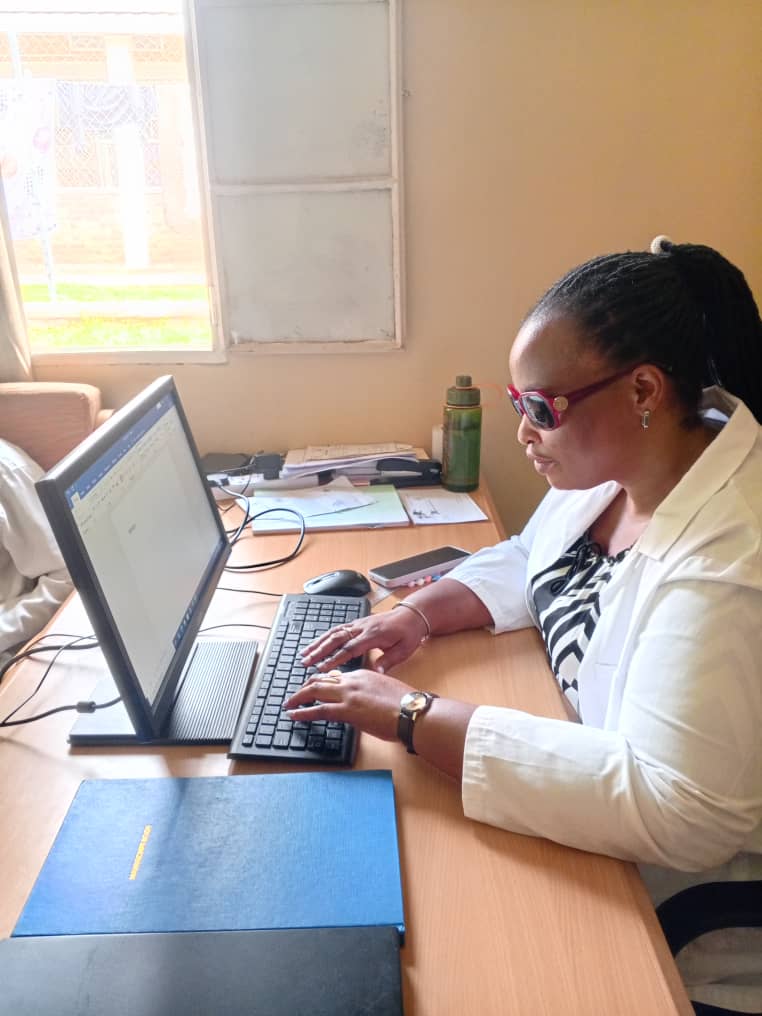
Waiting for Secondary School
In the 1990s, Niyibizi completed her entire primary education at Gatagara. But when she finished, there were no secondary schools in Rwanda specifically for visually impaired students. Inclusive education policies were still developing.
She waited.
In the post-genocide years, the Rwanda Union of the Blind (RUB) began advocating for educational access. Eventually, the government approved inclusive education initiatives allowing visually impaired students to attend mainstream schools.
However, instead of being placed locally, Niyibizi and two other girls received government scholarships to study in Cameroon.
“We studied there for four years at what was considered primary level, then returned in 2001,” she recalls.
Returning home did not immediately solve things. They faced bureaucratic hurdles before being placed at Gahini, the only available secondary school option for blind students at the time.
There, subject choices were limited. Visually impaired students were essentially required to follow the language arts stream.
Niyibizi had dreamed of studying medicine.
The system did not give her that option.
She studied what was available.
Fighting for Her Place at University
After completing secondary school, she and her peers again had to wait while advocates searched for a university placement that could accommodate them. Facilities and resources were discussed and partially arranged, but plans shifted.
In 2008, she arrived at the University of Rwanda’s Huye Campus.
There, a new obstacle emerged. She and other visually impaired students were told they would first have to spend a year in a preparatory adaptation program to learn how to “interact with people” and navigate campus life — a decision reportedly approved by university leadership and the Ministry of Education.
“We normally live with people,” she says. “As if we had come from the bush.”
They resisted.
Instead of accepting the requirement, she quietly joined the Psychology department — the field she now chose after medicine had become unattainable. Her peers did the same in their preferred disciplines. Lecturers, unaware of administrative restrictions, treated them like any other students.
They sat exams.
They passed.
“The first semester ended, grades were released, and we were all there.”
Assistive devices were scarce at first. Students shared a single old Braille machine and lent each other voice recorders. Exams were scheduled at different times so they could rotate equipment. Eventually, resources improved.
Looking back, she believes the biggest obstacles were not physical blindness but attitudes.
“Often the challenges people with disabilities face are caused by those around us,” she says. “We pay attention more carefully because if we make a mistake, they say it’s because we can’t see.”
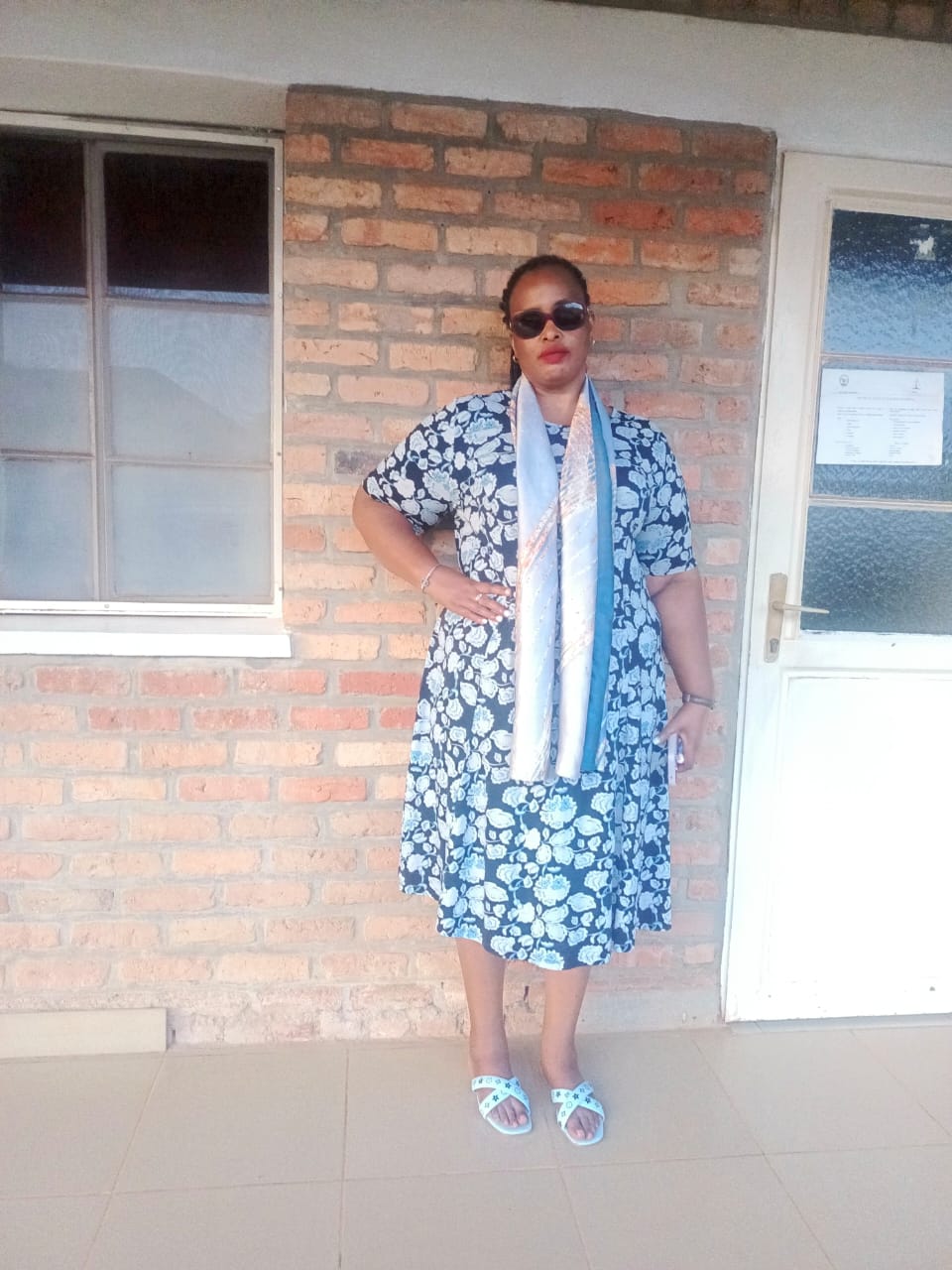
A Different Kind of Doctor
Though she was denied the chance to study medicine earlier in life, Niyibizi ultimately found her calling in Psychology and mental health.
Ironically, she became a doctor who “sees” mental and emotional suffering clearly — despite not seeing physically.
She reflects that although she once felt disappointed about not studying medicine, she is now grateful for how life unfolded.
Today, Dr. Consolatrice Niyibizi is a respected mental health professional and a mother of one child — fulfilling the dream her mother once spoke over her life.
Blindness took her sight.
But it never took her vision.
