

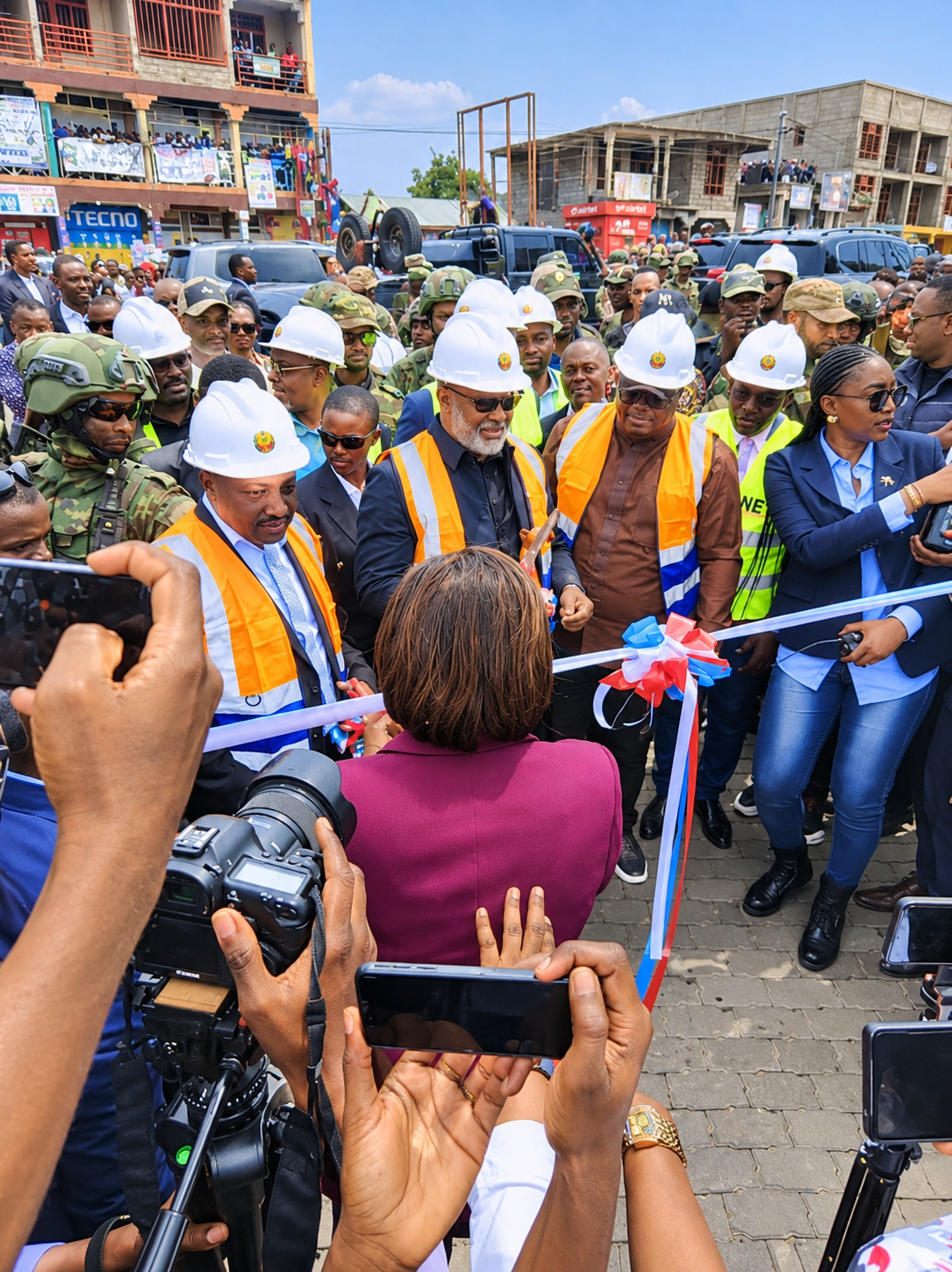
The past uninterrupted two years of AFC/M23 rule of Goma city have showcased the rebels capabilities in managing a city. Goma city Streets are swept, garbage collection trucks are commonly seen traversing the city , street lights are now functioning. They going for bigger projects
A new residential development of more than 3,000 houses is being planned outside Goma, eastern Democratic Republic of Congo (DRC), as pressure on housing continues to grow in the region’s largest urban centre.
Known as Ngabo City, the project is being promoted by Congolese company JM Construction. It is planned for Nzulo, in Masisi Territory, North Kivu Province, about 15 kilometres from Goma.
The development is expected to cover approximately 160 hectares. Beyond the houses, the plan includes schools, a health centre and a commercial centre.
The project is emerging as one of the flagship development initiatives of the rebel administration in eastern Congo. It was presented to provincial authorities on November 18 at the Musée de Himbi in Goma.
It received a favourable opinion from North Kivu Governor Bahati Musanga Erasto, who was represented by Vice-Governor for Development Chadrack Amani Bahati.
The governor was appointed by the Front for the Refoundation of the Nation, led by the March 23 Movement, after the rebel alliance captured Goma on January 27, 2025, and took control of the provincial capital.
Technical officials, members of the provincial administration and local administrative and customary authorities also attended. Discussions covered the technical aspects of the project, how it would be implemented and security arrangements.
Pierre Gatama, the company’s director general, said construction would begin soon. However, no detailed construction schedule, house prices or financing arrangements have been made public.
The houses are intended for interested subscribers, meaning buyers who sign up for the development. The project has not been presented as a government-funded public housing programme.
A city under pressure
Goma is one of the largest and busiest cities in eastern Congo. It sits on the shores of Lake Kivu, directly across the border from Rwanda’s Rubavu District. Although there is no recent official census, estimates put its population at around two million.
The city is also a major commercial and transport centre. Its position near mineral-producing areas, together with cross-border trade and the movement of goods, has made it an important economic hub. But the benefits of this activity have not been shared equally. Many residents continue to struggle with poverty and poor living conditions.
Years of conflict in rural parts of North Kivu have also pushed large numbers of people towards Goma and surrounding areas. The city has repeatedly received displaced families seeking safety, adding to pressure on already limited housing and public services. Humanitarian agencies have documented widespread reliance on makeshift shelters around Goma.
For many families, decent housing remains difficult to afford. Some live in crowded neighbourhoods, while others occupy temporary structures with limited access to basic services.
Ngabo City is being presented as one response to these challenges. Its location outside Goma could also provide room for residential expansion beyond the densely populated city.
The authorities currently administering North Kivu have in recent months highlighted infrastructure development, including roads, health facilities and schools. The housing project adds another dimension to those efforts.
Whether Ngabo City will deliver on its ambitions remains to be seen. Important details, including land ownership, environmental and social assessments, the cost of the houses and the infrastructure needed to support thousands of residents, are yet to be made public.
For now, it remains a major development proposal rather than a completed or fully financed housing programme.
