


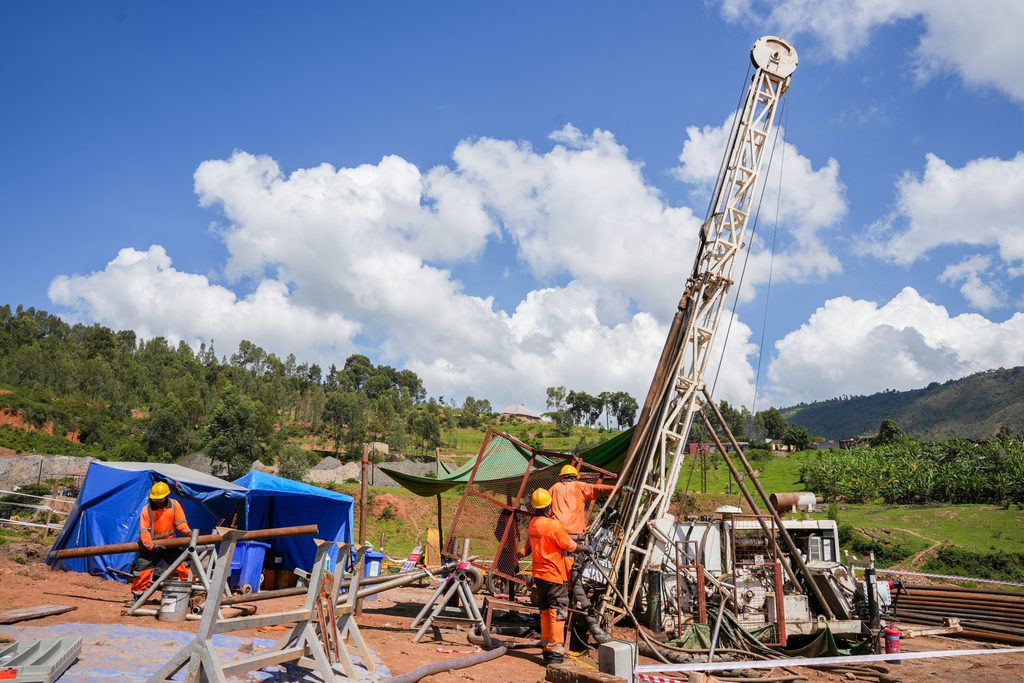
KIGALI – Trinity Metals has started a major drilling campaign at its Rutongo mine in northern Rwanda, using specialised technology to investigate tin deposits deep underground and establish whether the mine can has more to last decades more.
The campaign, which began on November 13 at the Karambo mine, marks the first modern diamond-drilling programme in the history of Rutongo, one of Africa’s major cassiterite deposits.
The company is targeting areas below the mine’s current operating levels, hoping to identify additional mineral resources and determine how far the tin deposits extend underground.
The first phase will involve drilling between 1,800 and 2,000 metres across five holes, with the deepest expected to reach between 650 and 700 metres.
The initial programme is scheduled to take approximately three months.
The first hole had reached a depth of 75 metres at the time of the announcement.
Despite its name, diamond drilling is not used to search for diamonds. It involves a specialised diamond-tipped drill bit that cuts through rock and extracts cylindrical samples, known as cores.
Geologists examine these samples to determine the presence, quality and extent of mineral deposits.
Trinity Metals says the results will guide the development of access to deeper sections of Rutongo and help the company plan future production more accurately.
Peter Geleta, Chief Executive Officer of Trinity Metals, said in a statement on Wednesday that the campaign would provide geological information needed to unlock the mine’s deeper potential.
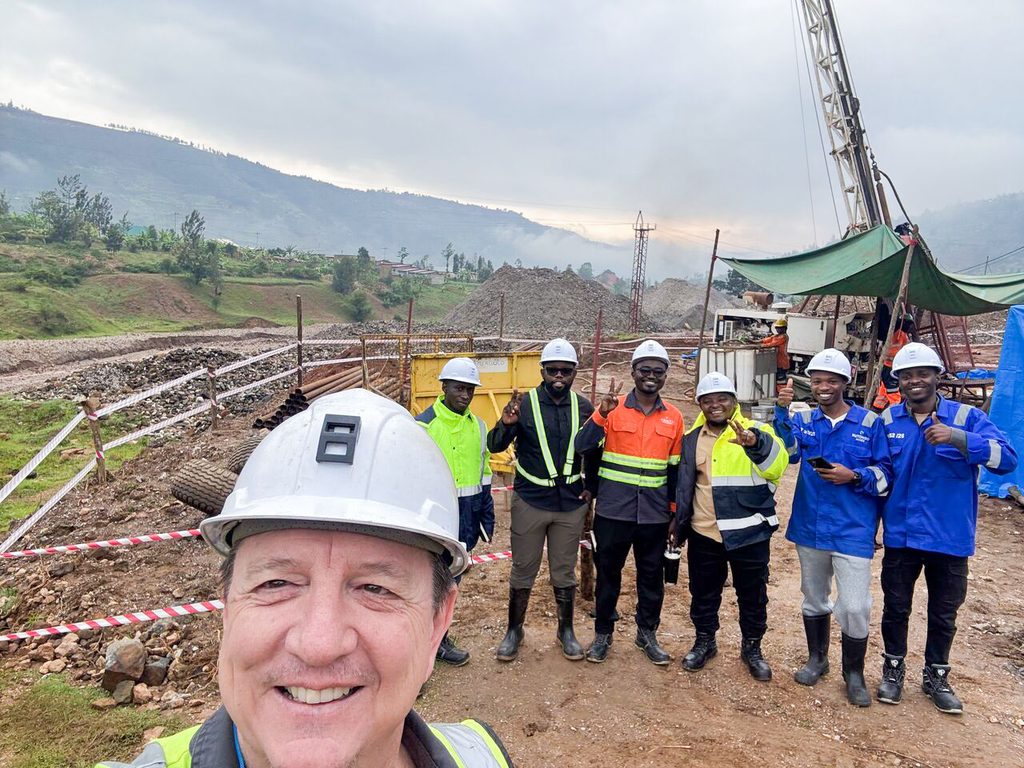
For almost a century, the Rutongo area has been mined without systematic modern drilling, with previous exploration largely relying on artisanal pitting and tunnelling, according to the company.
The initial drilling forms part of a larger surface exploration programme covering approximately 12,000 metres. Trinity also plans underground drilling to improve its understanding of the deposits and establish more reliable estimates of available resources.
Expanding Rwanda’s mineral resources
Rutongo is located about 26 kilometres north of Kigali and comprises six underground tin mines. Its mining concession covers approximately 9,600 hectares.
The mine currently produces between 40 and 70 tonnes of tin per month. Trinity estimates that the concession contains approximately 54,000 tonnes of recoverable tin, with plans to increase monthly production to 200 tonnes over the next five years.
The new drilling programme is part of a wider exploration drive covering the company’s other operations. Trinity says drilling plans and budgets have already been prepared for Nyamyumba, Gasambya and Sanzari, while additional targets remain under consideration.
Trinity Metals was formed in 2022 through the merger of three mining businesses: Rutongo Tin Mine, Nyakabingo Tungsten Mine and Musha Tin and Tantalum Mine.
The company produces Rwanda’s three major technology minerals commonly known as the 3Ts: tin, tungsten and tantalum. It has also identified a lithium deposit, known as Ntunga, on its Musha concession.
Its exploration activities extend beyond tin. At Nyakabingo, one of Africa’s largest tungsten-producing mines, Trinity began an advanced drilling programme in May 2026 to investigate whether tungsten-bearing veins extend further underground.
That campaign targets depths of approximately 850 metres and is intended to improve estimates of the mine’s resources and support long-term production planning.
In July 2026, the company also launched a sonic-drilling programme to assess historically mined material at Nyakabingo, with the aim of identifying additional tungsten that could potentially be recovered from old stockpiles.
Trinity has also been investing in processing technology.
At Nyakabingo, it commissioned a five-tonne-per-hour pilot plant to test improved methods of recovering tungsten from ore, including finer mineral particles that can be lost through traditional processing methods.
The company employs more than 6,000 people across its Rwandan operations, according to its published figures.
Trinity’s majority shareholder is TechMet, a UK-based investment company focused on securing supplies of minerals used in modern technology and industry. TechMet works with several investment partners, including the US International Development Finance Corporation (DFC).
Trinity received US$3.865 million in technical assistance funding from the DFC in June 2024, according to the company.
Through its investments in exploration, processing and mine modernisation, Trinity is seeking to expand production and increase the amount of minerals that can be recovered from its Rwandan operations.
