



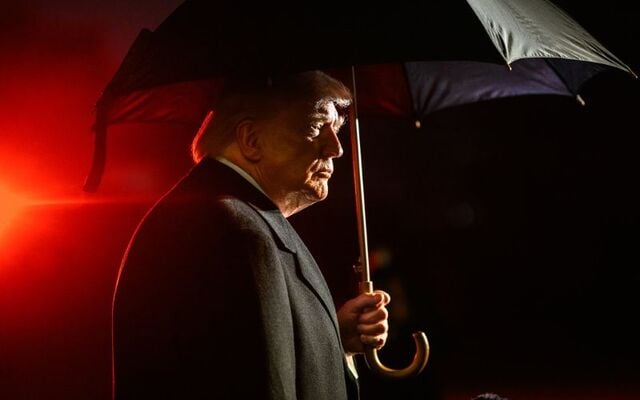
U.S. President Donald Trump is scheduled to launch his Board of Peace, which key global players fear could eliminate the UN
In late 2025, President Donald Trump’s administration unveiled the “Board of Peace”, a bold initiative aimed at resolving protracted conflicts like the Israeli–Palestinian crisis, with an initial focus on Gaza’s reconstruction.
The formal launch and signing are scheduled this week at the World Economic Forum in Davos, signaling both global ambition and elite political–economic support.
While framed as a nimble, results-driven body, the initiative has ignited concerns that it could evolve into a U.S.-dominated rival to the United Nations, potentially sidelining the 80-year-old institution in broader international affairs.
The Board of Peace is structured around prominent political figures—Marco Rubio, Tony Blair, Jared Kushner—and influential business leaders.
Embedded within a UN Security Council resolution, its remit includes managing Gaza’s governance transition, restoring public services, and ensuring stability.
The leaked draft charter, however, critiques “failed institutions” like the UN for bureaucratic inertia and proposes a lifetime chairmanship for Trump, along with veto powers, appointment authority, and fund control.
A reported $1 billion entry fee for permanent members has fueled fears of a “pay-to-play” model favoring U.S. interests. Invitations to 60 nations suggest ambitions extending far beyond the Middle East.
The emergence of the Board capitalizes on long-standing criticisms of UN operations. In Africa, these concerns are particularly visible.
The United Nations Organization Stabilization Mission in the Democratic Republic of the Congo (MONUSCO), established in 1999 and rebranded in 2010, is the world’s largest and most expensive peacekeeping operation, consuming over $8.7 billion to date.
Despite such investment, MONUSCO has faced relentless criticism for failing to protect civilians amid persistent violence, rigid mandates, operational inefficiencies, and coordination failures with Congolese forces accused of human rights abuses.
Similarly, the International Criminal Tribunal for Rwanda (ICTR), established in 1994, demonstrated the UN’s capacity for high-cost, slow, and sometimes detached justice.
Over two decades, it prosecuted 93 individuals at a total cost of $2 billion, with limited trials relative to the scale of the genocide. Each case case up to $20million, enough to fund a major government program here.
While pioneering legal frameworks—such as recognizing rape as genocide—the tribunal’s inefficiency and expense drew widespread critique.
Despite these shortcomings, the UN remains vital for Rwanda, providing significant development and humanitarian support.
Annual UN allocations through agencies like UNICEF, WFP, UNDP, IOM, and WHO have totaled hundreds of millions of dollars, bolstering health, education, governance, and refugee programs.
Rwanda is also a leading UN peacekeeping contributor, deploying nearly 6,000 personnel worldwide, generating financial reimbursements, and enhancing diplomatic influence.
The Board of Peace threatens to disrupt these benefits. By offering a U.S.-led, agile alternative to multilateral governance, it risks diminishing Rwanda’s strategic role and the UN’s influence in conflict zones.
Peacekeeping reimbursements could decline, development support may shrink, and the nation’s international standing could be affected. Opposition from China, Russia, and cautious allies like Israel further complicates the geopolitical calculus.
The launch at Davos signals a deliberate, high-profile push to reposition the U.S. at the center of global peace and security mechanisms, bypassing traditional UN channels.
For the UN, and for countries like Rwanda, 2026 may mark a watershed moment: either an opportunity to reform and strengthen multilateralism or a turning point toward fragmentation and uncertainty in global governance.
