



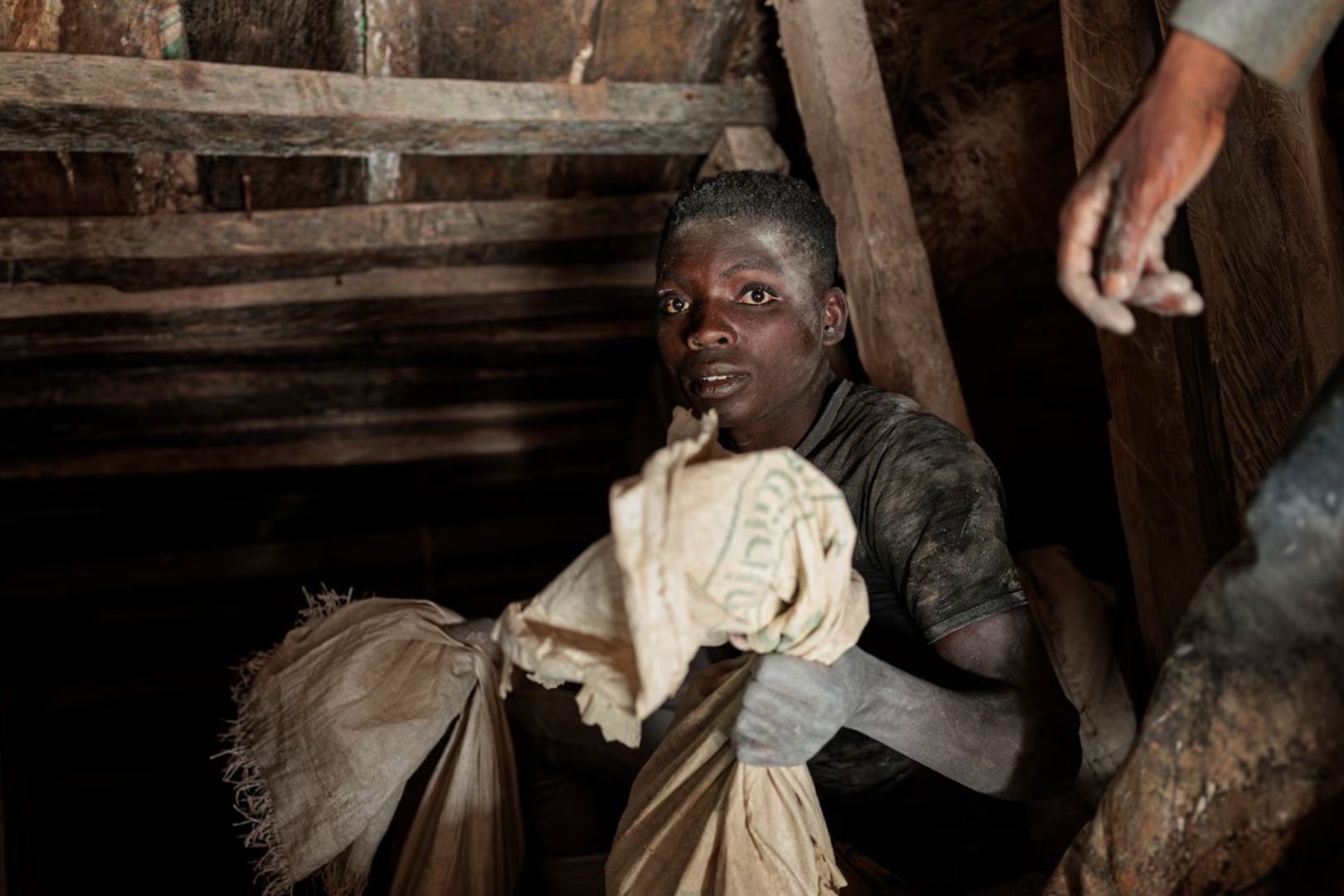
The Rubaya mine where the world’s technology gets its supplies to keep running
As a student of history, I recall very well that in 1965, there were killings and discrimination targeting Congolese Banyarwanda in North Kivu.
As I am writing this piece, Congolese Tutsi are still being brutally massacred under the orders of President Felix Tshisekedi.
Similarly, hundreds of the Hema people are being killed and beheaded like wild animals in Ituri Province. The world is silent.
Intriguingly, several Western countries have ganged up to impose sanctions and punitive measures against Rwanda and AFC/M23 for the conflict in eastern DR Congo, disregarding Rwanda’s legitimate security concerns and the M23’s struggle to protect Kinyarwanda speaking Congolese especially the Tutsi under a genocide threat.
European mercenaries are busy distributing arms in South Kivu to Kinshasa government-allied militia like Mai-Mai and Wazalendo and FDLR genocidal militia to kill the Tutsi.
In all this, Western countries and the UN are keeping a blind eye and nobody will call out Tshisekedi at whose behest these gross human rights abuses and violation of international law are being committed.
Many people question whether the West understands the root causes of the conflict in eastern DR Congo, but the evidence here removes such doubts.
For instance, on October 29, 1965, the United States representative in Bukavu, (South Kivu) André J Navez (US Consul) sent a cable to Washington informing that; “For its own political ends, the WaNande-controlled North Kivu Provincial Government seeks to picture the “Banyarwanda” (Kinyarwanda-speaking Congolese) as refugees- which they are not and not as Congolese citizens (which they are) …. No attempt has been made by the provincial government to correct or even recognize the grievances of the Kinyarwanda-speaking Congolese.
Instead, the North Kivu Government claims that there is a vast conspiracy organized by the ‘Rwandan emigres.”
In 1972 Mobutu’s government denied citizenship to Kinyarwanda speaking Congolese. A similar scenario, of denial of citizenship and killing of Congolese Tutsi is still prevails today.
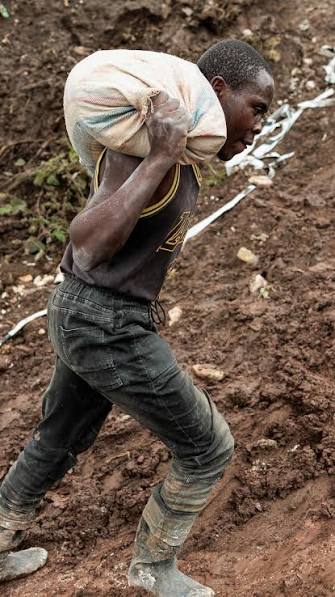
When the West turns around and claims that the conflict in eastern DRC is caused by Rwanda and M23 who want to steal Congolese minerals, knowing well the root causes of the conflict, they lay bare their sinister motive.
Here lies the real problem.
Western countries are scrambling for ‘critical minerals’ to feed their fast-evolving technology sectors including manufacture of electric vehicles (EVs), smart phones, clean energy technologies- from wind turbines and electricity networks, among others. Critical minerals are not the usual coveted ornamental minerals such as gold, diamonds or silver. They include battery metals like lithium, cobalt (Coltan), gallium, rare earth elements (REEs), etc, some of which are needed to power ‘green transition.”
Both West and Eastern countries are all scrambling for DRC critical minerals. It is believed DRC possess more than half of the world’s cobalt resources and over 70% of the world’s cobalt mining, mainly carried out by Western companies.
When the M23 captured Rubaya where the largest coltan mining takes place, the supply chain for critical minerals for their industries was disrupted, and with M23 in control of the mines, Western countries believe that critical minerals in DR Congo may end up in the hands of their ‘adversaries’ like China.
In 2024, China was the world’s largest producer and seller of EV vehicles with more than 13 million units on the market, making up more than 60 percent of the global production. This is while the US sold just 1.3 million. This has heightened a geopolitical rivalry.
DRC also possess other critical minerals like lithium used for EV batteries and Uranium used in manufacture of nuclear weapons.
By 1920s, a Belgian mining company, Miniere du Haut Katanga- UMHK, dominated the global uranium market, yet Belgium does not produce uranium domestically. It was stolen from DRC.
In 1945, the uranium used in the atomic bombs dropped by U.S on the Japanese cities of Hiroshima and Nagasaki, came from the Shinkolobwe mine in the Katanga province of the DRC.
Today, Tshisekedi has promised both US and EU countries mineral deals to help him fight the war against M23, and this is evidence that these Western countries will never be impartial in the DRC conflict when they have vested economic interests.
That is why no Western country has called for sanctions against Tshisekedi for using European mercenaries, because they are on a European mission to secure critical minerals. In fact, no single country in the West has been on record condemning the act.
Western countries work together when it comes to sourcing critical minerals. In June 2022, the US initiated a Mineral Security Partnership for the security of critical minerals supply chains.
Member countries include: UK, Australia, Canada, Finland, France, Germany, Japan, South Korea, Sweden, and the European Commission.
The International Energy Agency estimates that by 2040, the world is expected to need four times as many critical minerals for clean energy technologies as it does today.
The west depends on external sourcing of critical minerals and DRC is their jackpot.
The UK established a Critical Minerals Intelligence Centre (CMIC) that provides strategic advice to western countries on securing sustainable supplies of critical minerals.
The west will, by hook or crook, have access to these minerals from DRC. This explains why the west has closed its ears not to listen to Rwanda and M23’s existential security threats paused by the Tshisekedi regime.
The West’s one sided- partisan approach distorts and manipulates both facts and history of the conflict in eastern DRC.
As long as security concerns and strategic economic interests overlap in a conflict, actors will tend to interpret events through self-interest. This leads to selective accountability, the framing of opponents, and competing narratives that obscure the real causes of violence and hinder a shared path to resolution.
