


The confidential report from the DRC’s Defense and Security Commission, obtained by French magazine Jeune Afrique, paints a devastating picture of an army in complete institutional collapse.
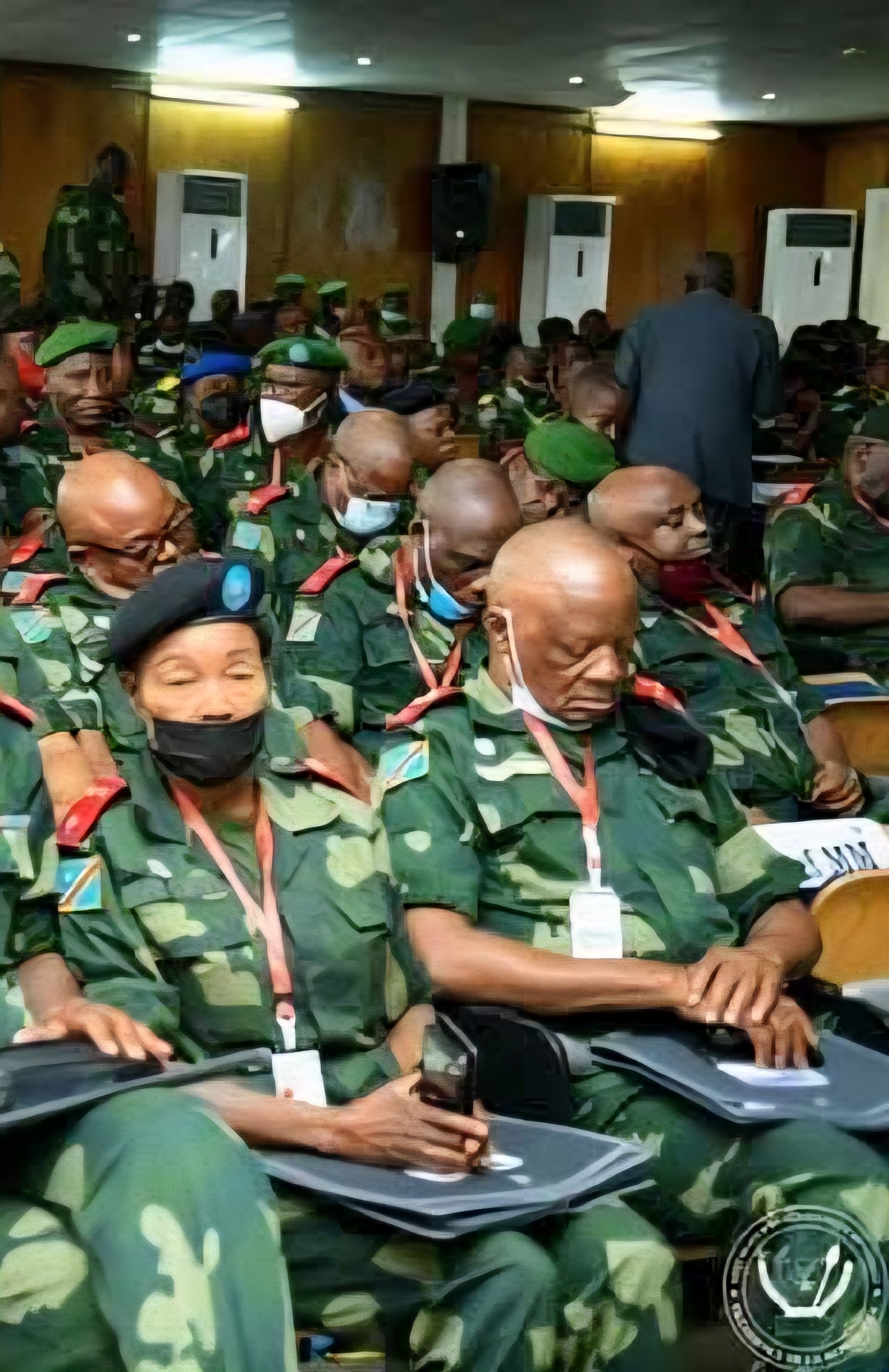
In May 2022, while being addressed by their civilian Commander-in-Chief, Félix Tshisekedi, the Congolese top military generals were deep in their sleep.
According to the report, the FARDC is riddled with structural dysfunctions. Among the findings: a near-total absence of a barracks policy, a lack of cohesion, a doctrinal deficit, a fragile chain of command, insufficient troop rotations, a failure to adapt to new technologies, poor intelligence gathering, problems managing Wazalendo auxiliaries, and inadequate coordination with the Ugandan army.
The absence of a barracks policy means soldiers are not properly housed, trained, or kept separate from civilian populations, leading to indiscipline and abuses.
The doctrinal deficit means the army has no unified framework for how to fight, forcing commanders to improvise, which wastes resources and costs lives.
The fragile chain of command means orders from the top do not reliably reach the bottom, or are ignored altogether.
The failure to adapt to new technologies is starkly illustrated by the report itself. After receiving strategic drones from donors, the FARDC watched helplessly as the adversary acquired jamming equipment, “thus reversing the balance of power in its favor.”
How can the US expect any return on its investment in the DRC when it is partnering with an institution so chaotic and so incapable of basic military functions? Washington must face reality: propping up the FARDC will only prolong the cycle of failure.
On its part, the European Union cannot continue to pour money into the FARDC without acknowledging that it is funding a machine of human suffering.
The same report reveals that between December 4 and 11, 2025 alone, more than 413 Congolese civilians were killed by bombings and summary executions in South Kivu.
Over 200,000 people fled into Burundi. In North Kivu, more than 4 million people are displaced.
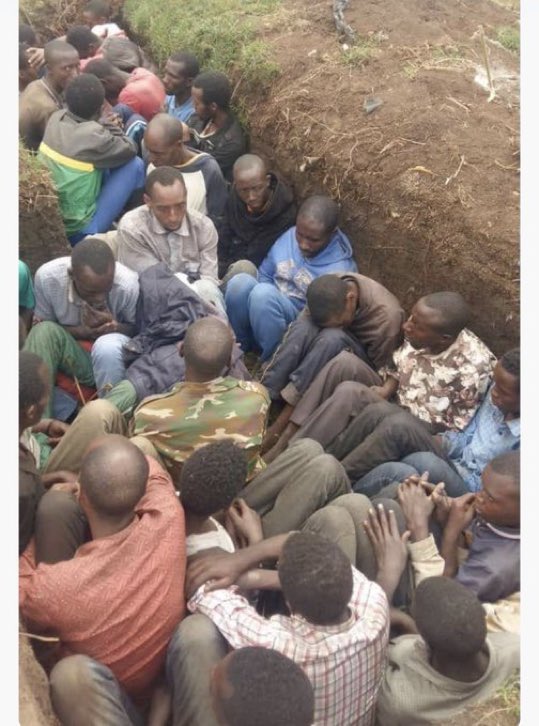
These aren’t soldiers. They’re civilians rounded up in South Kivu because they are Banyamulenge, and that, according to the Congolese army, makes them automatic suspects for alleged links to AFC-M23 rebels
Beyond the findings, the Congolese army is conducting deadly daily drone strikes against civilians in Minembwe and other AFC/M23 -held areas such as Masisi in North Kivu, causing countless civilian deaths. These are the predictable consequences of an army that is driven by a genocidal ideology against the Tutsi and is trigger-free.
Consider the Wazalendo auxiliaries. The Commission describes them as “disorganized” and “uncontrollable,” funded to the tune of $4 million per month through the Army and Defense Reserve.
The Minister of the Interior noted that some of these militias operate in territories that are “no longer formally administered” by his ministry, including Rutshuru, Nyiragongo, Masisi, Lubero, Walikale, Goma, Kalehe, Kabare, and Bukavu.
In other words, the FARDC has armed militias it cannot control in territories the state has abandoned. And yet, the EU continues to fund this chaos.
Worse still, the report reveals that promised combat bonuses have never been paid. The government suspended payments pending an inspection mission that is still ongoing.
The EU cannot claim ignorance. If it continues to fund an army that fails to pay its soldiers, arms uncontrollable militias, and oversees massacres of innocent civilians, then it becomes an accomplice.
The report makes it painfully clear. The Congolese state has collapsed in the east. Into this vacuum, the AFC/M23 has emerged as the only coherent force capable of imposing order.
While the FARDC cannot pay its soldiers, the AFC/M23 maintains discipline. While the FARDC cannot distinguish its own auxiliaries from criminals, the M23 operates under a clear chain of command. While Kinshasa fails to administer entire provinces, the AFC/M23 secures territory, opens roads, and protects civilians.
The international community can continue to issue sanctions and commission reports trashing the image of the AFC/M23, but that will not rebuild what has been destroyed. MONUSCO has spent billions of dollars over two decades with little to show for it. The peacekeeping mission has neither prevented the collapse of the state nor protected civilians from the army it was meant to support.
Instead of continuing the same failed policies, Washington should pivot. It should recognize that the AFC/M23 is the only true alternative for state rebuilding in eastern Congo. It can deliver what Kinshasa cannot. It is time to act on that reality.
