


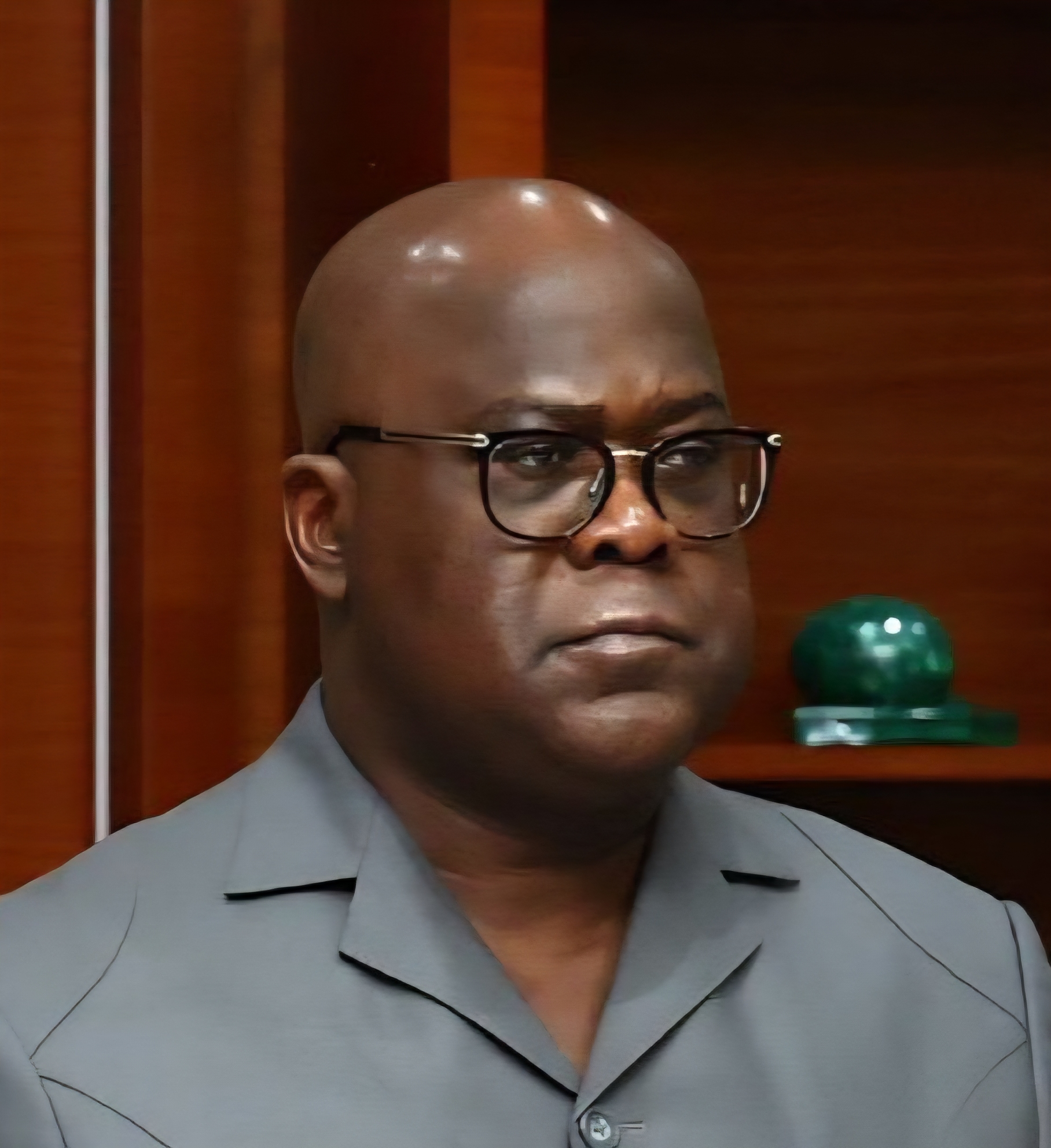
In his latest press conference, President Félix Tshisekedi said the quiet part out loud. He has no intention of ever leaving power. And to stay there, he appears to have mapped out two routes. Both, ultimately, lead through the graves of the Congolese people.
The first route is constitutional change. Tshisekedi knows that rewriting the constitution to abolish term limits is no small feat. Even Martin Fayulu, the figurehead of what passes for political opposition, has firmly rejected the idea.
Tshisekedi may try to buy off that fringe of the political class, some of the extremist hate merchants who prop up his administration. But even if he succeeds there, the streets will not be so easily bought. We can anticipate where this is headed. As he has shown before, his answer to popular protest is violence.
The second route is a forever war. Tshisekedi made it clear: there will be no elections while North and South Kivu remain in a state of conflict. His critics have pointed out the glaring contradiction.
He is prepared to hold a referendum on constitutional change during war, thus excluding millions of Congolese from the process, yet invokes the very same war as grounds for cancelling presidential elections. Then again, consistency has never been Tshisekedi’s strong suit. But the cynicism is chilling.
Clearly, from his perspective, the war against the AFC/M23 rebels is not a crisis to be resolved, but an opportunity to be exploited. If he cannot alter the constitution, why would he ever agree to a lasting peace? So long as the fighting drags on, he remains in power indefinitely.
And, frankly, this particular war does not threaten his family’s mining interests in Katanga. The state’s coffers, meanwhile, can always be replenished by mineral wealth from the rest of the country, or so he seems to believe. So why end the bloodshed?
By drawing parallels with the Ukraine war, Tshisekedi attempts to cloak himself in the language of resistance. But the irony is grotesque. He signed a peace deal with Rwanda in Washington.
Another peace deal is already on the table, drafted by Qatari mediators, and he cannot even fulfil the most basic commitments he made to his compatriots of the AFC/M23, namely a ceasefire and an exchange of prisoners. That alone strongly suggests he is prepared to fight to the last Congolese.
In short, whether through a constitutional coup or a perpetual war, the graves of potential protesters, innocent civilians caught in the crossfire, and the countless soldiers and militiamen he sends to the front are already being dug.
And from what we heard, he would gladly dance on the ashes of this nation if it bought him one more day in power. He is ready to reign over ruins.
It may be time for his opponents to reckon with the depth of that commitment. A man whose only aspiration is power and who has no tangible achievements to present will always need an enemy, a scapegoat, a war to distract the public from his own failures.
Here is a man who admitted during that press conference that he has no real army to speak of. And yet he continues to pour money into a conflict kept just deadly enough to avoid elections, or to win them on the promise of an ever-elusive military victory.
The quiet part is no longer quiet. The question now is whether his adversaries have any plan to stop this madness.
