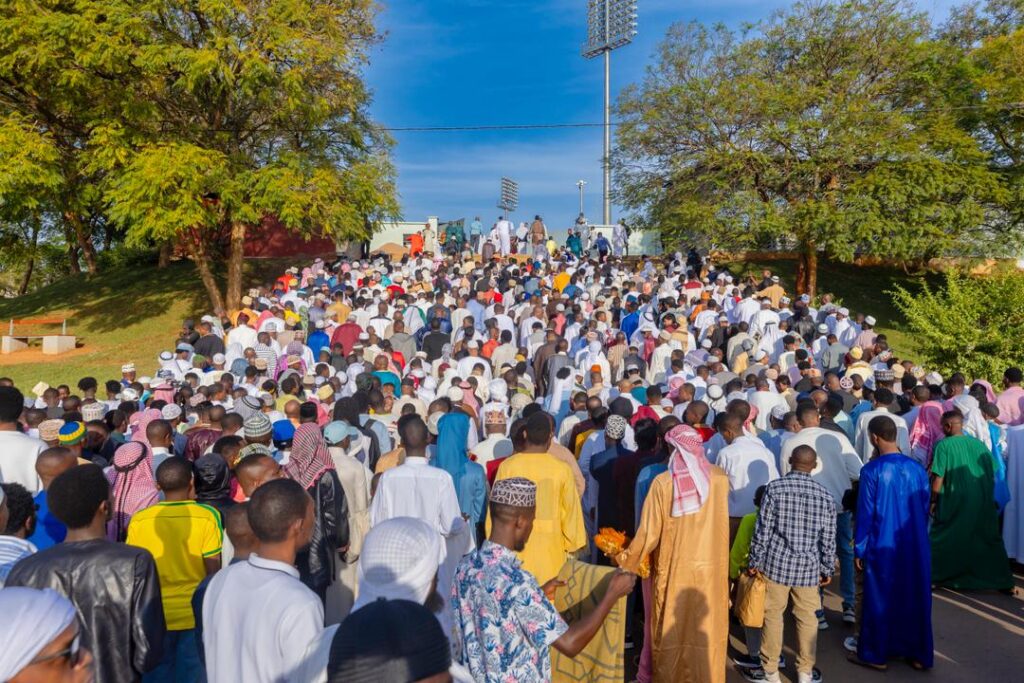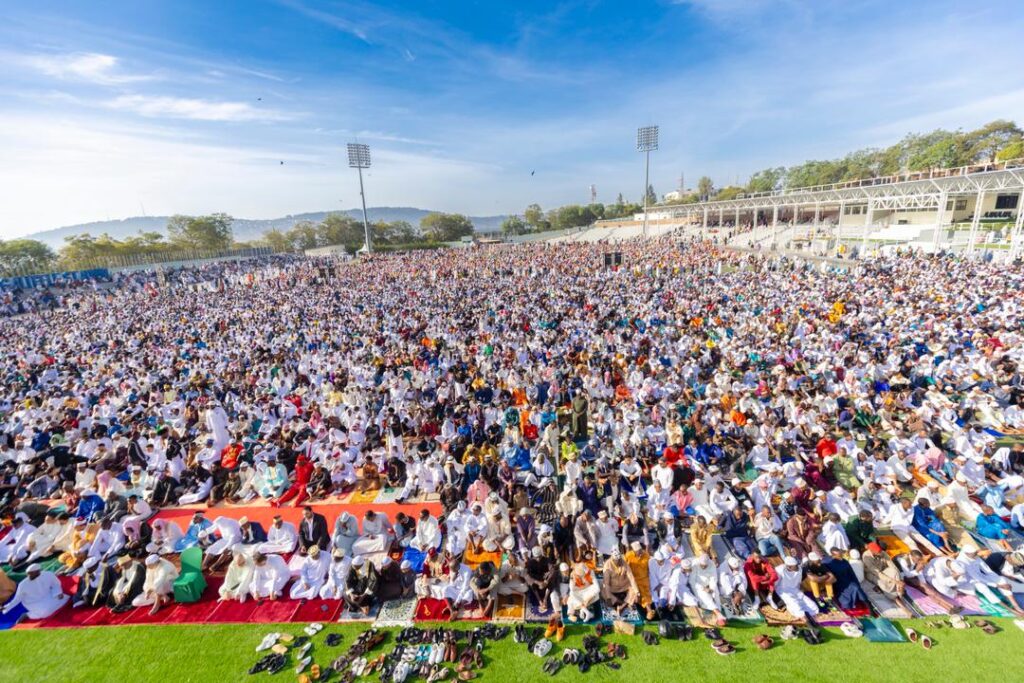
Muslims in Rwanda assembled at Kigali Pele Stadium on Wednesday morning to mark Eid al-Adha.
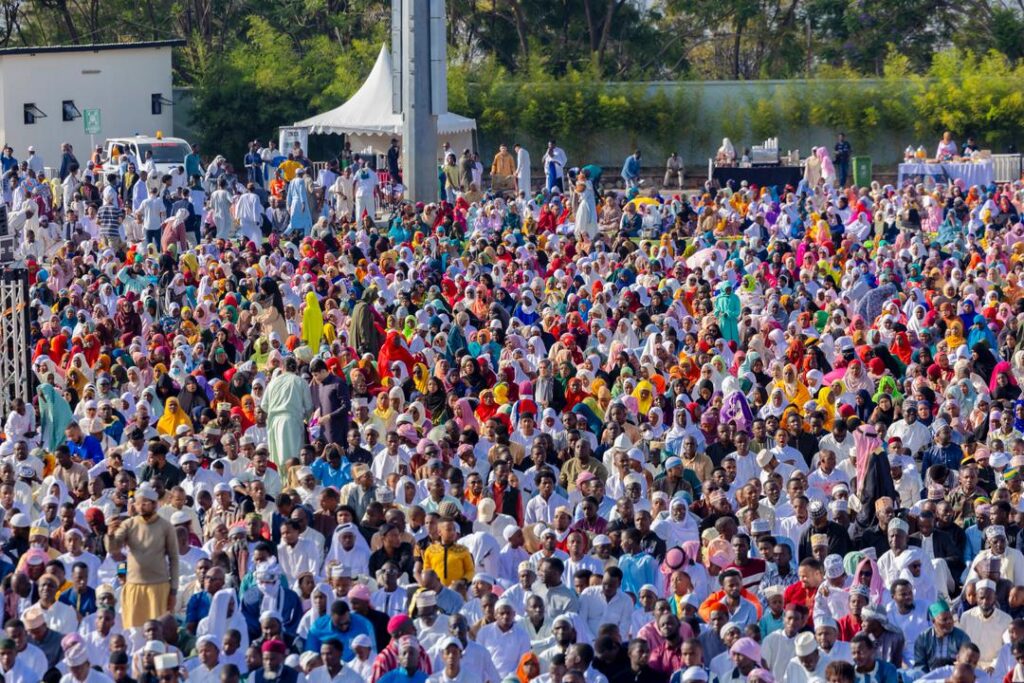
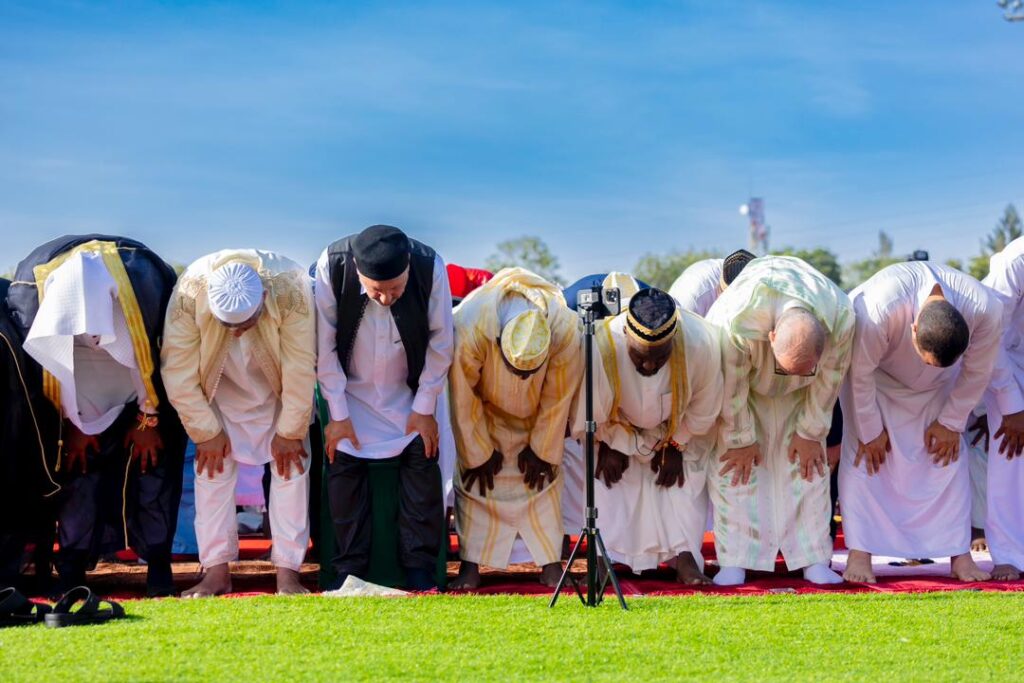
KIGALI -Thousands of Muslims assembled at Kigali Pele Stadium on Wednesday morning, turning the expansive venue into a tightly woven sea of devotion, reflection and collective celebration as Rwanda’s Muslim community marked for Eid al-Adha.
The gathering unfolded under a calm early morning sky, with worshippers filling the stadium in orderly rows that reflected both discipline and anticipation.
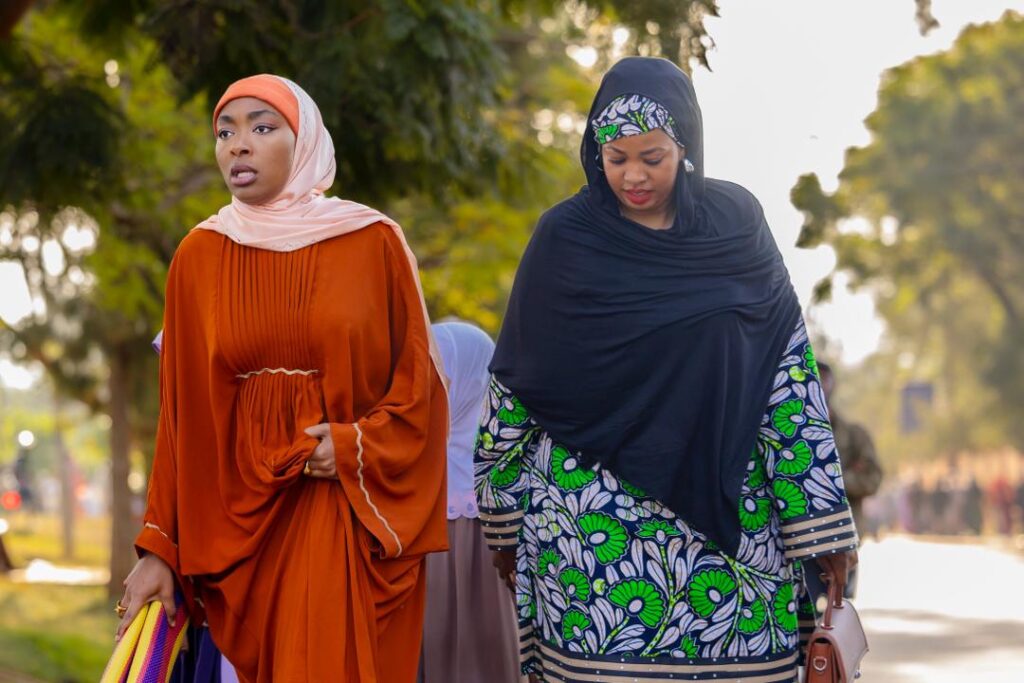
Families arrived together, greeting one another in quiet warmth before the communal prayers began, while volunteers coordinated movement across the grounds as the crowd steadily expanded.
Eid al-Adha, widely known as the “Festival of Sacrifice,” commemorates the Quranic account of Prophet Ibrahim’s willingness to obey Allah’s command to sacrifice his son Isaac before divine mercy replaced the act with a ram.
The occasion is observed globally through congregational prayers and the ritual slaughter of livestock, with meat distributed to relatives, neighbors and those in need.
A Sermon Rooted in Obedience and Meaning
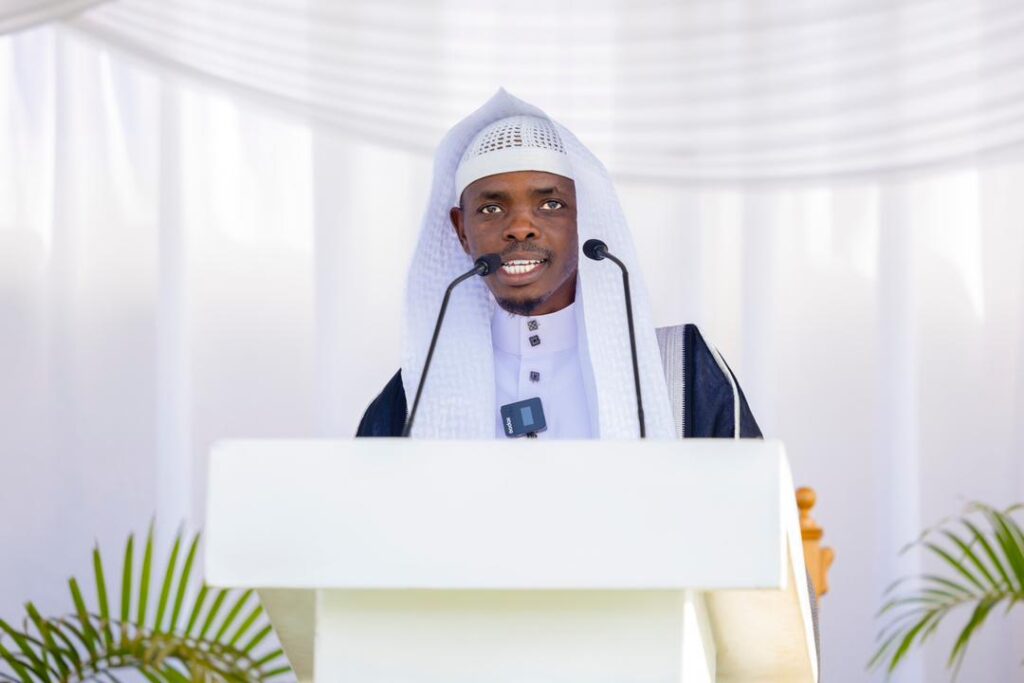
Rwanda’s Mfuti Sheikh Mussa Sindayigaya delivering his Eid message.
Delivering the Eid message, Rwanda’s Mfuti Sheikh Mussa Sindayigaya emphasized that the essence of the day lies in submission to God and the translation of faith into everyday acts of compassion and responsibility.
“This is a very important day where we celebrate through sacrifice, and if you have the means, please engage with others. The Quran calls us to sacrifice, and its meaning is clear. We are called to obedience, sincerity and generosity as taught by Ibrahim,” he said.
He added that the story of Prophet Ibrahim remains a timeless moral framework for believers, urging Muslims to internalize its lessons beyond ritual observance.
“These values shape faith, truth, wisdom and courage. Every Muslim, young or old, should study his life and emulate his character,” he said.
The sermon was met with attentive silence, as worshippers listened closely to a message that linked spiritual devotion with social ethics, particularly the duty to support vulnerable members of society.
Faith, Sharing and Community Responsibility
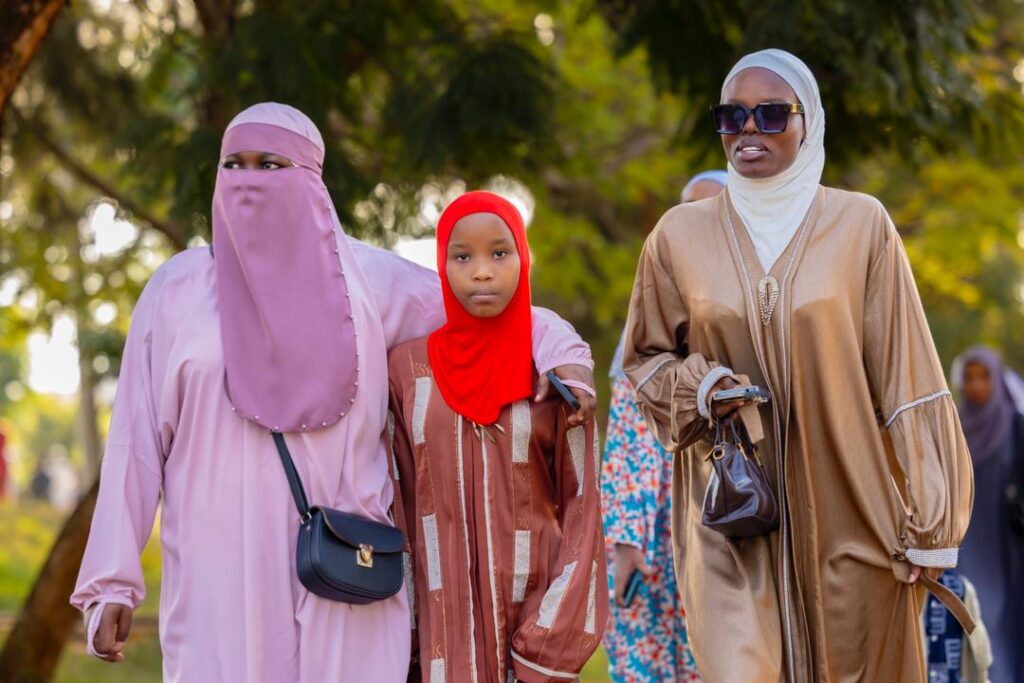
Families arrive together before the communal prayers began.
Across the global Muslim world, Eid al-Adha is observed by nearly two billion followers and coincides with the annual pilgrimage of Hajj in Mecca, where millions gather in one of the largest religious assemblies on earth.
The festival is deeply anchored in charity, with families encouraged to distribute sacrificial meat to those in need.
In Kigali, that message resonated strongly among worshippers who described the day as both a spiritual milestone and a reminder of social duty.
“Eid is not complete unless someone else also benefits from what you have. Sacrifice only has meaning when it reaches people who would otherwise be forgotten,” said Abdul Karim Habimana, a worshipper who attended with his family.
For Amina Uwase, a university student attending Eid prayers at the stadium for the first time, the experience carried emotional and symbolic weight.
“Standing among thousands of people in prayer gives you a sense of unity you cannot describe easily. It reminds us that faith is also about humility and shared humanity,” she said.
A Day of Reflection Beyond Ritual
As prayers concluded, worshippers gradually left the stadium and returned to homes and designated areas where the ritual sacrifice would continue over the coming days of Eid celebrations.
The movement outside the stadium remained orderly, with families exchanging greetings and sharing moments of joy after the solemn prayers.
Yet beyond the celebration, many reflected on the deeper message that sacrifice is not confined to animals offered, but extends to daily acts of kindness, discipline and generosity toward others.
Eid al-Adha stands as a reminder that faith is measured not only in worship, but in the lived expression of compassion, humility and responsibility within the wider community.