



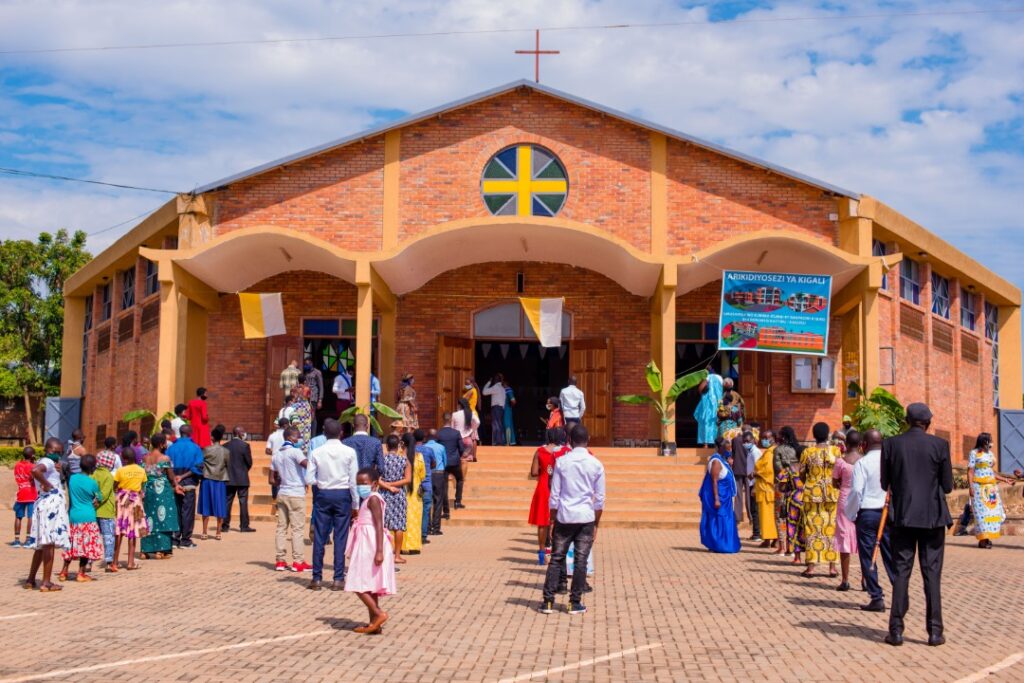
Worshipers going to church. Rwanda’s 2024 decision to close thousands of non-compliant churches and mosques triggered online worship.
KIGALI – In 2024, Rwanda’s decision to close thousands of non-compliant churches and mosques triggered a now-growing transition from congregational prayers to worship in digital spaces where authority is harder to define or regulate.
What began as a regulatory intervention to enforce safety, transparency, and infrastructure standards has since turned into a more complex paradox.
Faith did not stop, it simply relocated into livestreams, virtual meetings, and informal online gatherings that now operate beyond the familiar visibility of physical institutions.
According to the Rwanda Governance Board (RGB), inspections of faith-based organizations revealed widespread concerns, including false teachings, financial mismanagement, fraud linked to exploitation of believers, leadership disputes, and buildings that failed to meet legal standards.
The closures were not intended to suspend worship itself, but to compel compliance with basic operational and ethical requirements.
Yet compliance has been uneven. While some congregations adjusted and reopened, others shifted their activities into digital environments, where oversight is less defined and participation more fluid.
The Digital Migration of Worship
For many religious communities, platforms such as Zoom, Google Meet, YouTube, and TikTok became improvised sanctuaries. Services continued in familiar rhythms: prayer, worship, preaching, offerings, and intercession. Structurally, little changed. Contextually, everything did.
Pastor Dany Mutangana, of The United Christian Family Initiative, a fellowship of Christians from different denominations describes the transition as both necessary and uneven.
“For those who truly wanted to worship, nothing was interrupted. But not everyone has access to smartphones or stable internet. When we meet physically, we may be around 200 people, but online we are sometimes reduced to about 70. A significant number is lost due to the shift to digital platforms,” he says.
The change, he notes, has not altered the essence of worship, but it has reshaped its reach. Participation is now filtered through access to technology, quietly redefining who remains inside the fold and who is left outside it.
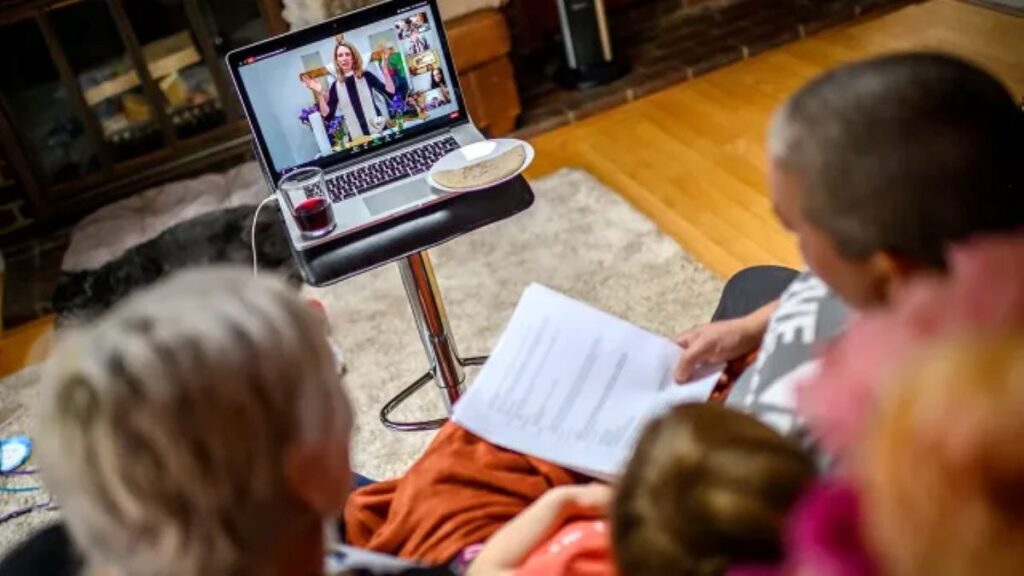
For many religious communities, platforms such as Zoom, Google Meet, YouTube, and TikTok became improvised sanctuaries.
Authority in an Unseen Space
As worship moved online, it entered a space where authority is less visible and more easily contested. In physical churches, leadership is identifiable, locations are fixed, and accountability is tied to administrative structures.
Online, those anchors weaken. Identity can be performed rather than verified, and authority can be claimed rather than confirmed. Mutangana acknowledges this shift.
“On social media platforms, some people hide under the cover of religion. Because they are not easily identifiable, some present themselves as pastors when they are not. Others enter with hidden intentions and end up committing abuses in these spaces,” he explains
Mutangana adds that online environments have also enabled forms of exploitation that are difficult to trace. Some individuals request money from followers under the promise of prayer, healing, or spiritual intervention.
“People can meet without knowing who is behind the screen. Some of these individuals are not even in the country. Yet they ask for money and make promises that are difficult to verify,” he notes.
The shift has not only created space for impersonation but also blurred the boundary between legitimate ministry and opportunistic fraud.
The Erosion of Trust
Beyond impersonation lies a broader consequence: the gradual erosion of trust.
Mutangana observes that repeated cases of misconduct have begun to shape public perception of religious leadership more broadly. Distinctions between genuine and fraudulent actors are increasingly lost in public sentiment.
“When people encounter wrongdoing, they tend to generalize. If they meet a dishonest person, they begin to think all pastors are the same. Trust has declined significantly,” he says.
In earlier years, religious institutions were more clearly embedded within administrative systems. Churches were registered, leaders were known to local authorities, and physical presence made oversight more straightforward.
The digital shift has disrupted that clarity, producing a far more diffuse ecosystem of religious actors. Now, anyone with a smartphone and internet connection can assume religious authority, regardless of training, legitimacy, or accountability structures.
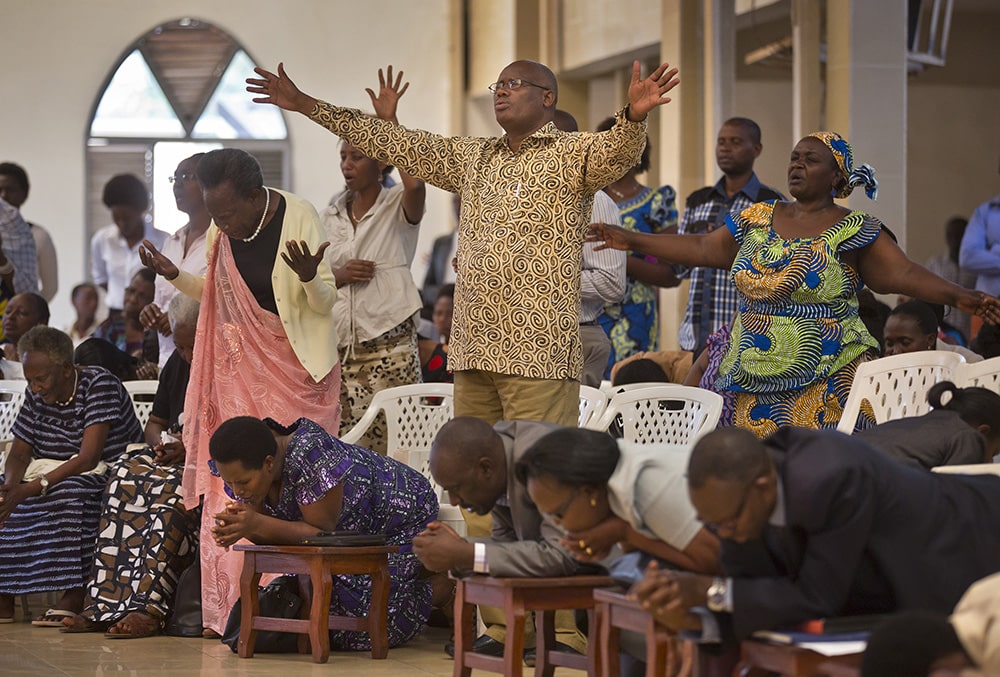
Christians worshiping in church.
Between Regulation and Reinvention
As of November 2025, RGB reported that 9,171 churches and mosques remained closed due to failure to meet required standards, although some are expected to reopen once compliance is achieved.
Yet the deeper transformation lies not in the closures themselves, but in what followed: the emergence of a hybrid religious landscape where worship, authority, and accountability no longer share the same physical boundaries.
What Rwanda is witnessing is not the disappearance of faith, but its redistribution into digital spaces that are both expansive and difficult to govern. In this environment, religious expression continues, but so too does ambiguity about identity, intent, and truth.
The result is a system in transition, where worship has adapted quickly to technology, while institutions are still catching up with its consequences.
And in that gap between regulation and reinvention, a question persists: when faith moves online, who ensures that it remains both authentic and accountable?