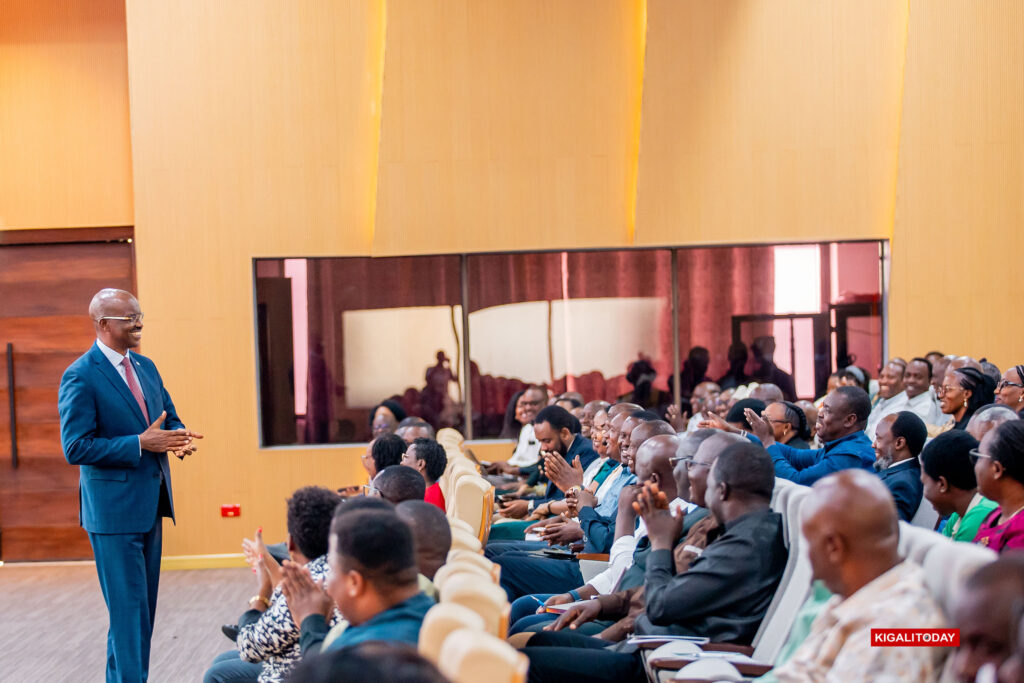
PSF is holding a three-day public-private retreat at Gako Military Academy, in Bugesera district.
BUGESERA— Rwanda’s economic hurdles are no longer defined by a lack of vision or development frameworks, but by the friction between policy design and the systems tasked with converting those ideas into production, trade, and investment outcomes.
This execution gap took center stage during a three-day public-private retreat at the Gako Military Academy, where government officials and corporate leaders mapped out the institutional bottlenecks dragging on the country’s ambitious growth agenda.
Under the Second National Strategy for Transformation (NST2), Rwanda is targeting a bold average annual growth rate of 9.3% through 2029, while aiming to lift per capita income from $1,040 to $1,369 over the same period.
Officiating the opening of the retreat, the Minister of Trade and Industry, Prudence Sebahizi, stressed that achieving these milestones hinges entirely on moving past bureaucratic silos.
“These ambitions cannot be achieved without the direct and active participation of the private sector,” Sebahizi noted, framing the gathering as a joint sandbox to isolate regulatory hurdles and co-create immediate, practical fixes.
Fixing Fragmented Value Chains
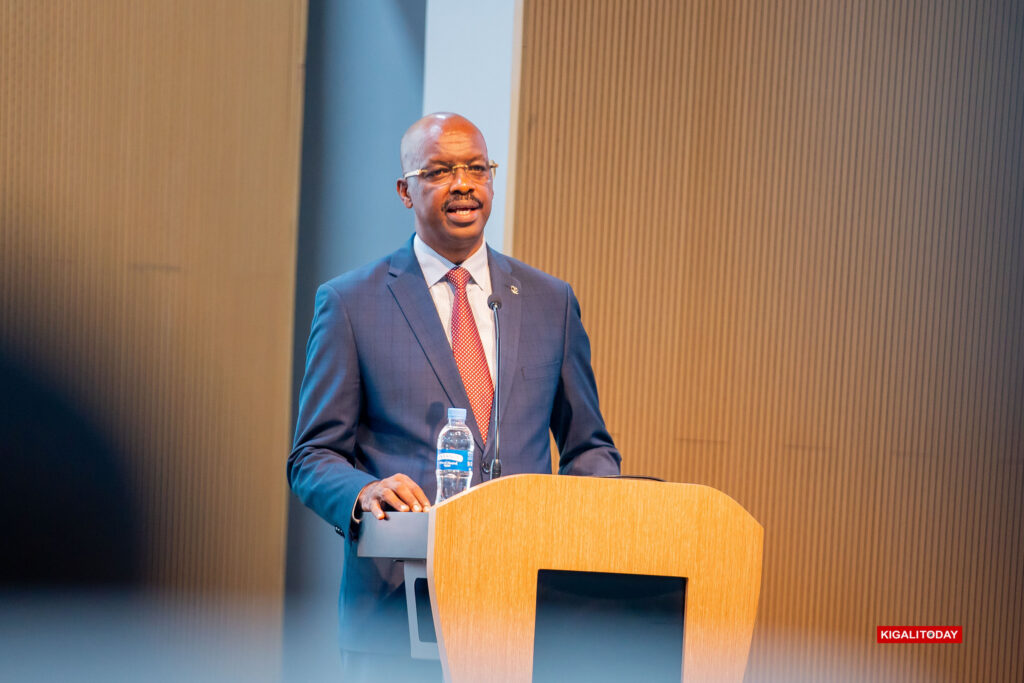
PSF Chairperson François Twagirumukiza speaking at the retreat.
Fragmented value chains, where multiple constraints combine to slow economic activity and undermine competitiveness, continue to hamper the growth and survival of private businesses.
The minister identified limited access to affordable financing, shortages of raw and packaging materials, high energy costs, and gaps in specialized technical skills as key challenges requiring urgent intervention.
Participants noted that these issues should not be viewed as isolated obstacles but as interconnected bottlenecks affecting the broader economy.
Robert Rukundo, Chairperson of the Association of Horticulture Exporters in Rwanda, said sustainable growth depends on stronger collaboration between the government and the private sector.
“It is very difficult for the private sector to operate in isolation without government support. The private sector brings efficiency and speed, while the government provides regulation and helps connect businesses to global markets,” he said.
Rukundo said the goal is not simply to identify challenges but to address the barriers that continue to constrain business growth and investment.
“The purpose of this meeting is to ensure that existing challenges and hindrances are either eliminated or significantly reduced,” he said.
Participants agreed that improving economic performance will require stronger linkages among producers, processors, financiers, regulators and exporters, enabling value chains to function more efficiently from production to market.

From Coordination to Performance
The role of the Private Sector Federation (PSF) is increasingly being viewed through its ability to transform into a dynamic platform—one that aggregates diverse business interests and translates them into structured, high-impact engagement with the state.
PSF Chairperson François Twagirumukiza noted that the retreat provides a timely blueprint to better align the Federation’s operational focus with national economic goals.
“We hope that through this retreat, we will gain a deeper understanding of how to align the Federation’s work with national priorities, build a stronger and more effective organization, and foster productive partnerships,” Twagirumukiza said. He emphasized that the overarching goal is to generate actionable, immediate outcomes to accelerate national development.
Rather than managing economic friction after the fact, both policymakers and business leaders are shifting toward a proactive approach—seeking early-warning systems to identify and resolve bottlenecks across regulation, financing, infrastructure, and skills development before they stifle growth.
To support this shift, targeted government interventions are being funneled into expanding SME access to capital, scaling technical and vocational training, cutting regulatory red tape, and accelerating digital adoption across local business operations.
Ultimately, Rwanda’s economic trajectory is already clearly mapped out through NST2 and Vision 2050. The defining challenge moving forward is no longer the roadmap itself, but ensuring that institutions, policies, and private enterprises operate with the synchronization and velocity required to turn abstract targets into measurable market results.