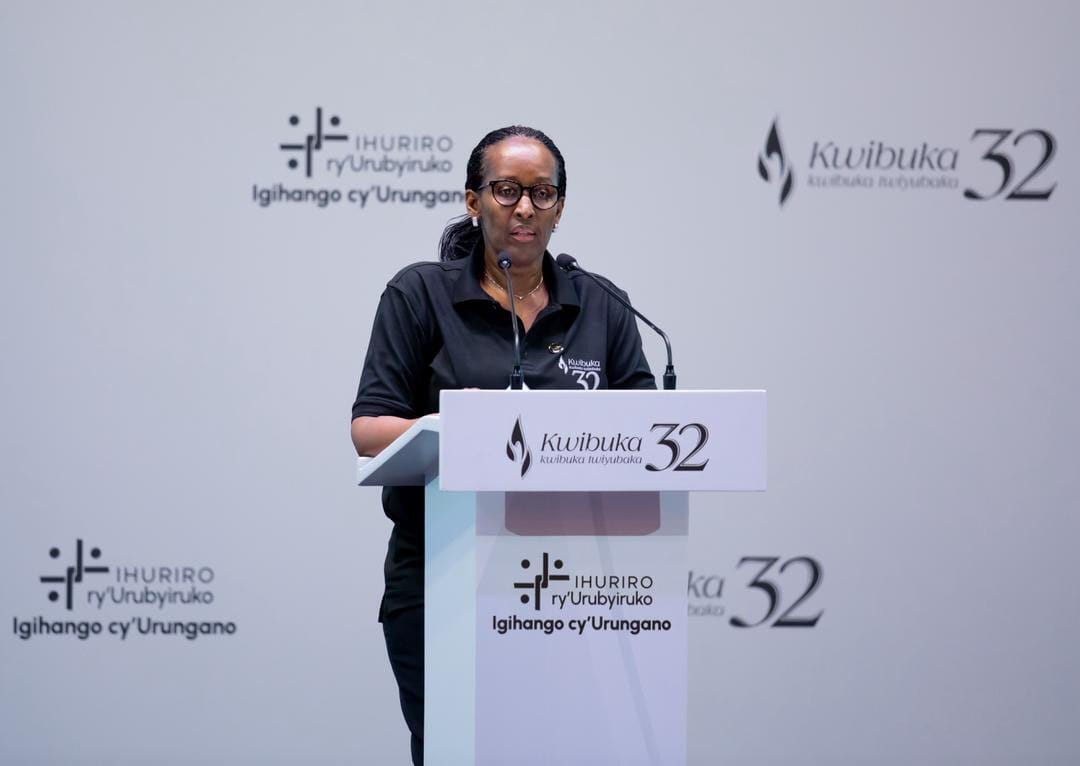
First Lady Jeannette Kagame addresses thousands of young people during the Igihango cy’Urungano (Generation Covenant) forum at the Intare Conference Arena in Rusororo.
KIGALI — First Lady Jeannette Kagame has urged Rwandan youth to take an active role in defending historical truth, warning that the preservation of collective memory increasingly depends on how the younger generation engages with information in the digital space.
Addressing thousands of young people during the Igihango cy’Urungano (Generation Covenant) forum at the Intare Conference Arena in Rusororo, she emphasized that remembrance alone is no longer sufficient without critical awareness and a deeper understanding of history.
“You have a strong foundation on which to build a better country. The responsibility of your generation is not only to remember, but also to understand, question, and protect the truth wherever it is challenged,” she told participants.
The forum brought together students, young professionals, entrepreneurs, artists, athletes, youth with disabilities, members of faith-based organizations, political youth wings, social media influencers, and Rwandans studying or living abroad who are currently in the country.
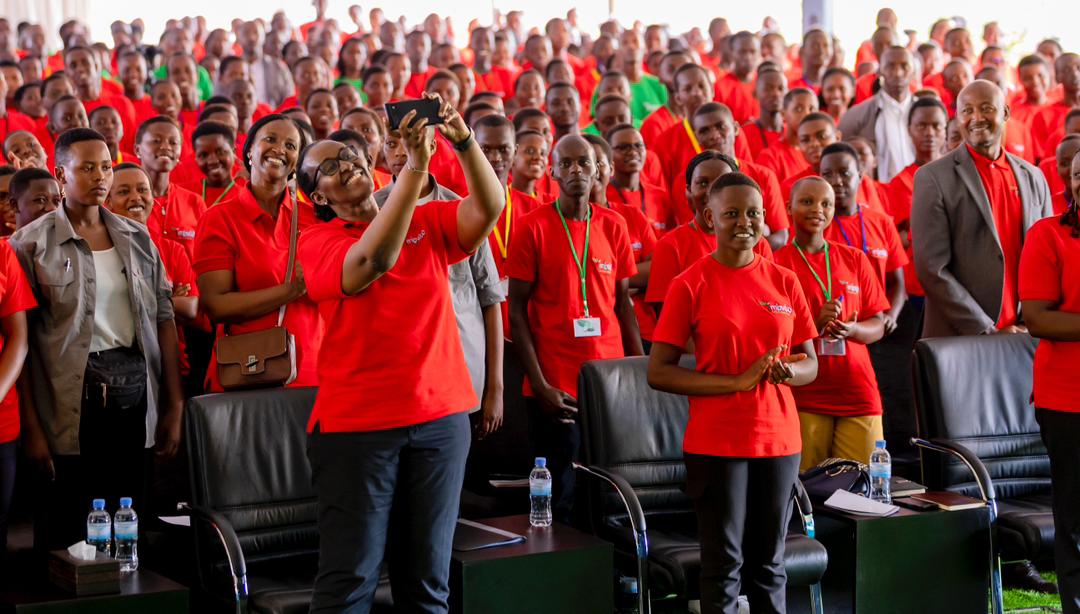
First Lady Jeannette Kagame shares a selfie moment with young people. [File Photo]
Jeannette Kagame cautioned that digital platforms have become a critical space where historical narratives are shaped — and, at times, distorted.
“In a world where information travels faster than truth can be verified, your greatest strength must be critical thinking. Do not allow misinformation or distorted narratives to define your understanding of history,” she said.
She urged young people to become active defenders of facts and unity rather than passive consumers of online content.
During the forum, Dr. Bizimana provided historical context on the causes of the Genocide against the Tutsi, pointing to exclusionary policies under the governments of Grégoire Kayibanda and Juvénal Habyarimana, which he said institutionalized discrimination and deepened ethnic divisions.
He noted that such policies contributed to the displacement of Tutsi communities and created conditions that eventually culminated in the 1994 Genocide against the Tutsi.
“The genocide did not occur suddenly. It was the result of a long process of exclusion, propaganda, and systematic division,” he said.