




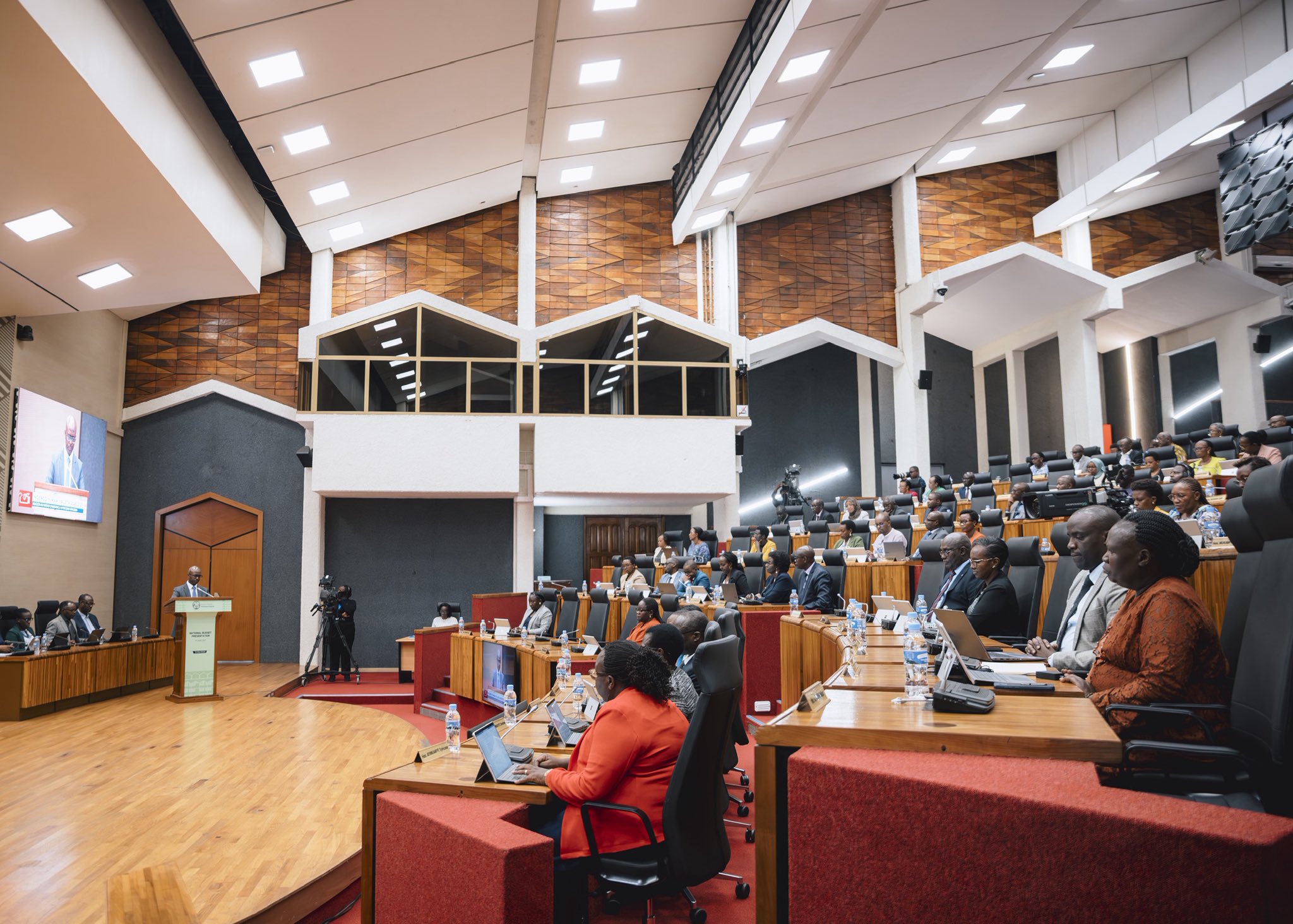
Finance Minister Yusuf Murangwa arriving at Parliament on Thursday present the 2026-2027 framework to joint session of the House
KIGALI — The government has nearly doubled its fertilizer subsidy budget to RwF64 billion, as it moves to protect farmers from rising global prices and potential supply disruptions linked to the ongoing conflict in the Middle East.
Finance and Economic Planning Minister Yusuf Murangwa announced the increase while presenting the 2026/27 national budget to Parliament, describing food security as one of the government’s highest priorities amid growing uncertainty in international markets.
The revised allocation represents a sharp increase from the Rw 39 billion put into the subsidy scheme in the previous financial year. This is a 64.1% rise in spending to help farmers.
The decision comes as global fertilizer prices continue to rise due to tensions in the Middle East, which have disrupted major shipping routes and increased costs across global supply chains.
Murangwa told lawmakers that ensuring farmers have access to fertilizer is critical to maintaining national food production and preventing future food shortages.
“As long as we have food, other challenges are manageable,” he said, emphasizing that the government was prepared to invest heavily in protecting agricultural production despite broader fiscal pressures.
The minister explained that the subsidy increase is intended to shield farmers from the impact of international market shocks and ensure that fertilizer supplies remain available throughout the upcoming farming seasons.
The move signals a significant policy choice by the government, which is balancing fiscal consolidation efforts with growing concerns about food security.
Rwanda, like many countries that depend on imported fertilizers, remains vulnerable to disruptions in global markets, particularly as the Middle East crisis affects shipping through key international trade corridors.
The increase also reflects a rapid reassessment of market conditions. When the Budget Framework Paper was presented in May, the government had projected fertilizer subsidies of RwF25.4 billion, while also carrying approximately RwF29.4 billion in unpaid arrears related to seeds and fertilizers supplied during the 2026 Season B agricultural campaign.
However, worsening global conditions and continued price increases prompted the government to substantially revise its support package before the final budget presentation.
The fertilizer subsidy was specifically cited as one of the major factors behind the growth of Rwanda’s overall national budget for the 2026/27 fiscal year, which now stands at RwF7,796.3 billion ($5.4 billion), representing a 12.1 percent increase compared to the previous year.
The agriculture sector remains a major beneficiary of government spending. The Ministry of Agriculture and Animal Resources has been allocated RwF352.5 billion, funding that will support a range of programs including irrigation infrastructure, post-harvest storage facilities, strategic grain reserves and agricultural inputs.
The government’s decision comes as international financial institutions warn that higher energy and fertilizer costs are likely to weigh on economic growth across many developing countries.
The International Monetary Fund recently approved a $250 million credit facility for Rwanda, noting that rising oil and fertilizer prices are creating additional inflationary and fiscal pressures.
Despite these challenges, officials argue that protecting agricultural production is essential to sustaining economic stability and safeguarding household incomes, particularly in rural areas where farming remains the primary source of livelihood.
By nearly doubling fertilizer subsidies, the government is effectively betting that maintaining agricultural productivity will help shield the country from external shocks and prevent food insecurity at a time of growing uncertainty in global markets.
Whether that investment proves sufficient will depend largely on how the international situation evolves in the months ahead. For now, Kigali appears determined to ensure that Rwanda’s farmers have the inputs they need to keep the country fed.
