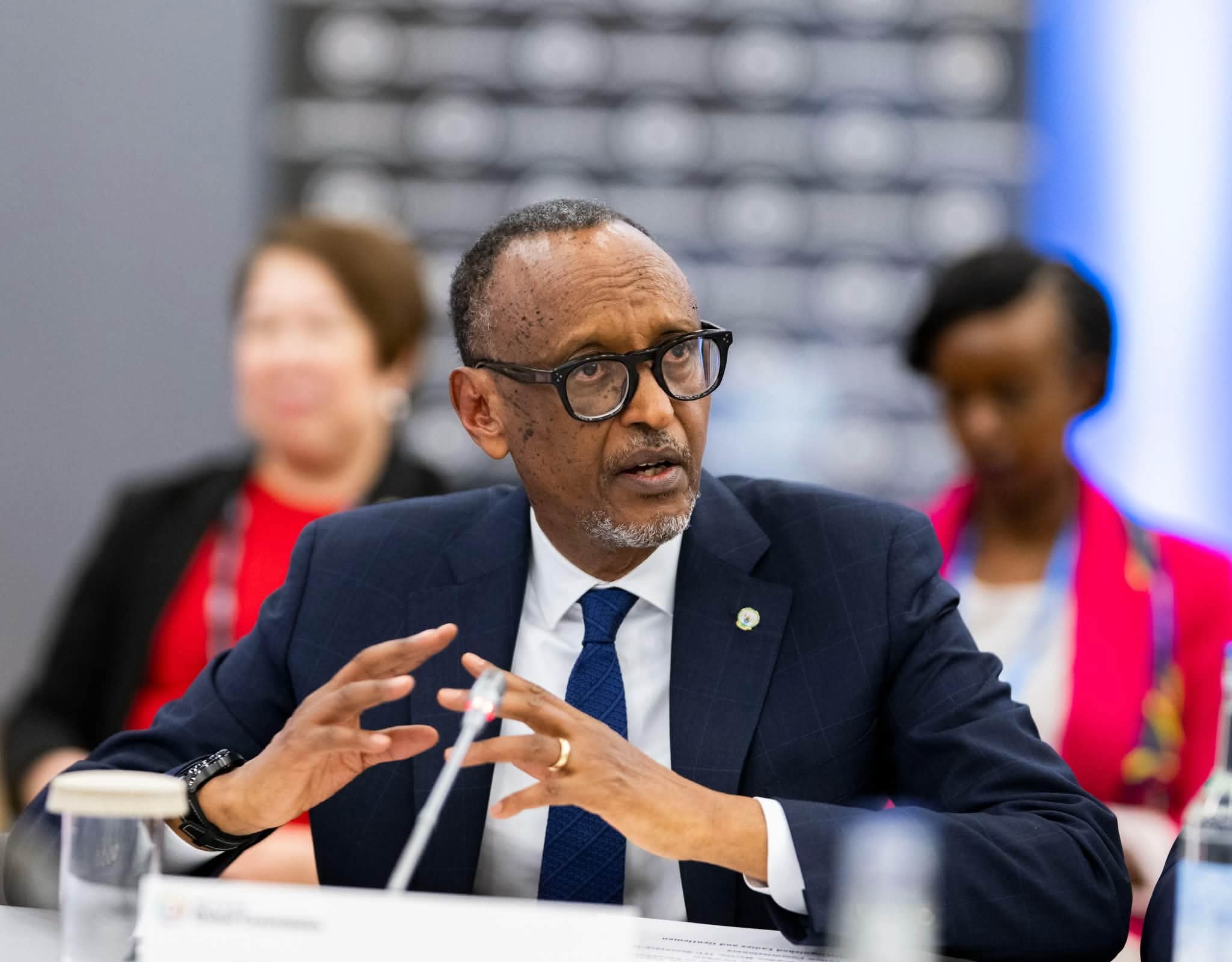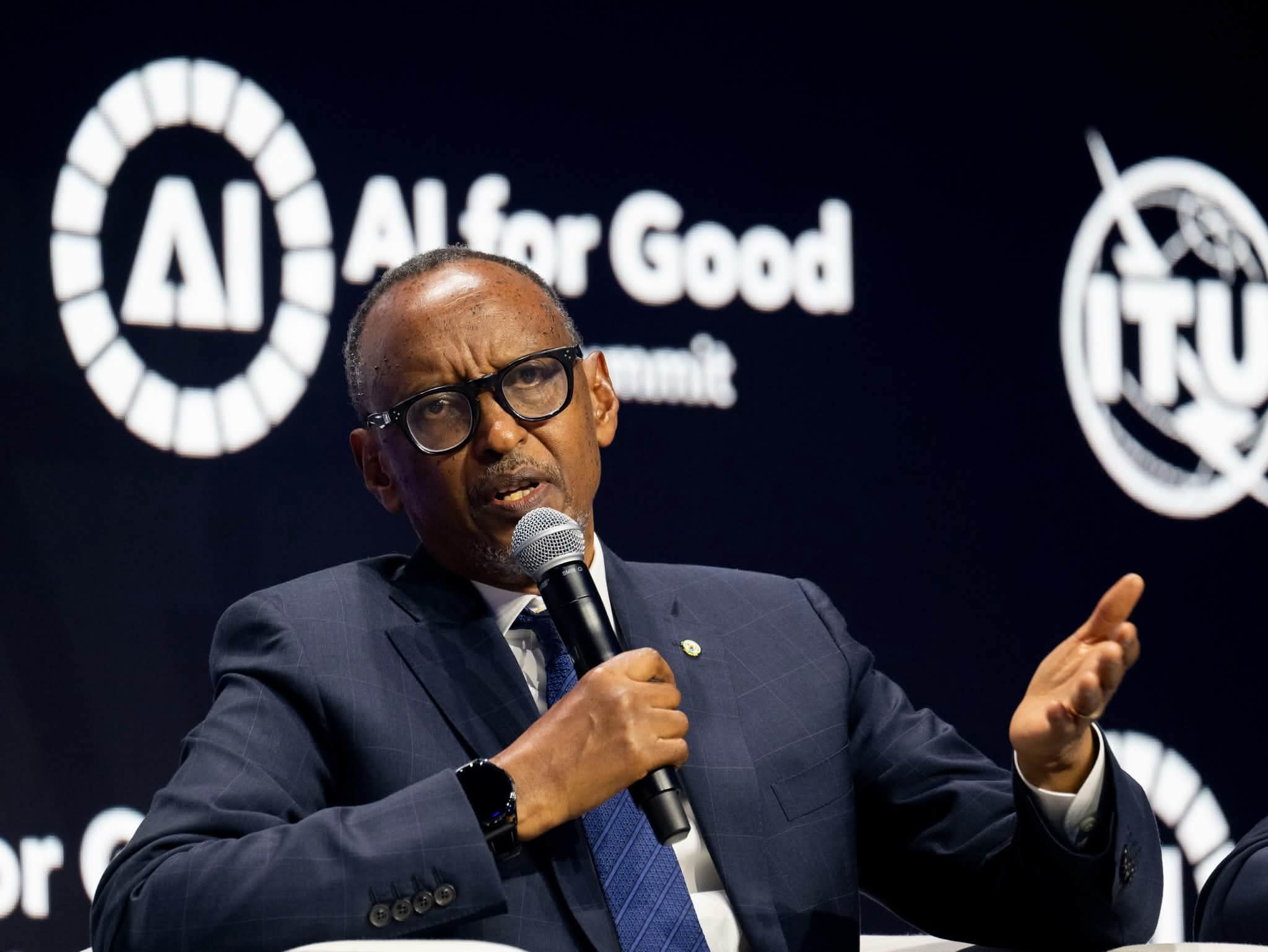
GENEVA — As governments race to shape the future of artificial intelligence, President Paul Kagame of Rwanda on Tuesday urged world leaders and technology companies to resist treating the technology as another arena for geopolitical rivalry, instead calling for closer cooperation to ensure its benefits are shared more broadly.
Speaking at the launch of the AI for Good Global Commission during the AI for Good Global Summit in Geneva, Kagame said the success of artificial intelligence would depend less on technological breakthroughs than on the willingness of governments and businesses to work together.
“It is always going to have results insofar as we can bring the public sector and private sector together,” Kagame said during a fireside discussion with International Telecommunication Union Secretary-General Doreen Bogdan-Martin and Salesforce Chief Executive Marc Benioff, who co-chairs the new commission alongside the Rwandan leader.

The commission, launched by the U.N.’s International Telecommunication Union, seeks to bring together governments, technology companies, investors and civil society to help guide the development of artificial intelligence at a time when countries are increasingly competing for dominance in the rapidly evolving field.
The initiative draws inspiration from the Broadband Commission, established in 2010, which helped expand internet connectivity by framing broadband not simply as a technological challenge but as a cornerstone of economic development.
Kagame, who has served as co-chair of that commission for the past 15 years, said its experience showed that sustained collaboration between governments and industry could deliver measurable progress, including in Africa, where digital connectivity has expanded significantly over the past decade.
“The Broadband Commission actually delivered results,” he said, adding that improved connectivity had enabled broader access to services across the continent.
Kagame acknowledged that he had initially intended to step back after years of serving on the Broadband Commission but said he agreed to co-chair the new body because artificial intelligence presented an opportunity too significant to ignore.
“I thought I needed to take a break,” he said with a smile. “But this is a very good task to carry out.”
The new commission, he said, should build on that legacy by ensuring artificial intelligence contributes to development rather than widening global inequalities.
Bogdan-Martin described the commission as an attempt to answer what she called the defining question of the next technological era: how to ensure artificial intelligence benefits everyone, not only the countries and companies leading its development.
“Our ambition is not simply to advance AI adoption,” she said. “It is to help ensure that AI expands opportunity, strengthens trust and delivers meaningful benefits for people everywhere.”
Benioff argued that artificial intelligence represented a technological shift unlike previous digital revolutions and required broader dialogue than conventional regulation alone could provide.
“This is not a regulatory body. This is not a rulemaking body,” he said. “This is a conversation.”
He added that the commission’s role would be to encourage governments, businesses and researchers to confront questions surrounding the technology before its rapid evolution outpaces public understanding.
“Technology is never good or bad,” Mr. Benioff said. “It’s what we do with the technology that matters.”
The launch comes as countries around the world are accelerating investments in artificial intelligence while struggling to agree on common standards for governance, transparency and safety.
Those debates have increasingly centered on whether AI will deepen existing inequalities by concentrating computing power, data and talent in a handful of countries and corporations.
For Rwanda, which has positioned itself as a regional leader in digital innovation, participation in the commission reflects a broader ambition to ensure African countries help shape the global conversation on artificial intelligence rather than merely adopt technologies developed elsewhere.
Earlier at the summit, Kagame in speech, urged governments to invest in digital infrastructure, education and AI governance, arguing that Africa’s young and rapidly growing workforce could become an important contributor to the global AI economy if given greater access to technology and skills.