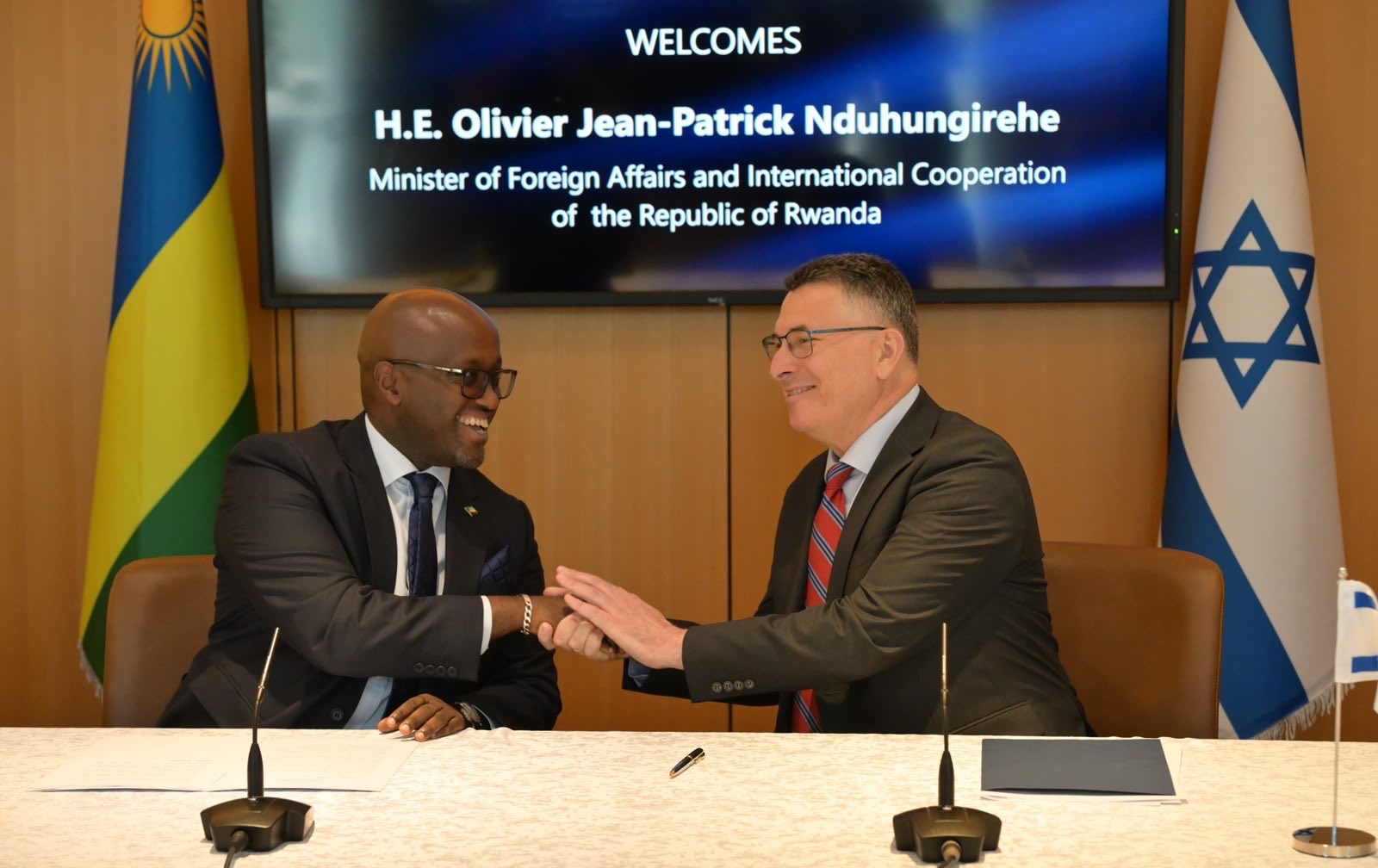
Rwanda’s Minister of Foreign Affairs and International Cooperation, Olivier Nduhungirehe, and Israel’s Minister of Foreign Affairs, Gideon Sa’ar signing agreements in Jerusalem.
JERUSALEM – Rwanda and Israel have deepened their bilateral ties with the signing of two agreements on education and development, turning a relationship built on shared histories into one increasingly focused on innovation, knowledge and the next generation.
Rwanda’s Minister of Foreign Affairs and International Cooperation, Olivier Nduhungirehe, and Israel’s Minister of Foreign Affairs, Gideon Sa’ar signed the agreement in Jerusalem.
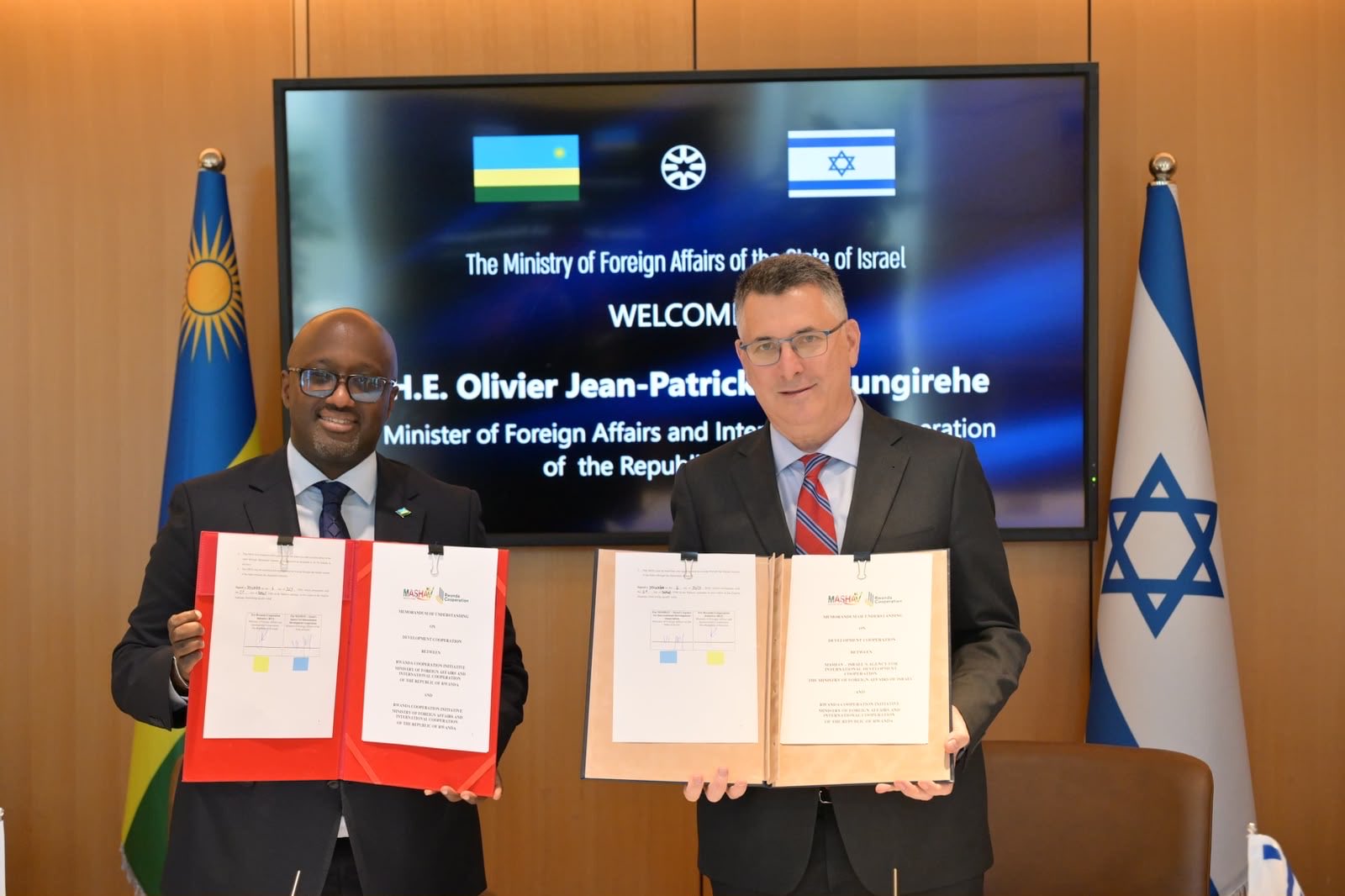
The agreement seeks to strengthen cooperation in basic education, ICT, Technical and Vocational Education and Training (TVET), higher education and scientific research.
A second memorandum of understanding links Israel’s international development agency, MASHAV, with the Rwanda Cooperation Initiative to expand collaboration on development programs and capacity building.
The agreements build on growing cooperation between Kigali and Jerusalem in areas such as agriculture, education, technology and professional training, reflecting Rwanda’s drive to build a knowledge-based economy through strategic international partnerships.
But beyond the documents signed, both ministers used the occasion to reflect on a deeper connection between their countries, one shaped by histories of genocide and a shared determination to rebuild.
“Both our peoples have suffered the worst tragedies,” Saar said, referring to the Holocaust and the 1994 Genocide against the Tutsi in Rwanda.
“Different histories, different regions, pure evil. Yet our nations did not allow tragedy to define our future. Instead, we chose to rebuild.”
He said that experience had created “a unique moral and natural bond” between Israel and Rwanda, adding that cooperation in remembrance and education remains an important pillar of the relationship.
After touring Jerusalem’s Old City and visiting Yad Vashem, Israel’s Holocaust memorial, Nduhungirehe reflected on first learning about the Holocaust as a child through films before later witnessing a similar tragedy in his own country.
“I thought it was fiction. But then a similar tragedy happened in my own country,” he said of the Holocaust.
The experience, he said, reinforced the importance of preserving historical memory while ensuring that nations are defined not by their darkest moments, but by what they build afterwards.
“Rwanda and Israel share strong ties that go beyond diplomacy. What defines us is the resilience of our peoples and our determination to turn adversity into progress, to turn the tragedy of genocide into socio-economic transformation, into resilience and into innovation,” Nduhungirehe said.
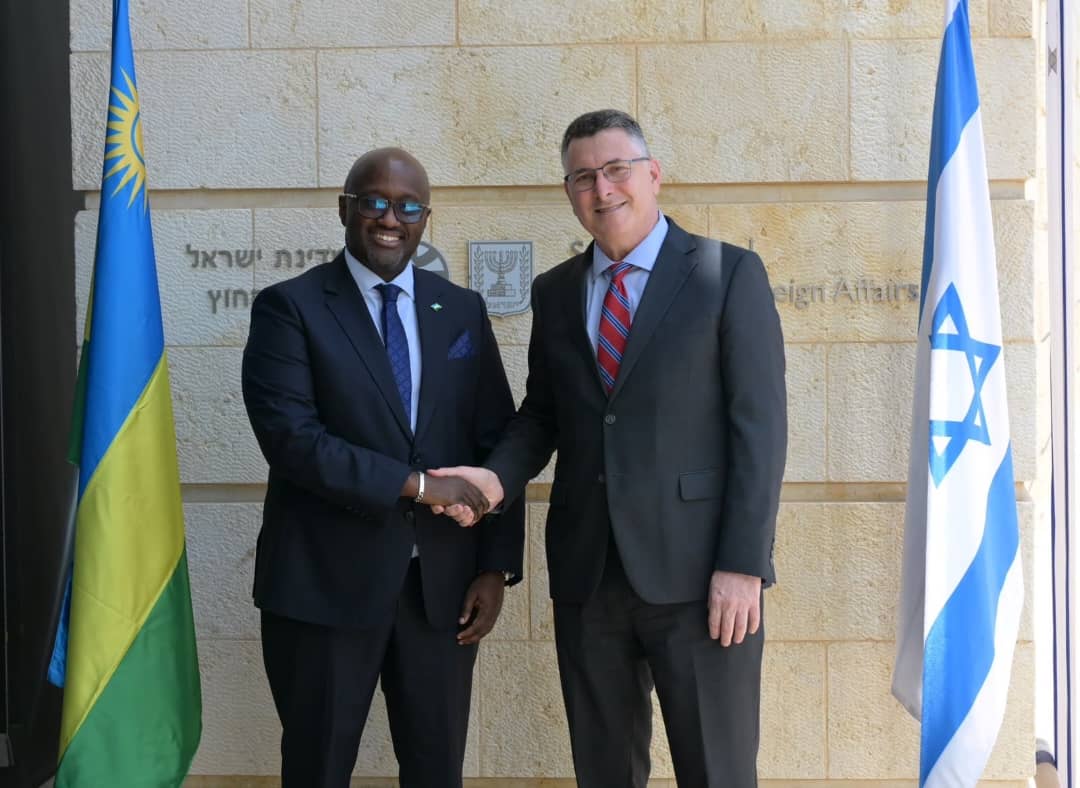
The new agreements are expected to expand academic exchanges, training programs and scientific collaboration, creating new opportunities for students, researchers and institutions in both countries.
Saar welcomed the peace agreement between Rwanda and the Democratic Republic of Congo and reaffirmed Israel’s support for its implementation, while both sides emphasized dialogue and international cooperation in addressing regional challenges.
The agreements represent another step in leveraging international partnerships to strengthen human capital and innovation.
This represents a shared belief that the strongest response to the tragedies of the past lies in investing in education, knowledge and the future.