

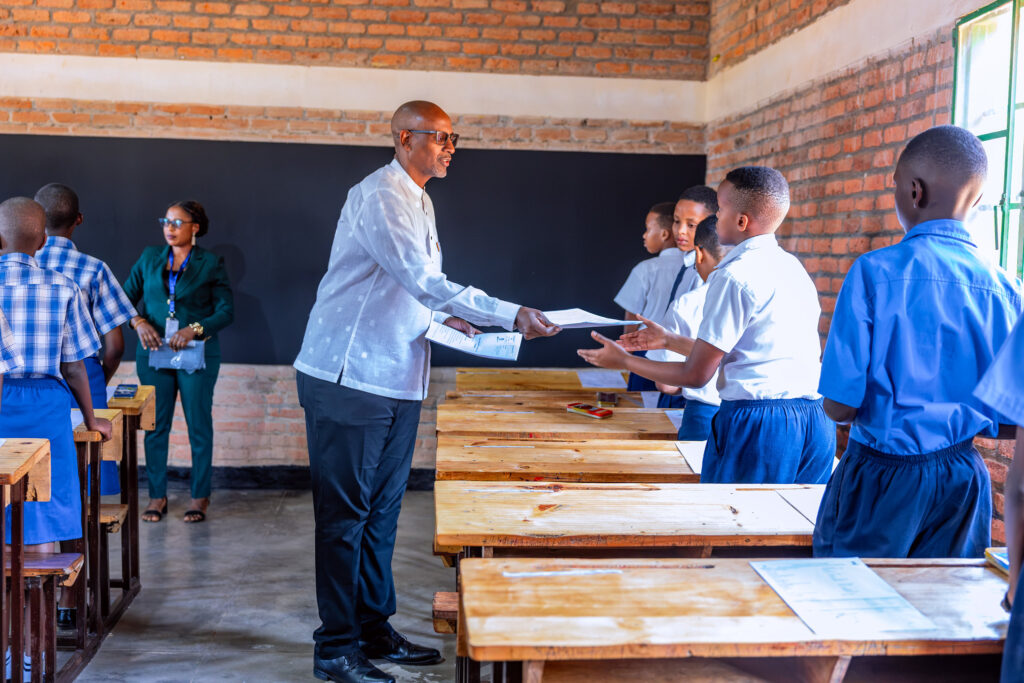
Education Minister Joseph Nsengimana distributing examination papers during this year’s primary leaving examinations.
KIGALI – Rwanda has spent years expanding access to education, building classrooms, recruiting teachers and ensuring that millions of children have a place in school.
Today, about 34 percent of the country’s population is enrolled in primary secondary and university education, a remarkable achievement by regional standards. But the Ministry of Education now believes the country’s next challenge begins after students enter the classroom.
Recent national learning assessments have revealed that while many pupils can read, far fewer fully understand what they are reading.
In Kinyarwanda, 71 percent of learners assessed could read, but only 44 percent demonstrated full comprehension. In English, 63 percent could read, yet only 24 percent fully understood the text and context.
Education Minister Joseph Nsengimana says those findings, together with continuous classroom observations, have shaped one of the most comprehensive education reforms Rwanda has undertaken in recent years.
“There is an assessment of learning achievements in Rwandan schools and continuous collection of anecdotal data. It is these findings that have informed the changes we are introducing in the next academic year,” he said.
Rather than introducing isolated policy changes, the ministry is transforming teacher training, the school day, school financing and discipline around one overriding objective of improving learning outcomes.
Better Teachers for Better Learning
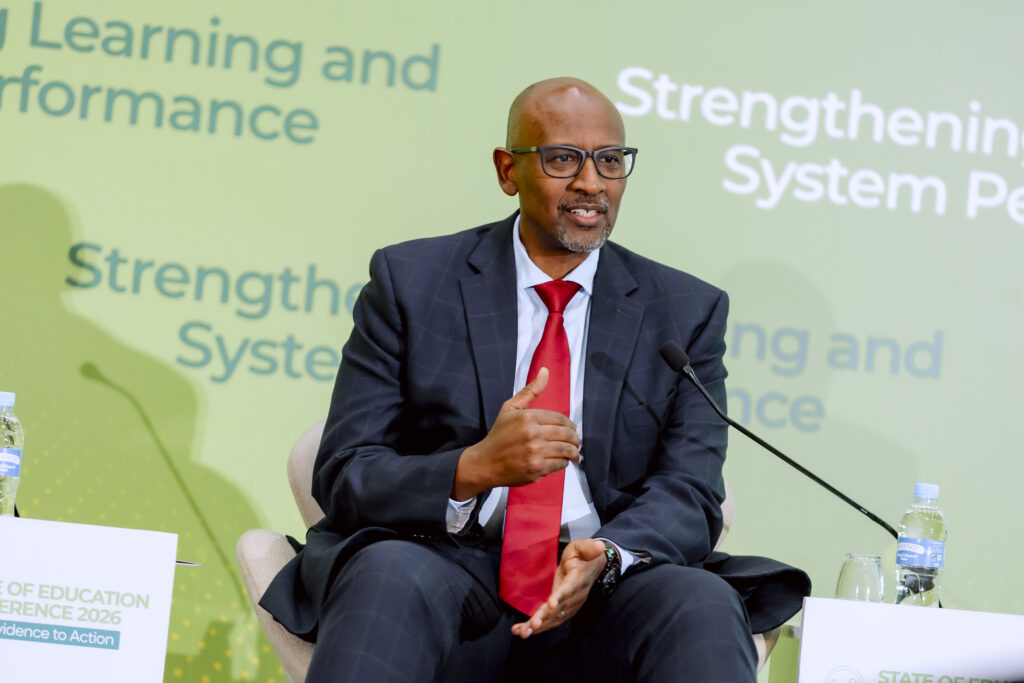
Education Minister Joseph Nsengimana continuous classroom observations, have influenced new education reforms beginning with the upcoming academic year.
The first reform focuses on the people leading classrooms. Over the next ten years, Rwanda will progressively upgrade the qualifications of primary school teachers through a continuous professional development program.
Teachers who currently entered the profession with Advanced Level qualifications will first upgrade to a university diploma before eventually earning bachelor’s degrees.
The program will be implemented in two five-year phases to ensure schools continue operating while teachers upgrade their qualifications.
The approach reflects the ministry’s belief that improving student performance begins with strengthening the quality of teaching.
A School Day Designed Around Learning
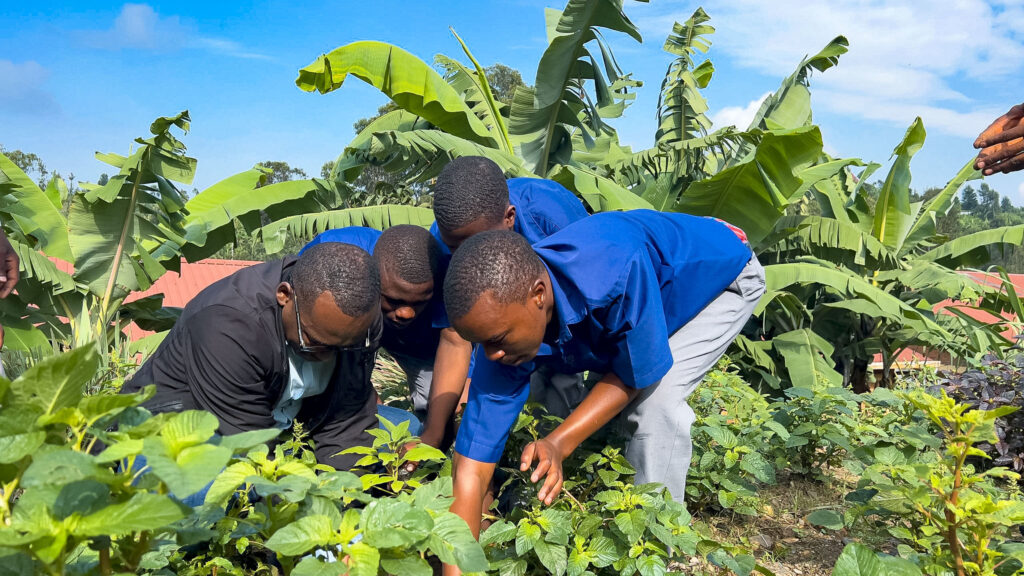
Instead of extending traditional classroom instruction into the late afternoon, students will spend the remaining hours in co circular activities basing on what they learn.
The ministry is also rethinking how students spend their day. Beginning in the next academic year, regular lessons in primary and secondary schools will run from 8:30 a.m. to 3:30 p.m.
Instead of extending traditional classroom instruction into the late afternoon, students will spend the remaining hours in activities such as ICT, debates, clubs and programs promoting Rwandan culture and values.
Nsengimana said the decision was informed by evidence that many students struggle to concentrate after long hours of conventional lessons. The new timetable is intended to reinforce learning through practical engagement rather than simply increasing teaching hours.
Teachers will also gain dedicated preparation time every Friday afternoon after students leave at 3:30 p.m., allowing them to improve lesson planning and classroom delivery as well as undertake their continuous professional development programs throughout the weekend.
Investing in Quality
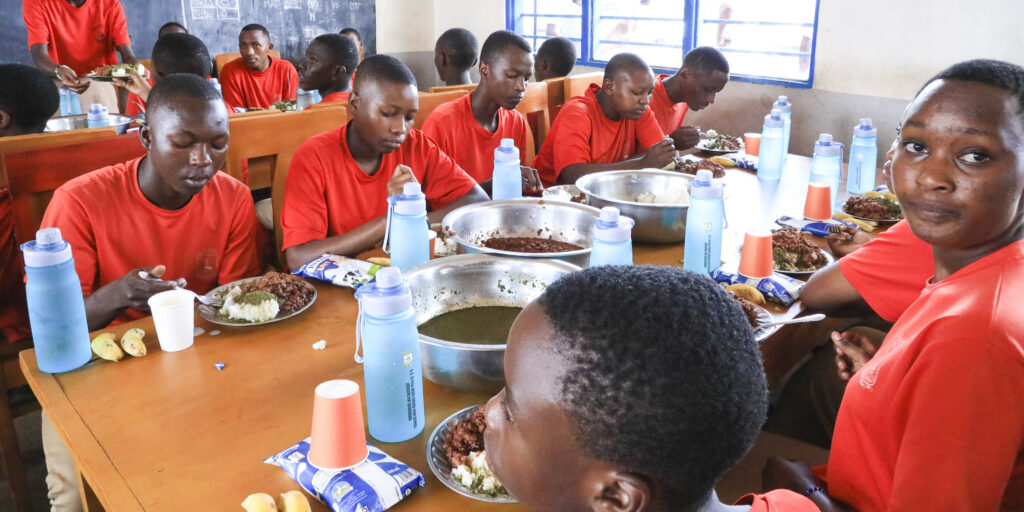
Additional funding will help schools maintain infrastructure, purchase learning materials and improve the overall learning environment.
The reforms also acknowledge that better learning requires better-resourced schools.
Beginning in January 2027, government operational funding to schools will increase by 65 percent, while parents’ contributions will also rise for the first time in five years. The adjustments include higher fees for public nursery, primary, secondary day and boarding schools.
“The government provides operational grants, contributes to school feeding and parents also make a contribution. But when we compare the resources schools receive with current market prices, they simply do not match,” the minister said.
The reforms place greater emphasis on shared responsibility for education by increasing parental contributions beginning in January 2027.
Parents of children in public nursery and primary schools will pay Rwf 2,000 per term, up from Rwf 975, while fees for public secondary day scholars will rise from Rwf 19,500 to Rwf 24,000. Parents of boarding students will contribute Rwf 110,000 per term, compared to the current Rwf 85,000.
The Minister explained that the additional funding will help schools maintain infrastructure, purchase learning materials and improve the overall learning environment.
Raising Standards Beyond Academics
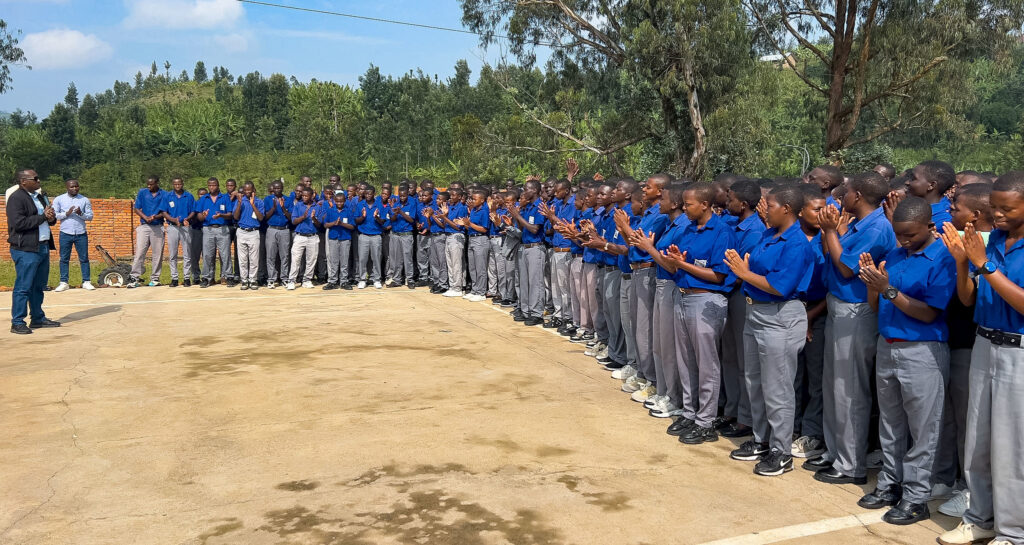
Improving education will require more than government policy alone, according to the Ministry of education.
The reforms extend beyond teaching and financing to the culture within schools. Schools will strictly operate as alcohol- and drug-free zones, with students, teachers or other staff found using prohibited substances facing immediate dismissal.
Serious violence, including assaults on teachers, and examination malpractice involving mobile phones will also attract tougher sanctions.
At the same time, the minister stressed that discipline would be accompanied by rehabilitation, with affected students receiving support through collaboration with other government institutions and community partners.
For Nsengimana, improving education will require more than government policy alone. He called on parents, teachers and communities to embrace the reforms, arguing that education is a shared national responsibility.
Rwanda’s education system has spent years ensuring that children get into school. The new reforms suggest the country’s next ambition is to ensure that every child who walks into a classroom leaves it with the knowledge, understanding and skills needed to succeed.