



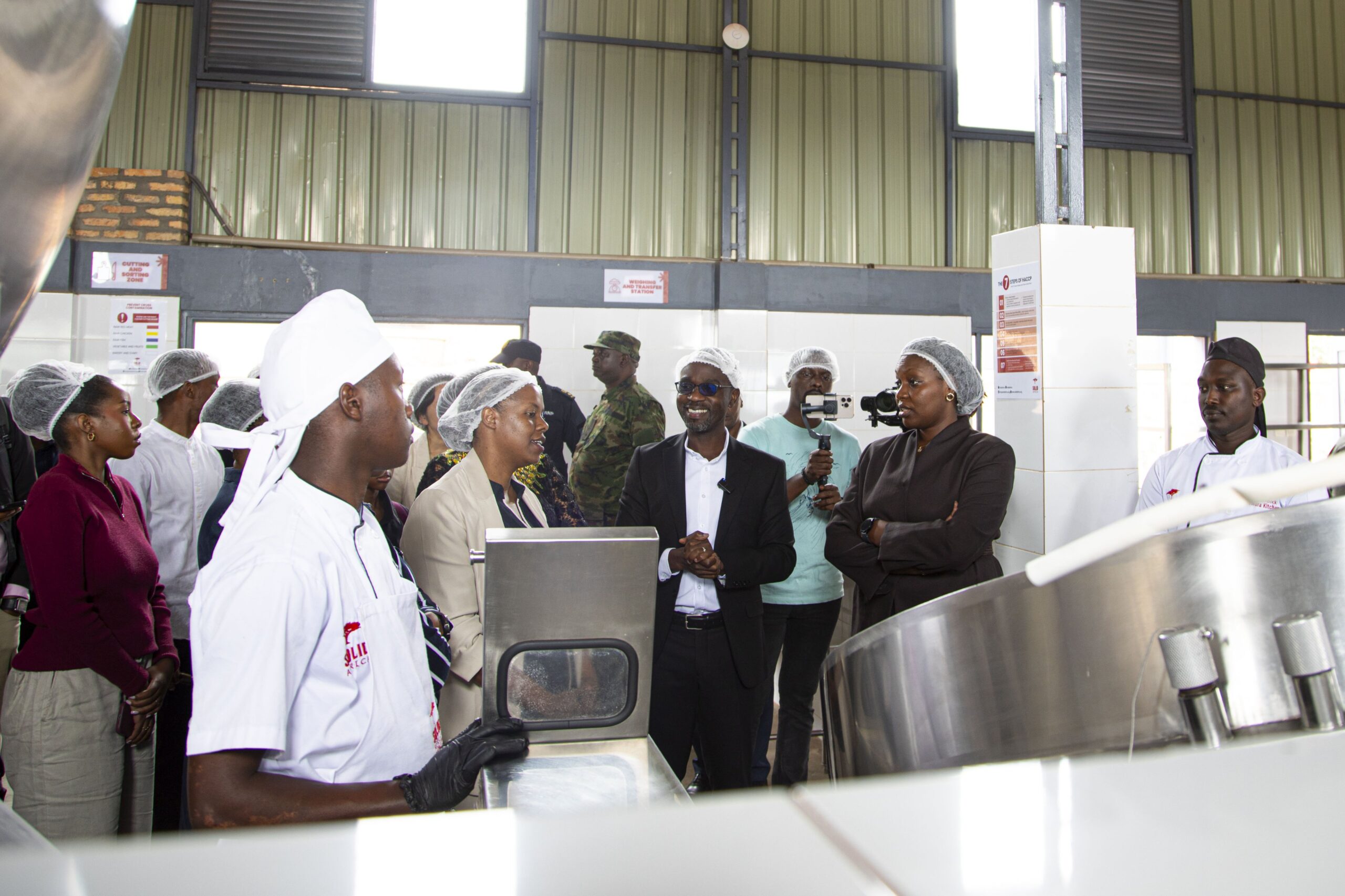
RWAMAGANA, Rwanda – The Rwandan government has begun testing a centralised school meal system that prepares food in large quantities and delivers it to schools – a mechanism similar to ones operating in Japan and South Korea.
The shift, says education ministry, is also aimed at reducing reliance on firewood, improving nutrition and lowering the cost of school feeding.
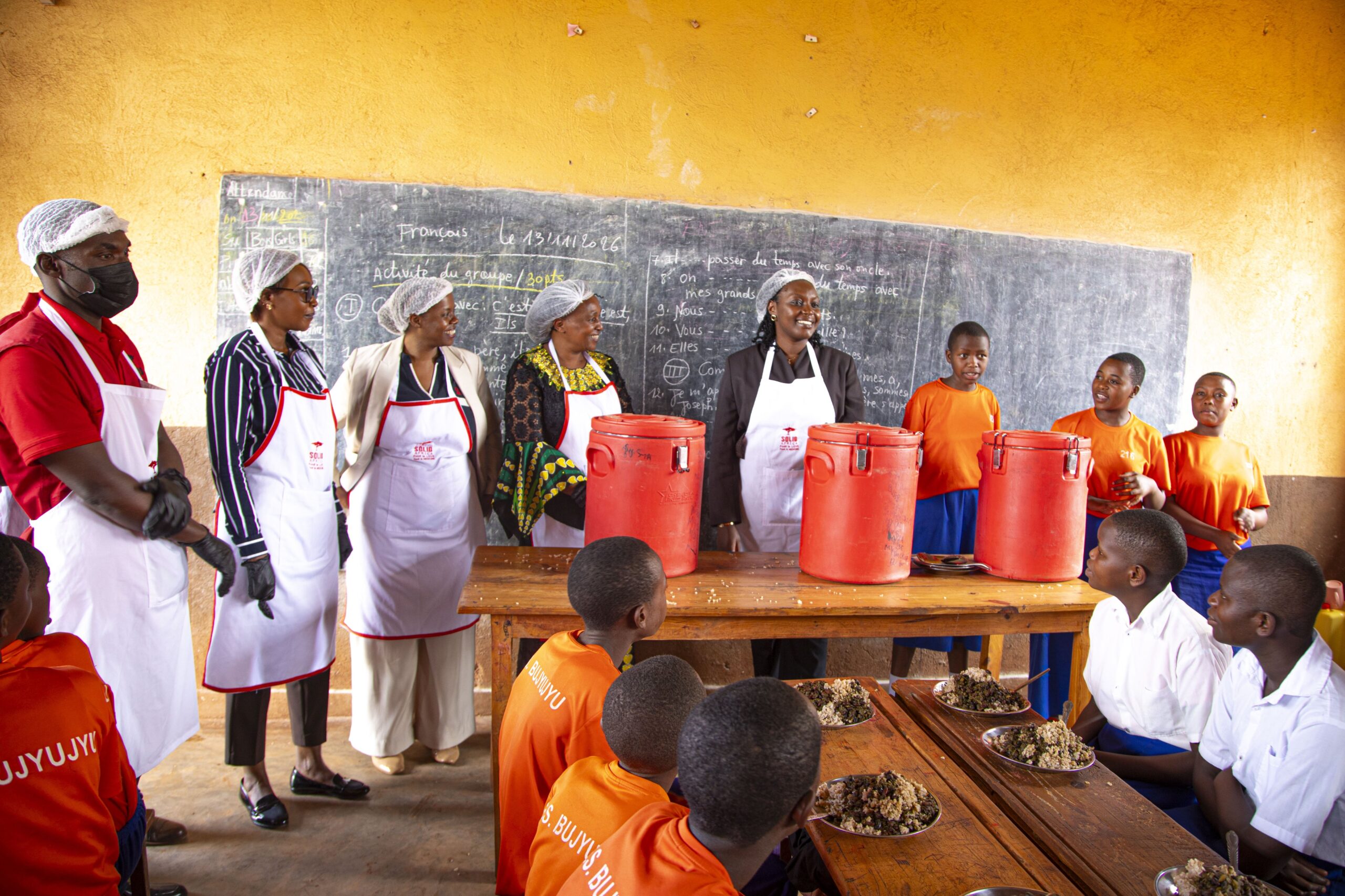
The pilot launched Friday serves 15,014 students and 266 teachers across five public schools in Rwamagana District.
Meals are prepared at a central kitchen and transported to the schools in electric vehicles, replacing the need for each institution to cook its own food.
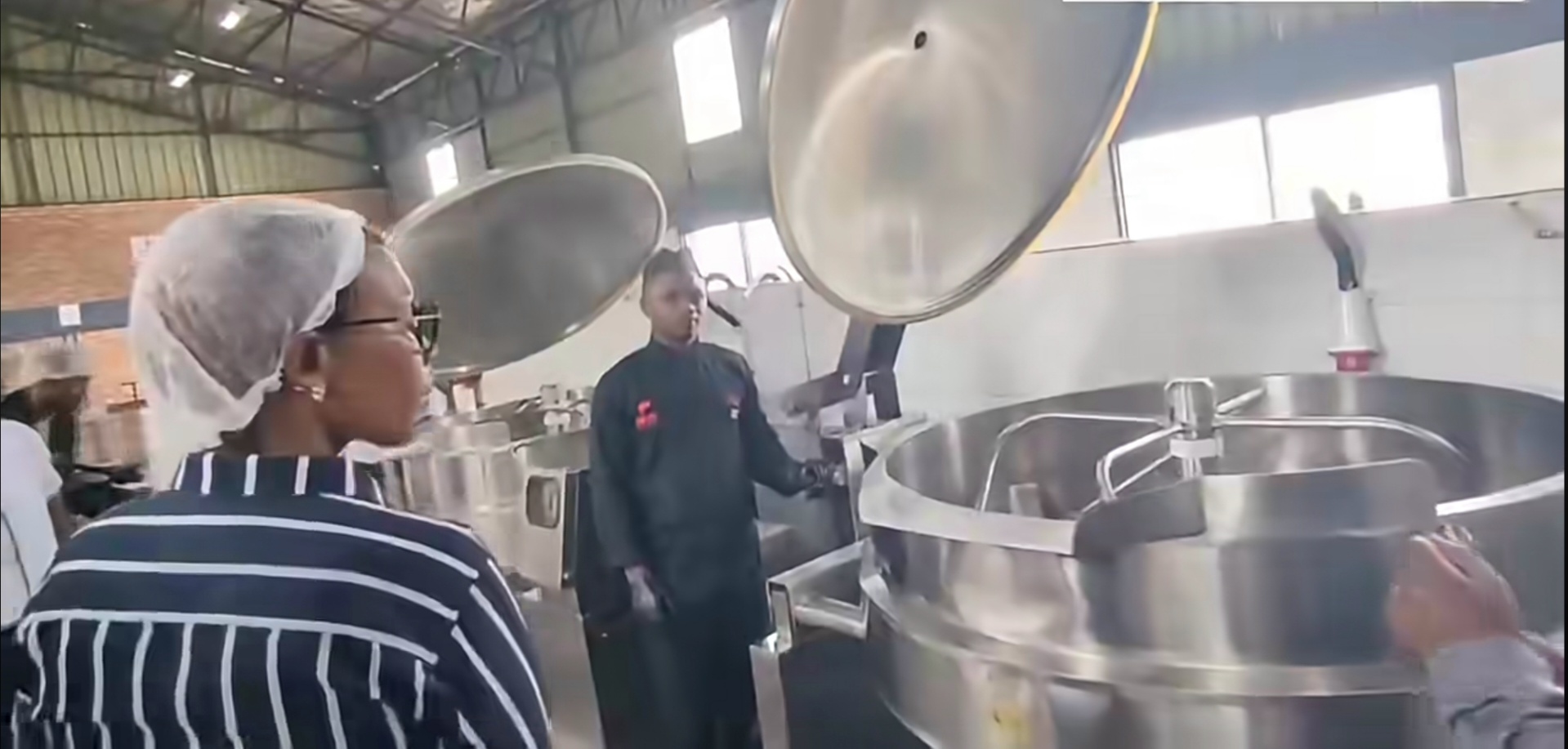
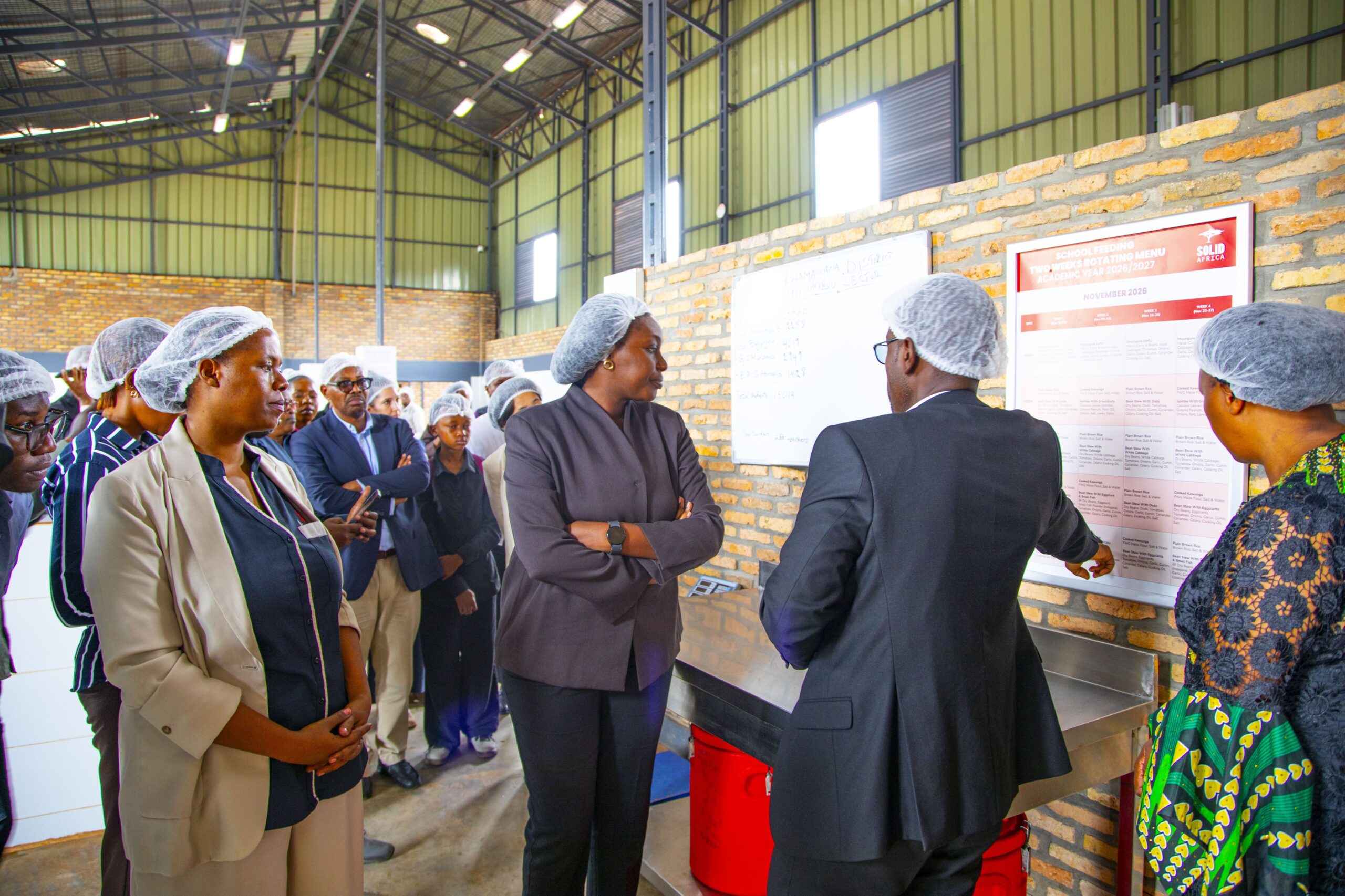
The facility, located at GS Bujyujyu in Muyumbu Sector, was inaugurated on Friday, November 13, by the Minister of State for Education, Claudette Irere, alongside representatives of Solid’Africa, the local social enterprise implementing the project.
The arrangement follows a hub-and-spoke model also used in Japan, where municipal school lunch centres, known as kyushoku centres, prepare meals for distribution to several schools.
Japan has developed this system alongside school-based kitchens as part of a nationwide school feeding programme.
The model allows large quantities of food to be prepared in specialised facilities before being transported to schools.
It also supports centralised nutritional planning and hygiene management. In Japan, school meals are considered part of education, with students often serving food to classmates and eating together in their classrooms.
South Korea also has a nationwide school meal system, although its arrangements are not identical to Japan’s. Its schools generally retain responsibility for meal operations, while procurement and distribution systems can involve centralised institutions.
Rwanda’s pilot adapts some of these principles to local conditions. Its five participating schools are GS Bujyujyu, GS Muyumbu, GS Muyumbu B, GS Murama and GS Gitagara.
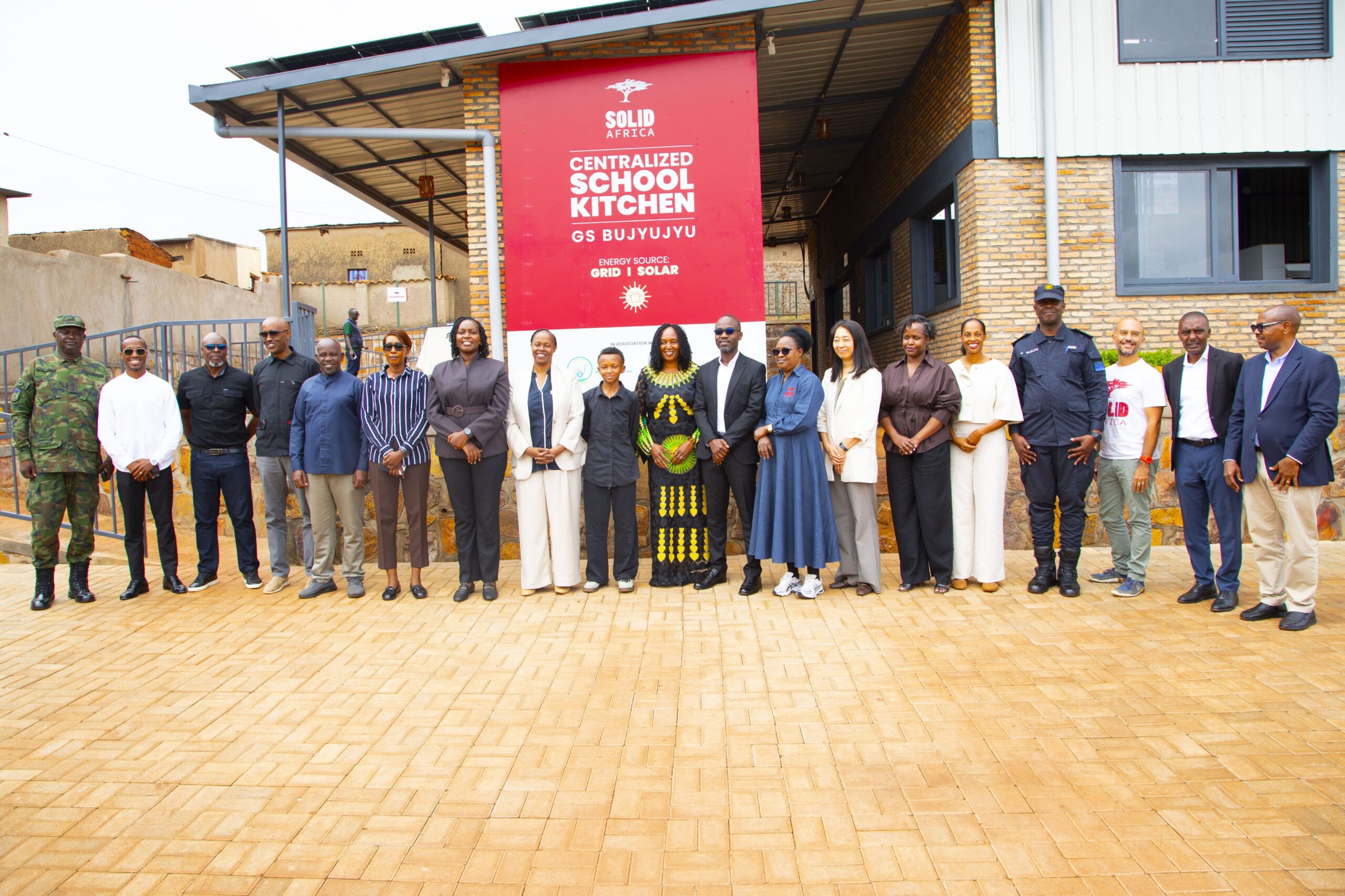
Speaking at the inauguration, Irere said access to nutritious meals was directly linked to children’s ability to learn and perform well in school.
“Every child in Rwanda deserves a good education, and no child should have to sit through a lesson on an empty stomach,” she said.
“Hunger makes learning harder. As we work to improve what children learn in school, we must also ensure they have the nourishment they need to make the most of every school day.”
She thanked Solid’Africa, The Rockefeller Foundation and other partners for supporting investments in school feeding infrastructure.
Clean energy and lower operating costs
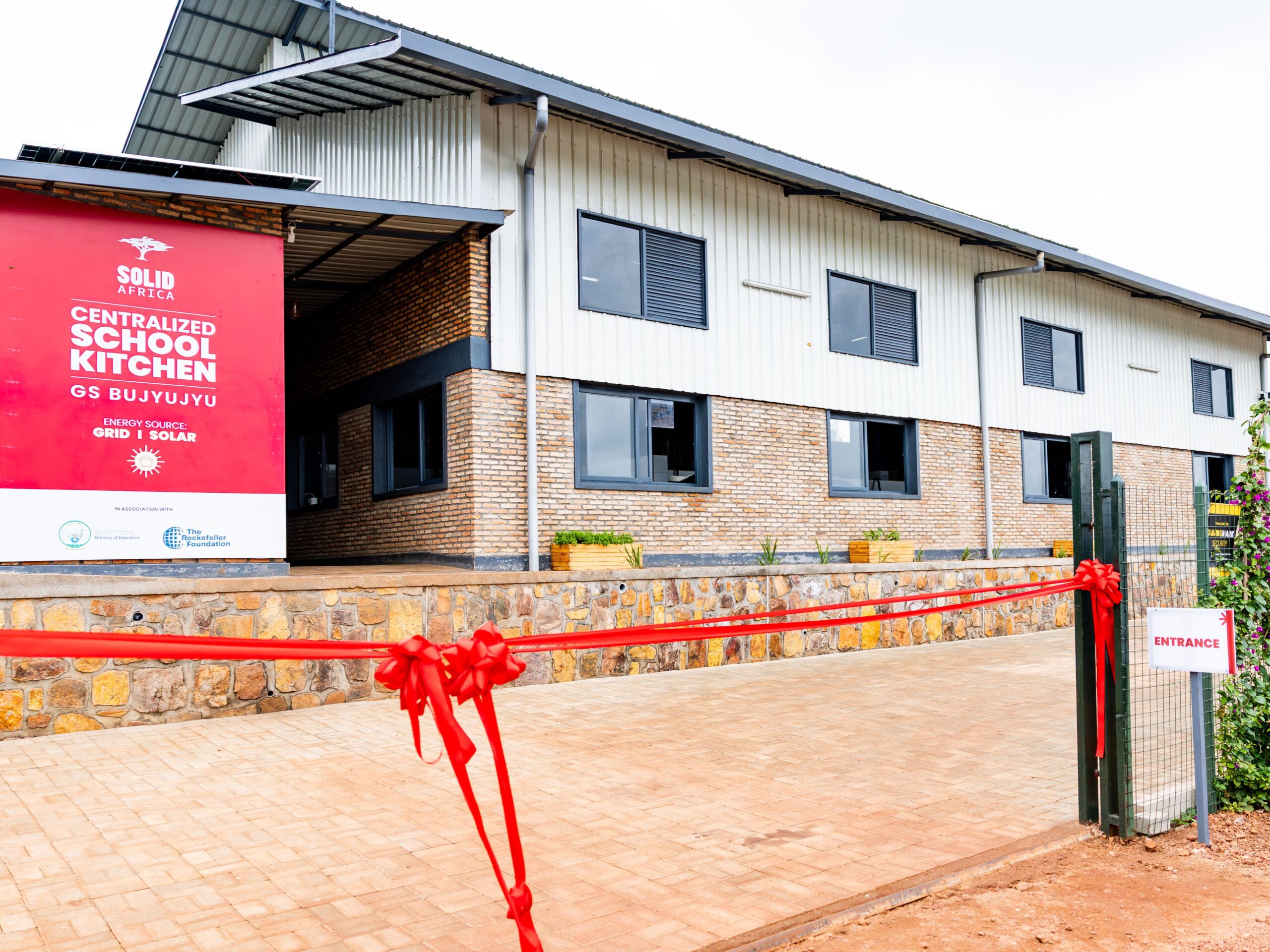
One of the main differences between Rwanda’s approach and older centralised school kitchen systems elsewhere is its emphasis on clean energy.
The facility operates within a one-hour delivery radius of the five schools. It prepares meals and dispatches them in electric vehicles to ensure they reach students in time for lunch.
Its energy system combines rooftop solar panels with electricity from the national grid. Industrial electric cooking equipment replaces traditional wood-burning stoves.
The arrangement is expected to eliminate harmful smoke from cooking facilities and reduce energy costs per meal. It also supports Rwanda’s target of phasing out biomass cooking in public institutions by 2030.
Centralising food preparation could also reduce the duplication of kitchens, cooking equipment, staffing and storage facilities across individual schools. However, the pilot’s assessment will determine the actual savings.
Farmers integrated into supply chain
The project also connects school feeding with local agricultural production.
The kitchen purchases fresh produce from agricultural cooperatives representing approximately 1,000 smallholder farmers in the surrounding region.
Structured purchasing agreements are intended to give farmers a reliable market for their harvests. The arrangement also provides schools with locally grown ingredients.
This is another distinction in Rwanda’s approach. Rather than relying solely on large commercial suppliers, the project is designed to link public food procurement directly to smallholder farmers and rural communities.
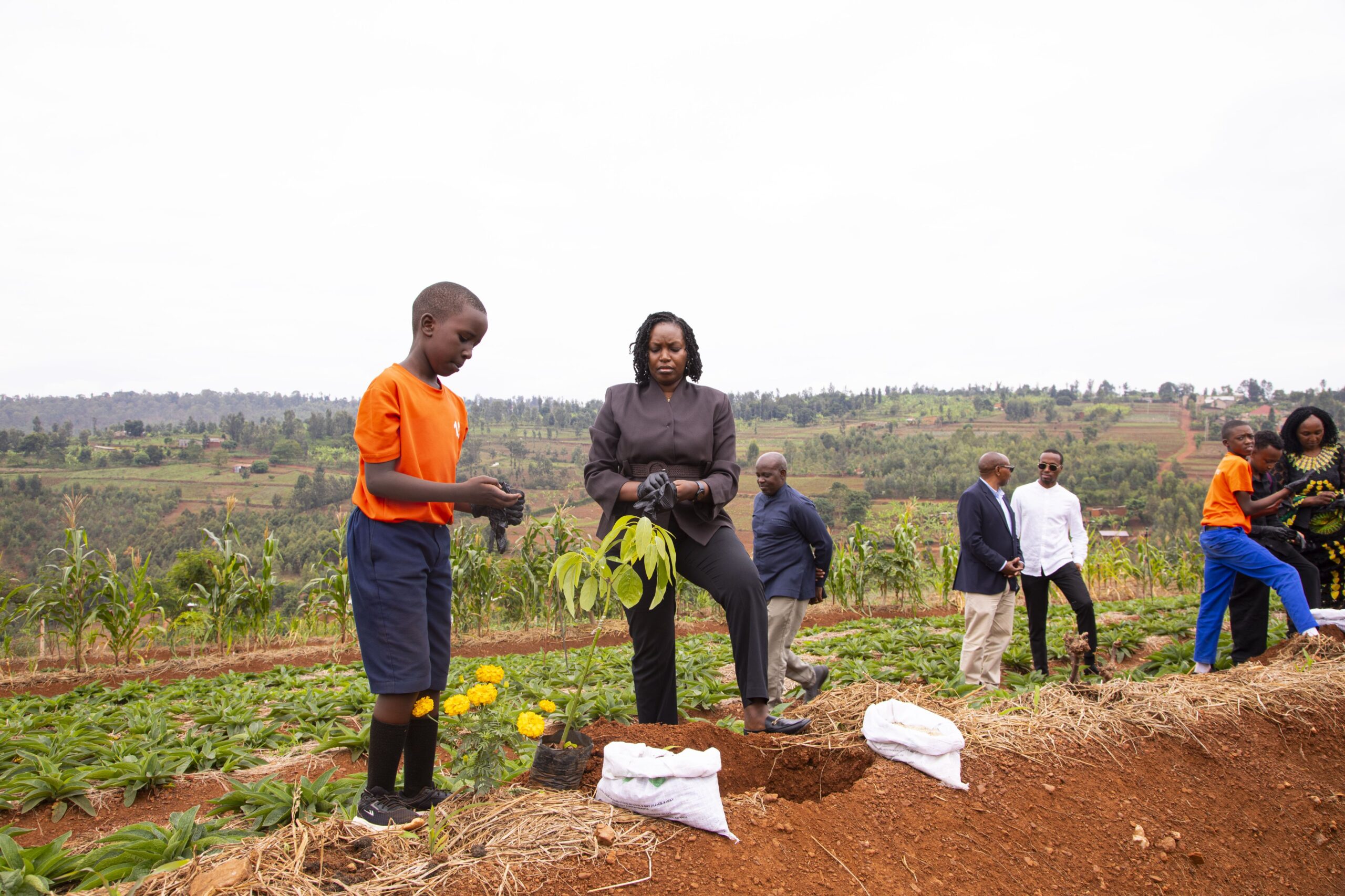
School gardens form another part of the programme. They supplement food supplies while giving students practical lessons in nutrition and food production.
Japan’s Shokuiku, or food and nutrition education, similarly treats school meals as an opportunity to teach children about healthy diets, food production and the value of local ingredients.
A model for wider rollout
The Rwamagana project follows a partnership agreement signed between the Government of Rwanda and Solid’Africa in November 2023.
Solid’Africa previously developed centralised clean-cooking systems for public hospitals in Kigali, and other referral regional hospitals.
The school kitchen extends that approach to the education sector.
Supported by catalytic funding from The Rockefeller Foundation, the facility will serve as a testing ground for the model.
Unlike Japan and South Korea, which have operated nationwide school feeding systems for decades, Rwanda is starting with a limited pilot.
The Rwamagana facility serves 15,014 students and 266 teachers, providing an opportunity to assess the model before expanding it.
Government officials and technical partners will monitor its performance over the coming school terms. The assessment will cover energy efficiency, meal delivery logistics and the cost of preparing each meal.
The findings will inform decisions on whether to establish additional regional kitchen hubs across Rwanda.
