


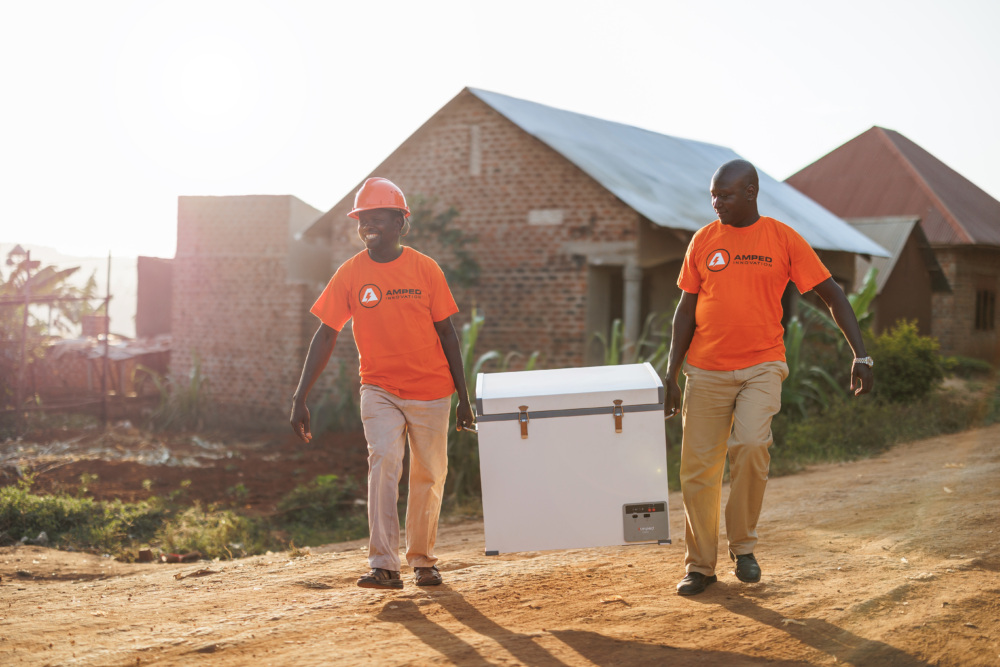
Amped Innovations, is one of those social enterprises, that have produced solar refrigerators for rural regions.
A study conducted from eastern Rwanda has revealed that energy-efficient and off-grid technologies—such as solar water pumps, solar-powered refrigerators, electric cookers, and electric motorcycles—could play a transformative role in growing rural economies, boosting incomes, and improving food security across the country.
These technologies, also known as Productive Use of Energy (PUE), were found to be not only environmentally friendly but also profitable for small businesses and farmers, especially in areas with limited or unreliable electricity access.
The findings are based on real-life experiences gathered from entrepreneurs and households in several districts.
The study was conducted by the World Bank in partnership with EnDev Rwanda, an initiative that supports access to modern energy for productive and household use.
EnDev (short for “Energising Development”) is a global program funded by donors including Germany, the Netherlands, Norway, and Switzerland, and in Rwanda, it works to expand energy access in off-grid and rural communities.
The study focused on how PUE appliances impact daily income, reduce losses, and support long-term sustainability in these regions.
In places like Kayonza, Gatsibo, and Nyagatare, business owners reported that using appliances like solar refrigerators and electric pressure cookers led to fewer losses and more profit.
For instance, meat and milk sellers said they used to lose up to 30% of their stock daily due to spoilage. But with refrigeration, those losses dropped dramatically, and weekly earnings increased by as much as 50%.
However, the report highlights that these energy-saving tools remain financially out of reach for most rural users.
A new solar refrigerator costs between RWF 1.5 million and RWF 3 million, while electric pressure cookers range from RWF 790,000 to RWF 1.5 million.
Even used appliances such as second-hand fridges cost around RWF 180,000—still far beyond the budget of most small-scale farmers and informal vendors. Grid-powered refrigerators are cheaper, at between RWF 500,000 and 1.5 million, but come with the added burden of high electricity bills.
Business owners in Nyagatare, for example, reported spending between RWF 20,000 and 55,000 monthly on electricity to operate refrigerators. This represented nearly a quarter of their business expenses.
In response, many users said they switch off appliances at night to cut costs, which risks food safety and undermines the benefits of having refrigeration in the first place.
For those in off-grid areas, solar appliances are more sustainable and flexible, but still expensive.
Despite the upfront cost, they offer good financial returns. The report calculates that solar refrigerators deliver an internal rate of return (IRR) of 34%, while electric motorcycles yield an estimated IRR of 36%.
Electric pressure cookers top the chart with a potential return of up to 45%. These numbers show that, over time, the technologies pay for themselves and help users grow their businesses.
Still, the study found that most users lack access to loans or financing options.
Banks often see these technologies as risky, and there are few tailored loan products. Some buyers use village savings groups to raise the money needed, a process that can take several months or longer.
The report urges the government and its partners to introduce low-interest credit, leasing options, and result-based subsidies to make the technologies more affordable.
It also recommends that Rwanda develop a national strategy for scaling up PUE technologies. This would include identifying priority sectors, supporting public-private partnerships, and offering training to both users and technicians.
Another key recommendation is improving electricity reliability—especially in areas served by mini-grids—since frequent power cuts discourage people from investing in electrical appliances.
The report pays special attention to the role of women and youth. In the pilot program, four out of five refrigerator users were women, many of whom said the technology helped them expand their small food businesses and gain financial independence.
With Rwanda’s strong focus on youth employment and gender inclusion, the report suggests that targeting women and young entrepreneurs for PUE rollout could multiply benefits across communities.
The economic impact of adopting energy-saving tools is significant. More productive rural businesses would mean higher household incomes, reduced food waste, and better access to markets.
It would also help formalize more of the rural economy, expand the tax base, and bring Rwanda closer to its long-term goals under the National Strategy for Transformation (NST1).
In short, the study makes it clear: when rural households and entrepreneurs have access to the right energy tools, they don’t just save power—they generate opportunity.
With smart policies and financing support, energy-saving technology could help unlock the next big leap in Rwanda’s journey toward rural transformation and inclusive economic growth.
