


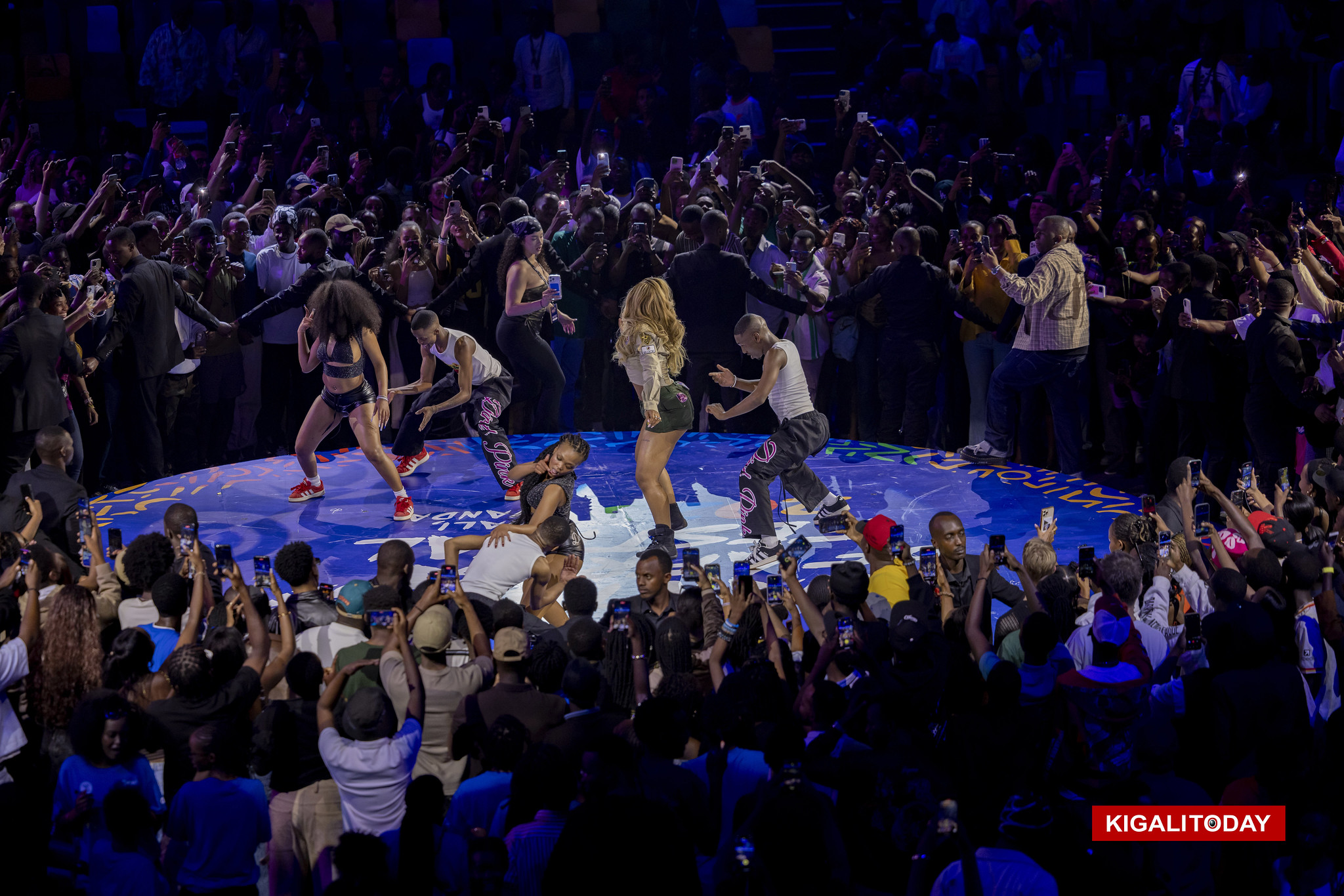
The ongoing Giants of Africa Festival to August 2 is one of those gigs trying to spice up the country’s entertainment sector (Photo by Eric Ruzindana/Kigali Today)
Kigali — Under the dim lights of Kigali’s live music venues, the rhythm is slowly returning—but the crowds are thinner, the gigs fewer, and the money tighter.
Once a pulsing part of Rwanda’s urban culture, the entertainment scene is still picking up the pieces five years after COVID-19 brought it crashing down.
From dancers and DJs to filmmakers and festival organizers, those who gave the country its creative heartbeat are fighting to reclaim their space in a world that moved on faster than they could recover.
For many, the stage never disappeared—it just got harder to stand on.
The phenomenon is reflected in the latest data from the Labour Force Survey for Q2 2025 which confirms that employment in the arts, entertainment, and recreation industry remains one of the lowest and least recovered segments of the national workforce—five years after the COVID-19 pandemic devastated the sector.
When the pandemic struck in early 2020, it devastated entertainment industries around the world. Concerts, film productions, festivals, and cultural events were abruptly canceled as governments imposed lockdowns and banned public gatherings to curb the virus.
The closure of cinemas, theatres, nightclubs, and live event venues left millions of artists, performers, and event workers without jobs—many of whom operated informally and lacked contracts or social protections.
At its peak in mid-2019, Rwanda’s entertainment industry employed about 15,000 people, representing 0.5% of the total employed population.
But by May 2020, amid pandemic-related restrictions, employment fell by more than 70%, dropping to just 4,000 jobs. Since then, recovery has been slow and inconsistent.
As of Q2 2025, the sector employs only 9,000 people, or 0.2% of the workforce, still well far below its pre-pandemic size.
Recovery in the entertainment sector has been slow and uneven, but it is gradually finding its footing. During the pandemic, many artists and creatives turned to digital platforms to stay connected with their audiences—live-streaming performances, releasing music and videos online, and hosting virtual events.
Social media became a vital stage, allowing performers to remain visible and relevant while physical venues stayed closed. In the post-pandemic era, entertainers have continued to leverage platforms like YouTube, TikTok, and Instagram not just for visibility but also for monetization and fan engagement.
At the same time, there’s been a push to return to in-person experiences, with organizers reviving concerts, festivals, and cultural shows—often blending them with online promotion to reach wider audiences.
The shift has prompted many in the industry to rethink how they connect with fans, combining traditional performances with digital storytelling and influencer-style outreach to rebuild momentum and reclaim lost ground.
Stalled Momentum, Informal Barriers
Industry players point to several factors have contributed to the sector’s stagnation.
“Unlike hospitality or retail, the entertainment sector remains largely informal and under-capitalized,” explains a Kigali-based events organiser who specializes in creative industries. “There’s little access to financing, few regulatory protections, and limited investment in infrastructure and equipment.”
Many artists, musicians, and performers rely on short-term gigs or seasonal events, making their income precarious. Others have shifted to unrelated work in services or trade to survive.
Moreover, government stimulus and recovery programs have tended to prioritize high-volume employment sectors such as agriculture, construction, and hospitality.
As a result, cultural workers say they feel overlooked in Rwanda’s broader economic development agenda.
Contrast with Hospitality Growth
In stark contrast, the hospitality sector, which includes hotels, restaurants, and catering services, has seen consistent post-COVID growth.
Employment in this sector rebounded from 50,000 in 2020 to 181,000 in 2025, now accounting for 4% of the workforce.
Much of that recovery has been driven by domestic tourism, business travel, and increased urban consumption.
“Hospitality bounced back because it’s tied to Rwanda’s tourism and investment narrative,” says a tour operator . “But entertainment needs its own path—it needs structure, policy, and belief that it matters culturally and economically.”
Cultural Value vs Economic Metrics
The entertainment sector’s continued marginal share of employment masks its broader significance to national identity, youth expression, and urban life. Kigali’s vibrant music scene, growing film interest, and the rise of local digital creators suggest potential that remains largely untapped in formal labour statistics.
Some advocates argue that more targeted support—from training and grants to digital platforms and festival infrastructure—could help transition creative work from informal to recognized employment.
