


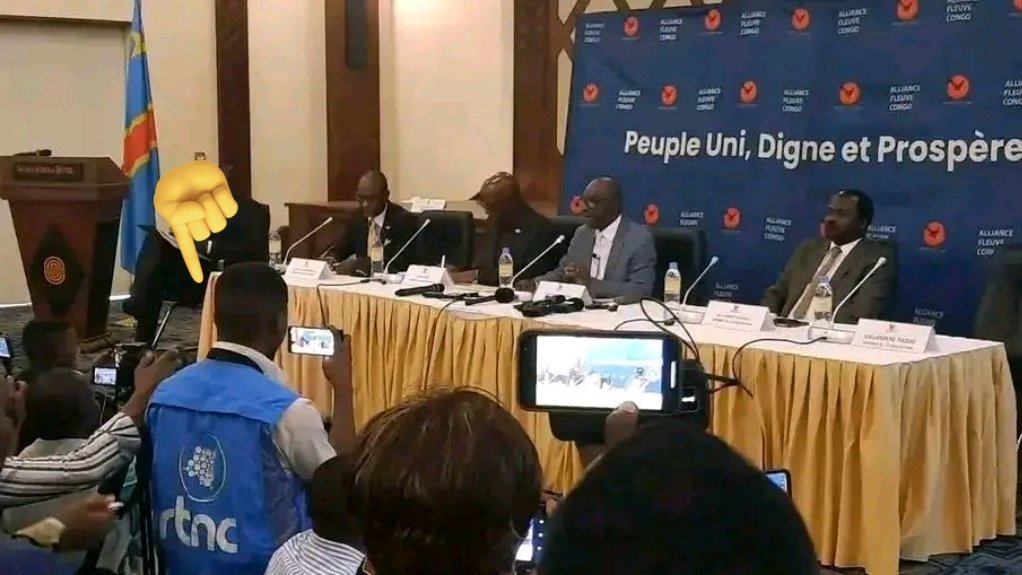
The AFC/M23 (Alliance of the Congo River / March 23 Movement) held a press conference on Friday, July 25, 2025, at the Serena Hotel in Goma. During this conference, the rebel movement reviewed the key points of the Doha agreement.
As the second phase of the peace negotiations in Doha is scheduled in the coming days, the AFC/M23 conditions its participation on the respect of commitments by Kinshasa.
Speaking before the local press, Benjamin Mbonipa, permanent secretary of the AFC/M23 and a member of the delegation present in Doha, expressed a firm position of the movement: the prior release of their prisoners.
“If Kinshasa does not release our prisoners by the 27th, what will we do in Doha?” he asked, calling for respect of the commitments contained in the Declaration of Principles.
According to Mbonipa, the Doha Declaration risks becoming a mere symbolic document if it is not accompanied by concrete actions.
“There will be no Doha if there is no release of prisoners. We will only accept this if our prisoners are freed before the start of phase 2, of our 700 prisoners. Otherwise, what would we do in Doha?” he insisted.
On the substance, the AFC/M23 reiterates its commitment to dialogue as the only path to lasting peace. Both parties [the Congolese Government and the AFC/M23] agreed that peace constitutes the foundation of the negotiations.
“They reaffirm their commitment to resolving conflicts by peaceful means, that is, dialogue,” Mbonipa recalled.
He also stressed the importance of transparency and truthfulness in exchanges with the media. He mentioned the failure of the SADC mission in Goma as a revealing precedent.
“When the SADC mission failed here in Goma, the AFC/M23 wanted to prioritize dialogue,” he explained, emphasizing that the movement remains committed to a negotiated solution.
The permanent secretary of the AFC/M23 also denounced the continuation of hostilities despite the signing of the Doha agreement.
“Even after the signing of Doha, they attacked us. There have been ceasefire violations by the Government,” he stated, once again calling to “silence the weapons, to improve the living conditions of the populations and preserve human lives.”
According to the AFC/M23, the consolidation of peace requires concrete “confidence-building measures.” These must help establish a favorable climate for sincere and productive dialogue.
“When the weapons fall silent, it will create a climate of trust conducive to constructive dialogue,” insisted the permanent secretary, adding that the AFC/M23 remains a major player committed to all efforts for lasting peace.
Asked about the role of former President Joseph Kabila, Benjamin Mbonipa condemned what he considers an unjustified attempt at exclusion.
“The Joseph Kabila trial is quite surprising. He was not given a choice and he came here. It’s not to say he is a member of M23 as long as he has not said so himself. Do you think there will be peace in this country by excluding Joseph Kabila?” he said, urging to avoid resentment and trials by intention.
The AFC/M23 concluded by affirming that the ongoing peace agreement must go beyond mere statements. It must enable deep addressing of the structural causes of the conflict through an inclusive process based on truth, justice, security, and respect for fundamental rights.
