



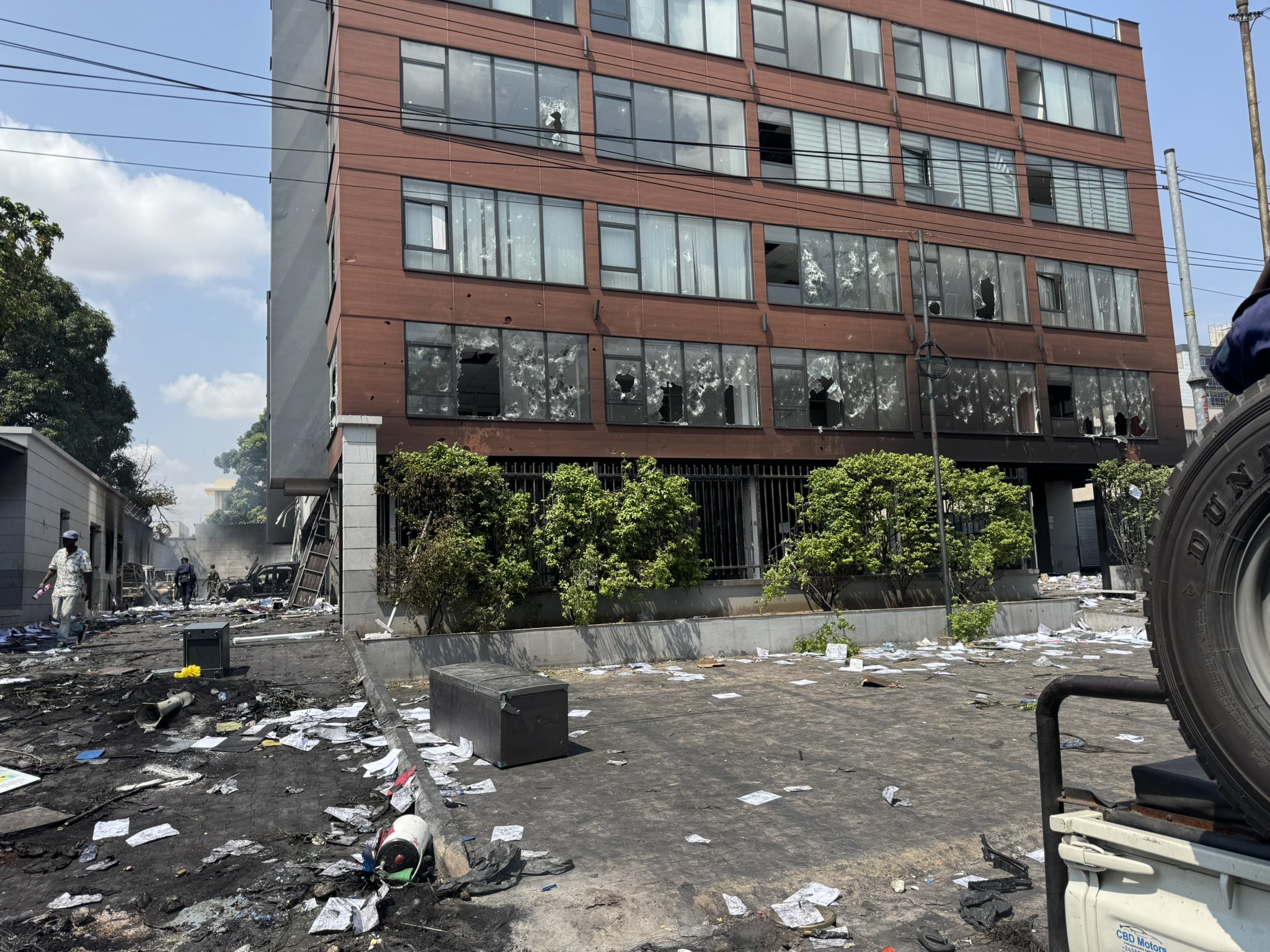
Rwanda’s embassy in Kinshasa was looted, and some parts set ablaze.
The government of Rwanda is seeking firm guarantees from the Democratic Republic of Congo (DRC) that the violent attack on its embassy in Kinshasa will never happen again, as part of a broader effort to restore diplomatic relations between the two countries.
This position was presented to lawmakers on Tuesday, July 29, during a plenary session in the Chamber of Deputies, as they reviewed a draft law approving the peace agreement signed in Washington on June 27, 2025, between Rwanda and the DRC.
The agreement—brokered in Washington with involvement from Qatar and the African Union—outlines commitments under four key pillars: security, economic cooperation, political coordination, and the return of refugees.
Presenting the agreement to Parliament, Rwanda’s Minister of Foreign Affairs and International Cooperation, Ambassador Olivier Nduhungirehe, emphasized that the deal must be matched with concrete actions from the DRC—particularly on dismantling the FDLR rebel group, ending hate speech, and ensuring diplomatic protection.
“We strongly condemned the burning of our embassy. Such actions are unacceptable, and we expect clear guarantees from the Congolese government that this will never be repeated,” said Nduhungirehe.
He added that the agreement also includes provisions for the protection of Rwandan nationals in the DRC, the lifting of airspace restrictions on RwandAir, and the cessation of arbitrary arrests targeting Rwandans in Congo.
In January 2025, protesters in Kinshasa attacked multiple embassies—including Rwanda’s—blaming them for alleged complicity in the M23 rebel crisis. The Rwandan embassy was looted and vandalized during the riots. Kigali now seeks firm guarantees from the DRC government that such diplomatic violations will never happen again under any circumstance.
Despite expressing cautious optimism, the minister noted that some recent actions in Congo seem to contradict the spirit of the peace deal, particularly the continued support for the FDLR—a militia group composed of remnants of the 1994 Genocide against the Tutsi.
“This is not just about military posturing. It’s about preventing another genocide,” he told lawmakers.
“The FDLR is backed by the Congolese state and has attacked Rwanda before. Eliminating it requires Congo’s political commitment.”
Lawmakers echoed the government’s concerns, with MP Bizimana Minani Deogratias drawing parallels between Rwanda’s defensive posture and a homeowner securing their property against known threats.
Minister Nduhungirehe reiterated that the joint monitoring mechanism included in the agreement—comprising Qatar, Togo, and the African Union—is intended to ensure both parties adhere to their commitments, including facilitating peace talks between the DRC government and the M23 rebel group, in which Rwanda participates as an observer.
The Cabinet had approved the peace deal on July 16, 2025.
After the engagement with the minister, the Chamber of Deputies unanimously approved the agreement, effectively giving firm backing to move forward with its implementation.
