


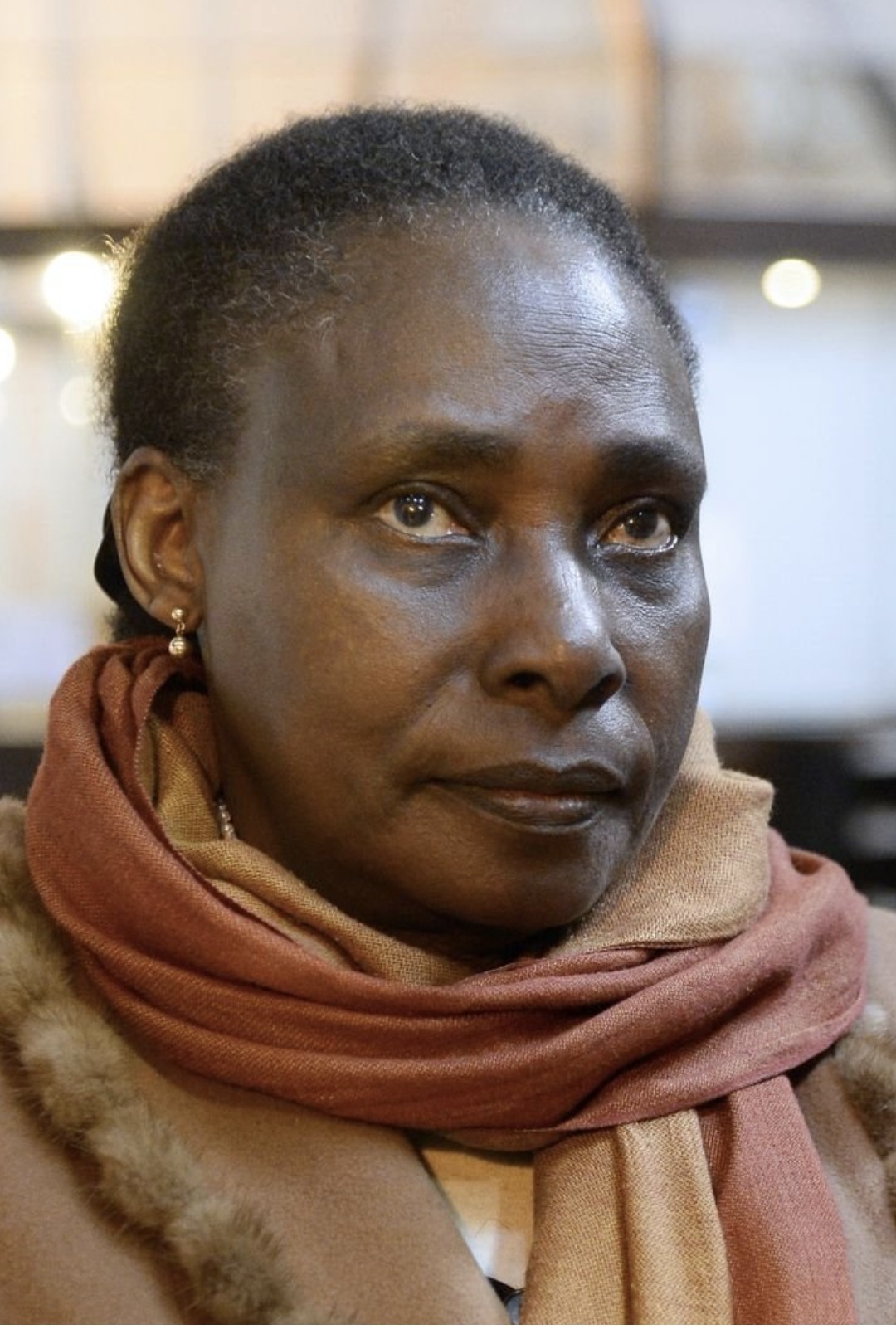
On Thursday August 21, 2025, a Paris court delivered a ruling that is baffling . Two French investigating judges concluded there was “insufficient evidence” to indict Agathe Kanziga Habyarimana, the widow of Rwanda’s former president Juvénal Habyarimana, for her role in the 1994 genocide against the Tutsi.
In their view, she was not a perpetrator but rather a victim, a grieving widow whose husband, brother and relatives had died in the April 6 attack on the presidential plane.
The decision appears, at first glance, like a technical judgment about evidence. But placed against the historical record, it is profoundly strange.
Over the past three decades, France’s own intelligence services, its own archives, and even its own courts have described Agathe Habyarimana as one of the most central figures in the preparation of the genocide.
How then can French justice now claim that there is no evidence against her?
The “Akazu” Matriarch
Agathe Kanziga Habyarimana was far more than the wife of Rwanda’s president. From the 1970s onwards, she was seen as the real force behind the throne, the matriarch of an extended family and political network that came to be known as the Akazu, or “little house.”
This network, built around her brothers and relatives from the Gisenyi region, extended into the military, politics and business. It functioned as a tightly controlled system of patronage and repression that shaped nearly every major decision in Rwanda for decades.
French archives themselves would later describe her as the “notorious head of the Akazu,” and intelligence officers identified her as the most extremist voice in her husband’s entourage.
To observers both inside and outside Rwanda, she was the hardliner par excellence, the one who drove the ideology of “Hutu Power” to its most violent conclusions.
French Evidence Naming Her
What makes the 2025 dismissal so contradictory is that France itself once produced clear evidence of her role.
A French Military Intelligence (DRM) note dated March 13, 1992, flagged the government’s complicity in orchestrated massacres in Bugesera. These killings, presented publicly as spontaneous violence, were in fact attributed by French analysts to the ruling clique around the presidency—the same circle led and influenced by Agathe Habyarimana.
This was not an isolated assessment. For years, French diplomatic and intelligence documents consistently highlighted her as the pivot of extremism. Her reputation was not hearsay but recorded in the files of France’s own security services.
In 2009, the French National Court of Asylum went further still. In a judgment rejecting her asylum claim, the court ruled that Agathe Habyarimana was “at the heart of the regime” responsible for political and ethnic massacres from 1990 onwards.
It concluded that she exercised “de facto authority” within the Akazu, and that she played a “predominant role” in the creation and control of Kangura and RTLM—the newspaper and radio station that would go on to become the principal platforms of genocidal propaganda. This was not survivor testimony alone; it was a finding of a French court.
Evacuation by France
Yet when the genocide began, the French state acted not against Agathe Habyarimana but in her favor.
On April 9, 1994, two days after the presidential plane was shot down and targeted mass killings erupted across Kigali, French troops evacuated her and her entourage under Operation Amaryllis.
She was flown first to the Central African Republic, and soon afterwards to Paris, in business class tickets paid for by the French government.
For survivors, this episode has always symbolized a larger betrayal: that France, fully aware of her reputation and the evidence of her influence, chose to save her even as hundreds of thousands of Tutsi were being hunted and slaughtered.
The ruling of August 2025 therefore sits uneasily with this history. By arguing that there is no sufficient evidence linking Agathe Habyarimana to the genocide, the Paris judges effectively erase not only the testimonies of survivors, but also the documented record of France’s own intelligence services and courts.
The paradox is glaring.
In 1992, France’s DRM intelligence already identified regime complicity in massacres linked to the presidency. French archives called Agathe the “notorious head of the Akazu.”
In 2009, a French court stated she was “at the heart of the regime,” with de facto authority and a leading role in controlling genocidal propaganda. Yet in 2025, other French judges declared there was no case against her.
Why the Reluctance?
Observers suggest several reasons for France’s hesitation. Legally, proving personal responsibility in genocide cases is notoriously complex, especially without direct written orders. Politically, the trial of Agathe Habyarimana would inevitably expose France’s complicity with her regime, forcing the country to reopen painful debates about its role in Rwanda.
Finally, there is the question of time: at 82 years old, she is elderly, and some judges may feel reluctant to launch a trial that might never conclude.
For the survivors and people of Rwanda, these explanations are little more than excuses. If ordinary perpetrators of the genocide can be tried and convicted in French courts, then the most powerful figures of the regime should not be shielded from accountability.
The case of Agathe Habyarimana highlights France’s ongoing struggle with its Rwandan legacy.
On the other hand, French courts now declare there is no evidence against the woman its own intelligence once described as the notorious head of the Akazu.
This contradiction threatens France’s credibility as a defender of international justice. It suggests double standards: while lower-level génocidaires have faced justice in France, the woman long seen as the matriarch of genocide lives undisturbed in Paris.
