


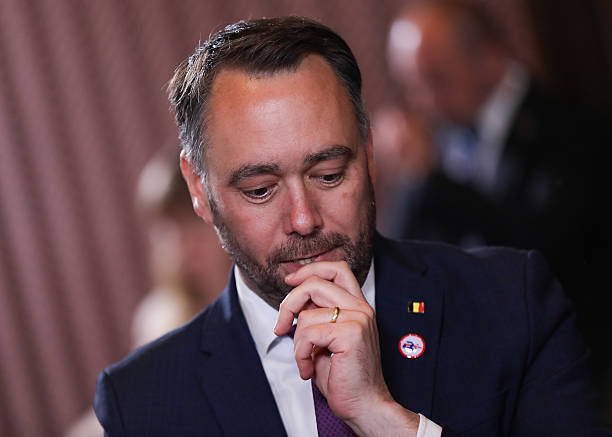
In Warsaw, Poland, on May 7, 2025, Deputy Prime Minister of Belgium, Maxime Prevot, attends the Informal Meeting of the EU Ministers for Foreign Affairs at the Polish Army Museum. (Photo by Klaudia Radecka/NurPhoto via Getty Images)
Belgium’s Deputy Prime Minister and Minister of Foreign Affairs, Maxime Prévot, has announced he will travel to Kigali in November for the ministerial conference of the International Organisation of La Francophonie (OIF).
His trip, confirmed by Brussels, marks the first high-level contact between Rwanda and Belgium since the two countries severed diplomatic ties earlier this year.
On March 17, Rwanda announced the immediate suspension of relations with Belgium, just hours after the European Union imposed sanctions against Kigali over its alleged involvement in the Democratic Republic of Congo (DRC) conflict.
Kigali accused Brussels of spearheading the EU measures. In response, Belgium expelled Rwandan diplomats, froze development aid, and closed its embassy in Kigali, while Rwanda also shut its mission in Brussels.
Rwanda’s Foreign Affairs Minister, Amb. Olivier Nduhungirehe, has since insisted that repairing ties will require confronting the root causes of the fallout. In an interview with KT Radio Rwanda Behind the Headlines program, he accused Belgium of adopting a hostile stance, particularly in relation to the DRC crisis.
“Diplomatic relations are built on trust, mutual respect, and a desire for cooperation,” Nduhungirehe said, stressing that Rwanda does not currently prioritize restoring ties unless Belgium changes its approach.
After the fallout with Rwanda, Maxime Prévot himself embarked on a regional tour of all Rwanda’s neighbors. During this period, Belgium also issued a series of statements designed to reassure the government of the Democratic Republic of Congo.
In recent weeks, reports indicate that Belgium has been leading a push to arm Burundi, with large consignments of weapons delivered to its troops stationed in South Kivu.
In April, the annual commemorations of the 1994 Genocide against the Tutsi were notably absent in Belgium—another sign that Brussels had chosen to turn the page on its past engagement with Kigali.
However, this week Belgium appeared to signal a change of course, cancelling a book presentation by controversial Belgian academic Prof. Filip Reyntjens, whose latest work has been criticized for attempting to negate the genocide. He is also regularly on social media questioning different aspects of Rwanda’s history, reinforcing an ethnic narrative for the country.
Tensions between the two nations have simmered for more than three years. In 2023, Belgium refused to accredit Rwanda’s nominated ambassador, Vincent Karega.
Amid this backdrop of mistrust, Prévot’s upcoming visit could be an unusual opening for dialogue.

1 comment
Finally people are now understanding. Wouuuu
Comments are closed.