


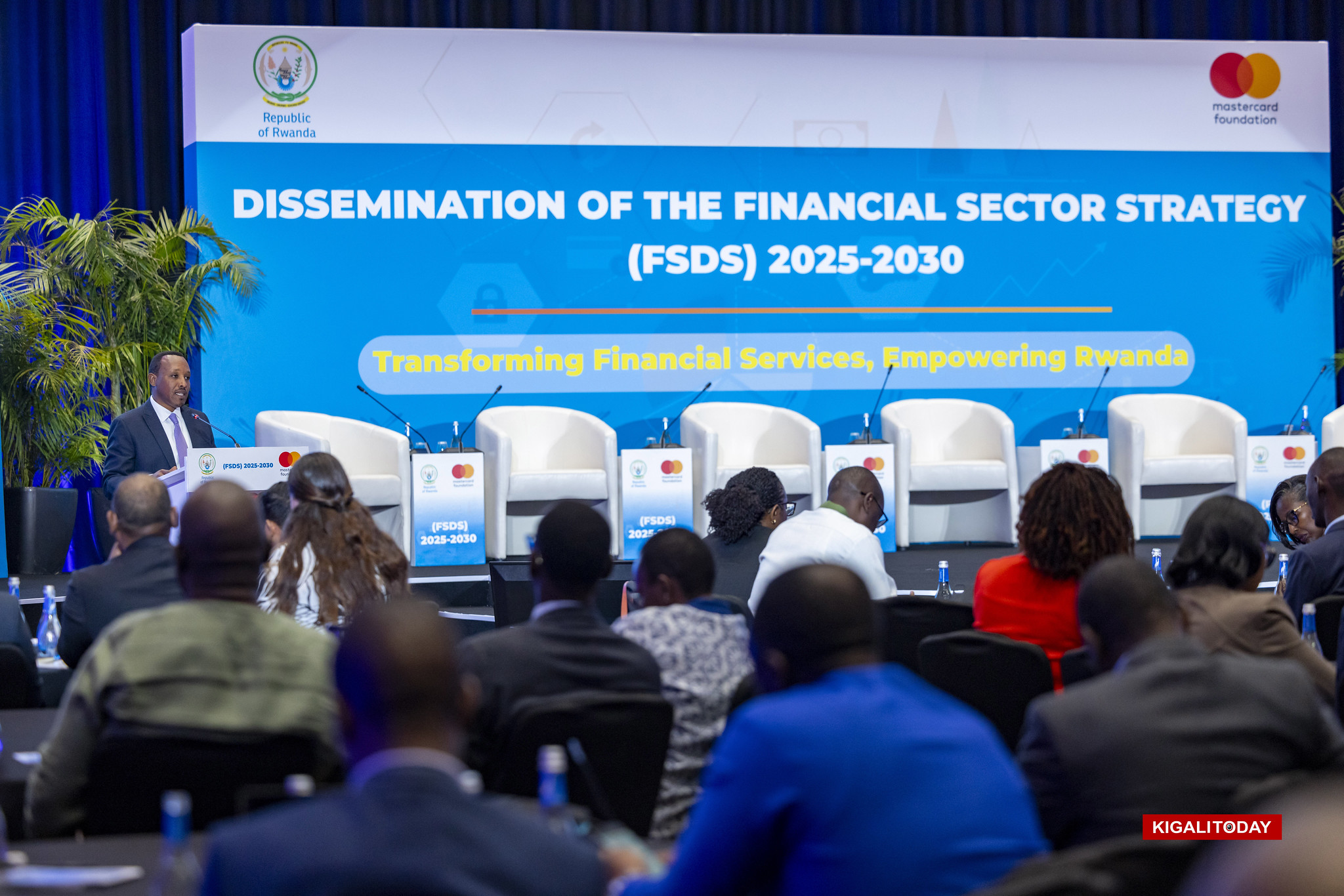
Rwanda has unveiled an ambitious plan to transform its financial landscape by 2030, with three notable elements at the center of the reform – establishing the Rwanda Academy of Finance (RAF) to professionalize the sector, digitizing the Rwanda Stock Exchange (RSE) to modernize capital markets, and expanding loans to the agriculture sector, which has long been starved of affordable credit.
The new Financial Sector Development Strategy (FSDS 2025–2030) unveiled Thursday to industry players and policymakers, outlines sweeping reforms aimed at building a financial system that is more inclusive, competitive, and innovation-driven. It was developed from a partnership with MasterCard Foundation.
More Photos from the launch event
The high-level stakeholders’ forum was attended by banking executives, regulators, and investors, the strategy marks the most comprehensive overhaul of Rwanda’s financial architecture in over a decade.
It seeks to correct deep-rooted imbalances where a handful of large banks dominate lending, credit remains expensive, and critical sectors such as agriculture and small businesses struggle to access finance.
The government expects the reforms to channel more resources into productive investments, lower borrowing costs, and expand access to financial services nationwide.
Financial Growth Targets
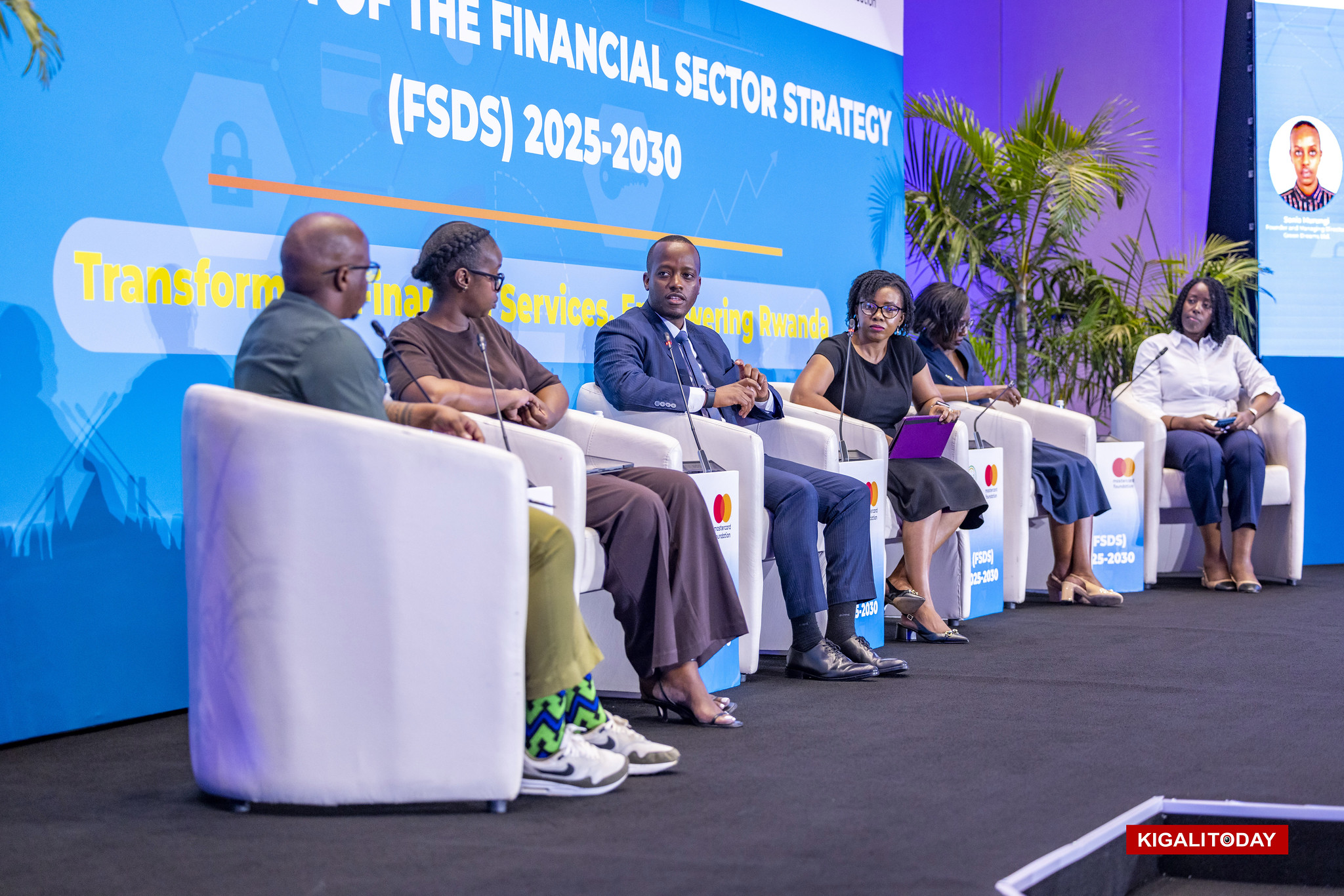
From Right to Left: A panel discussion involving top financial sector executives; Hortense Nicole Mudenge – CEO Rwanda Finance Limited, Carine Umutoni – CEO Ecobank Rwanda, Ivy Hesse – Managing Director BK Capital, CEO RSSB – Regis Rugemanshuro, Sonia Umurungi – Founder and MD Green Dreams Ltd, and panel moderator Arnold Kwizera
The government has set bold growth targets for the financial sector. Total banking assets are projected to grow from RWF 8.5 trillion in 2024 to RWF 15 trillion by 2030, nearly doubling in six years. This expansion will be driven by rising deposits, credit growth, and the entry of new digital and non-bank players.
At the same time, private sector lending is expected to increase from RWF 4.6 trillion in 2024 to RWF 9.2 trillion by 2030, largely benefiting SMEs, agriculture, and housing — sectors that have traditionally struggled to access credit.
Banking income is also projected to grow sharply, from around RWF 900 billion in 2024 to over RWF 1.7 trillion by 2030.
However, future profitability will rely less on high lending rates and more on innovation, such as digital transactions, trade finance, and fintech partnerships. The government wants non-interest income — currently about 25% of bank revenue — to reach at least 40% by 2030, marking a shift toward a more diversified and resilient financial system.
The FSDS also targets a rise in financial inclusion from 83% in 2024 to 95% by 2030, supported by mobile and agency banking as well as fintech integration. Rural and women-focused banking initiatives will receive special incentives to close the inclusion gap and ensure financial growth benefits all Rwandans.
Training a New Generation of Financial Professionals

Dr Diane Karusisi, CEO Bank of Kigali, graced the strategy launch event
At the heart of the strategy is the establishment of the Rwanda Academy of Finance (RAF) — a new national institution that will train professionals in modern finance, fintech, risk management, and regulatory compliance.
The academy will serve both junior and senior finance professionals, offering internationally recognized programs such as ACCA, CFA, and CPA. Officials say RAF will “build the human capital needed for a world-class financial system,” reducing dependence on foreign expertise and ensuring that Rwanda’s financial growth is anchored in local talent.
Another cornerstone of the FSDS is the complete digitization of the Rwanda Stock Exchange (RSE). The bourse will move from its current semi-manual setup to a fully automated, real-time trading and settlement platform, significantly improving efficiency and transparency.
The modernized exchange will also introduce new investment products, including exchange-traded funds (ETFs), real estate investment trusts (REITs), and green bonds, while connecting Rwanda’s market to regional trading systems through the African Exchanges Linkage Project (AELP).
This digital transformation will make it easier for ordinary Rwandans to invest, and for local companies to raise funds. Tax incentives will encourage more listings, while market-making institutions will help increase liquidity.
This will democratize investment in Rwanda and deepen regional integration.
Doubling Agricultural Lending
The strategy also aims to fix a long-standing problem — the low levels of credit to agriculture, which employs about 40% of Rwandans but currently receives less than 1% of total bank lending.
The FSDS commits to doubling agricultural lending by 2030, using targeted incentives, risk-sharing funds, and digital lending systems tailored to smallholder farmers and cooperatives.
The Development Bank of Rwanda (BRD) and the Bank of Kigali (BK) will spearhead this initiative through blended finance mechanisms and credit guarantees, encouraging commercial banks to extend affordable loans to the rural economy.
The goal is not only to increase lending but also to make it sustainable and accessible, especially for women and youth farmers.
Driving a Cashless, Competitive Future
A key pillar of the strategy is Rwanda’s continued move toward a cashless economy. The National Bank of Rwanda will expand digital payment platforms, promote interoperability across systems, and continue path to implement a Central Bank Digital Currency (CBDC) to make transactions faster and cheaper.
At the same time, the FSDS seeks to break up the dominance of a few large banks — chiefly Bank of Kigali, I&M, and Equity — by encouraging new digital and challenger banks and introducing open banking frameworks. These measures are expected to stimulate competition, reduce loan costs, and drive efficiency through data-sharing and technology.
The government envisions a financial sector that is twice as large, more inclusive, and globally competitive, capable of powering national development and positioning Rwanda as a rising regional financial hub.
If fully implemented, the FSDS could redefine the country’s financial future — shifting the system from one that mainly serves institutions to one that empowers citizens, fuels enterprise, and drives Rwanda’s next decade of growth.

A cross-section of executives and policymakers at the launch
