




The peloton powers through rain-soaked roads as teams begin positioning for control during Stage One of the 2026 Tour du Rwanda.
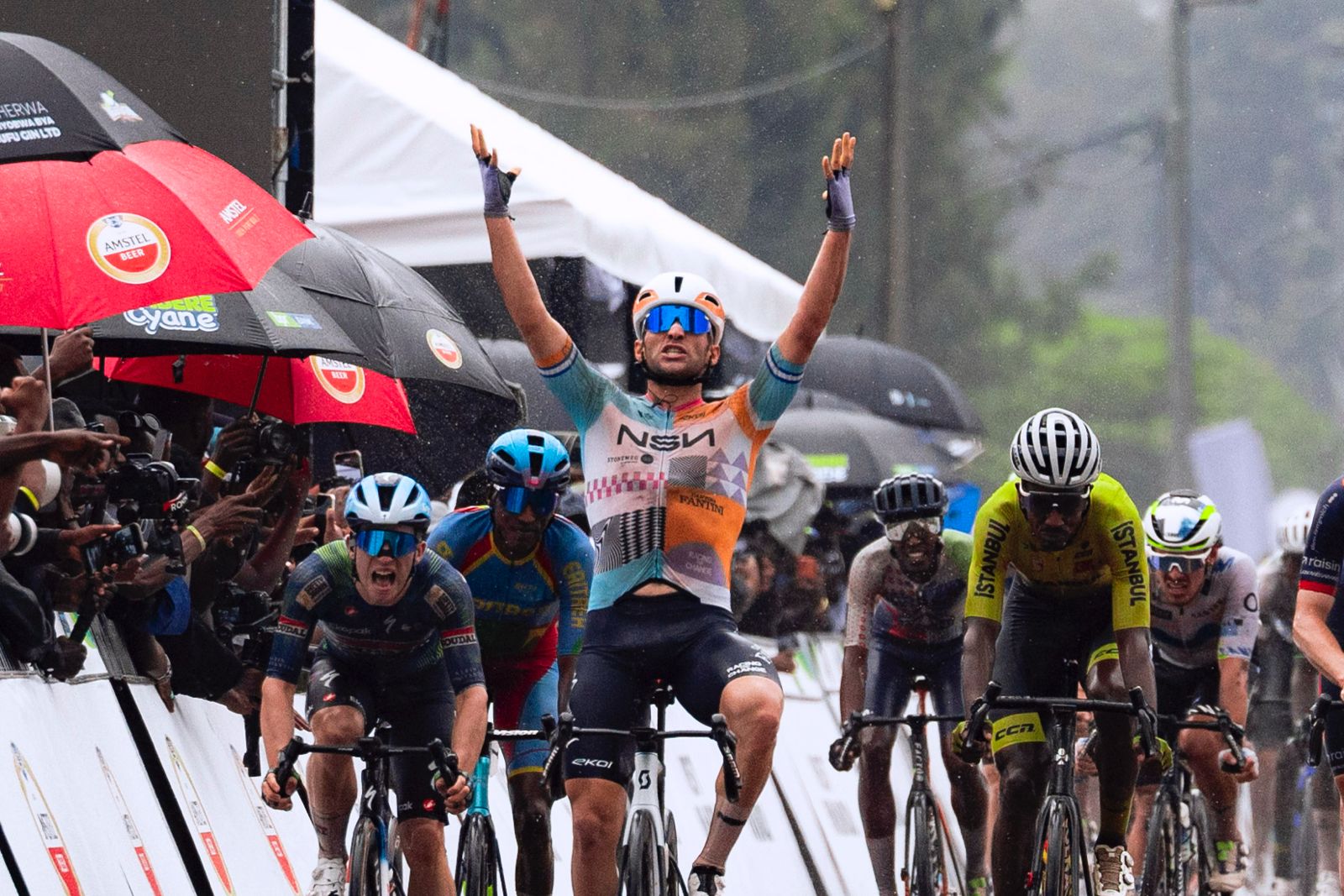
Stage One of the 2026 Tour du Rwanda delivered a thrilling opening chapter on Sunday, as Israel’s Itamar Einhorn stormed to victory in Rwamagana to claim the first yellow jersey of this year’s race.
The 173.6-kilometre route from Rukomo in Gicumbi District tested both endurance and tactical awareness, producing aggressive early attacks and a high-speed finale that set the tone for the week ahead.
Soon after the official start, a breakaway group animated the race. Henrique da Silva Avancini (Localiza Meoo/Swift Pro Cycling) and Miguel Heidemann (REMBE rad-net) established themselves at the front, building a gap that at one stage stretched beyond four minutes.
Their move forced the peloton into calculated pursuit mode, with teams such as NSN, Eritrea and Movistar carefully managing the tempo behind.
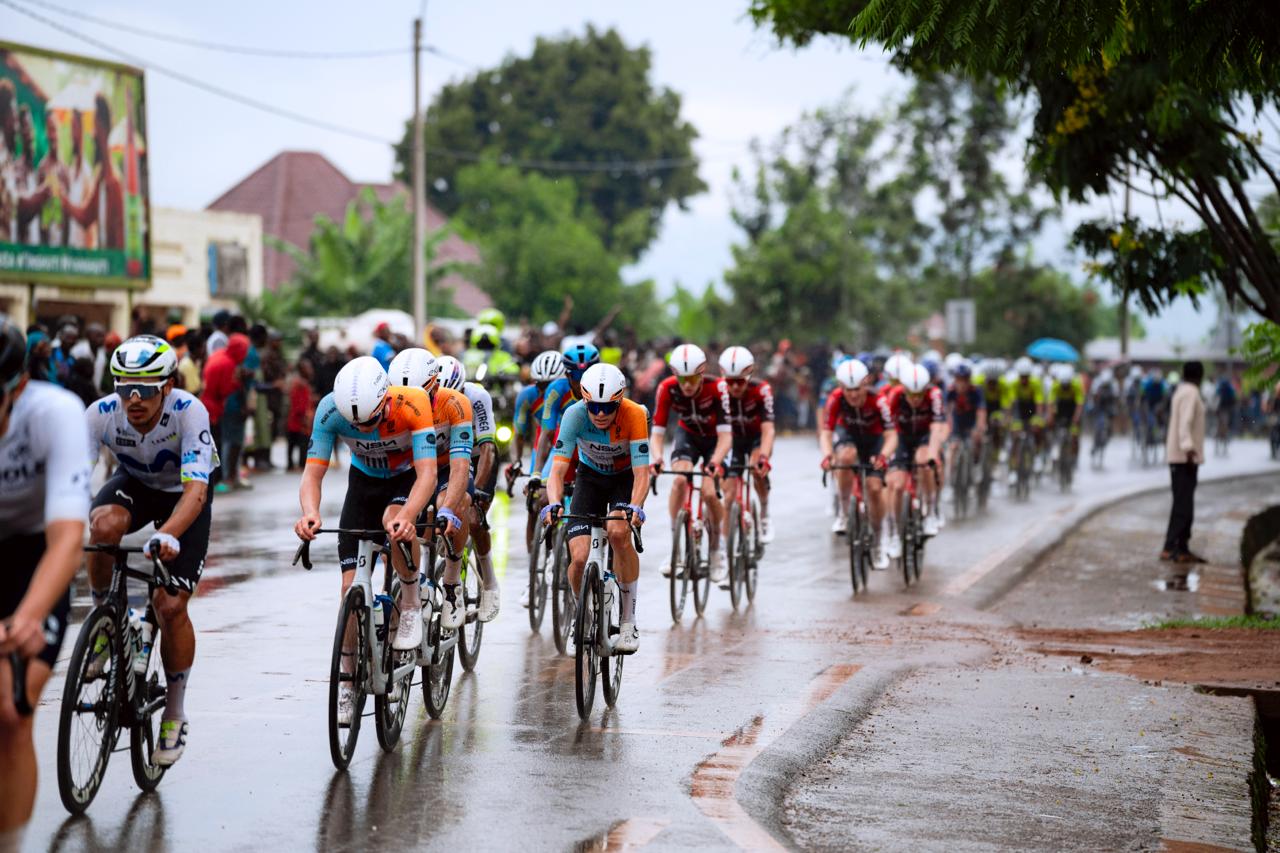
The peloton stretches across the tarmac as the gap to the early breakaway begins to fall inside the final Kilometers.
Fast start, early intent
Eighty-four riders rolled out at 11:00 a.m., and it did not take long for the race to ignite. A select group forced the early break, with Henrique da Silva Avancini (Localiza Meoo/Swift Pro Cycling) and Miguel Heidemann (REMBE rad-net) driving the move.
The duo built a commanding advantage behind them. The peloton led by teams including NSN, Eritrea and Movistar, remained composed, carefully calculating the chase rather than reacting impulsively.
The first categorized climb in Gatsibo provided an early test, with Heidemann taking maximum points. Intermediate sprints in Nyagatare and Kabarore added further tactical complexity, as bonus seconds were up for grabs.
Avancini proved particularly aggressive, collecting valuable time bonuses that briefly reshaped the provisional standings. The introduction of bonus seconds at multiple points along the route ensured the tempo never dipped, forcing teams to remain alert.
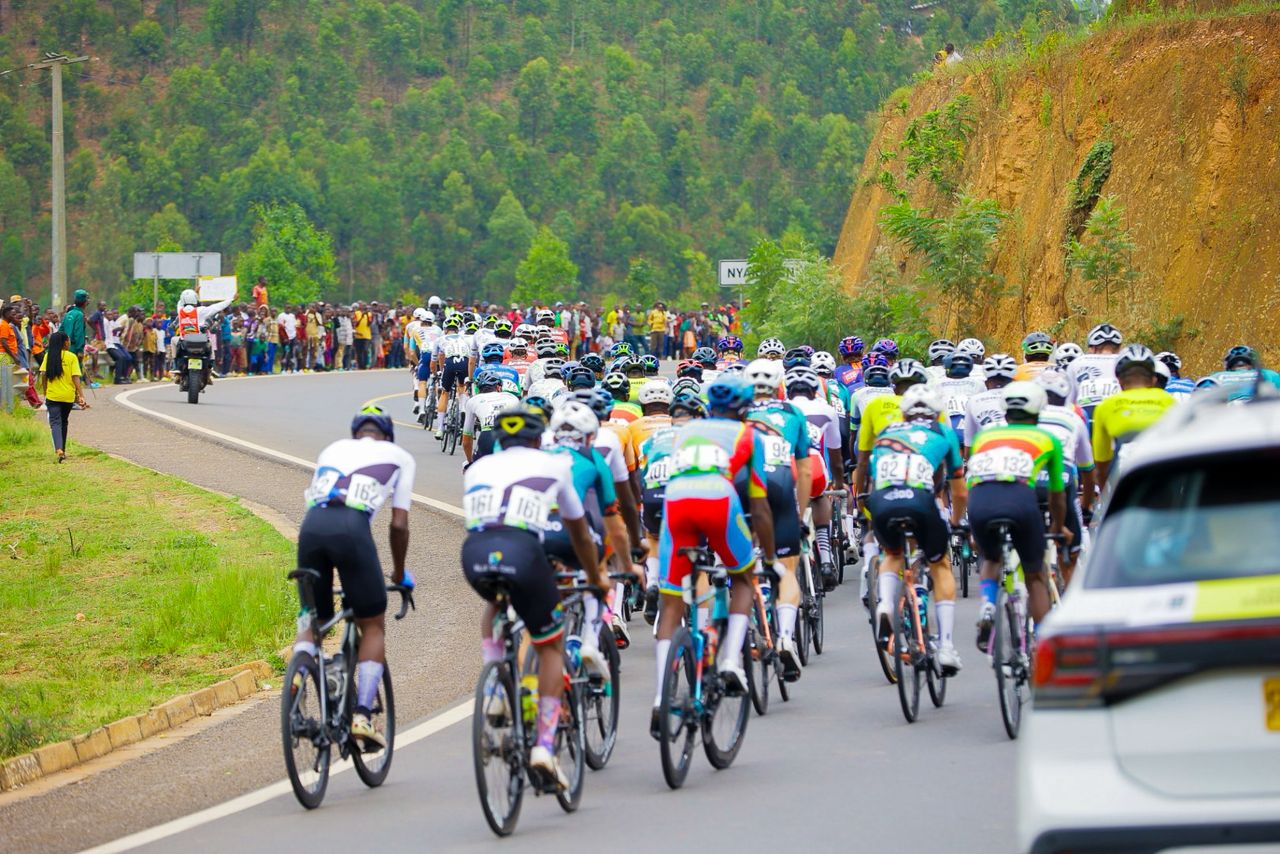
Riders snake around one of Rwanda’s iconic winding climbs, highlighting the demanding terrain that shapes the race’s character.
Rain and rising pressure
As the race progressed through the Gatsibo–Kayonza–Rwamagana corridor, heavy rain created slippery conditions. Despite the weather, the pace remained high, with average speeds reflecting the peloton’s determination to keep the breakaway within reach.
With 30 kilometers remaining, the gap began to fall decisively. By the time the riders reached Kayonza, the once-comfortable advantage had dwindled. Inside the final 10 kilometers, the peloton completed the catch, setting the stage for a sprint finish.
The closing kilometers were tense and technical. Lead-out trains formed as teams battled for prime position. In the final meters, Einhorn timed his acceleration to perfection, launching a powerful sprint to cross the line first.
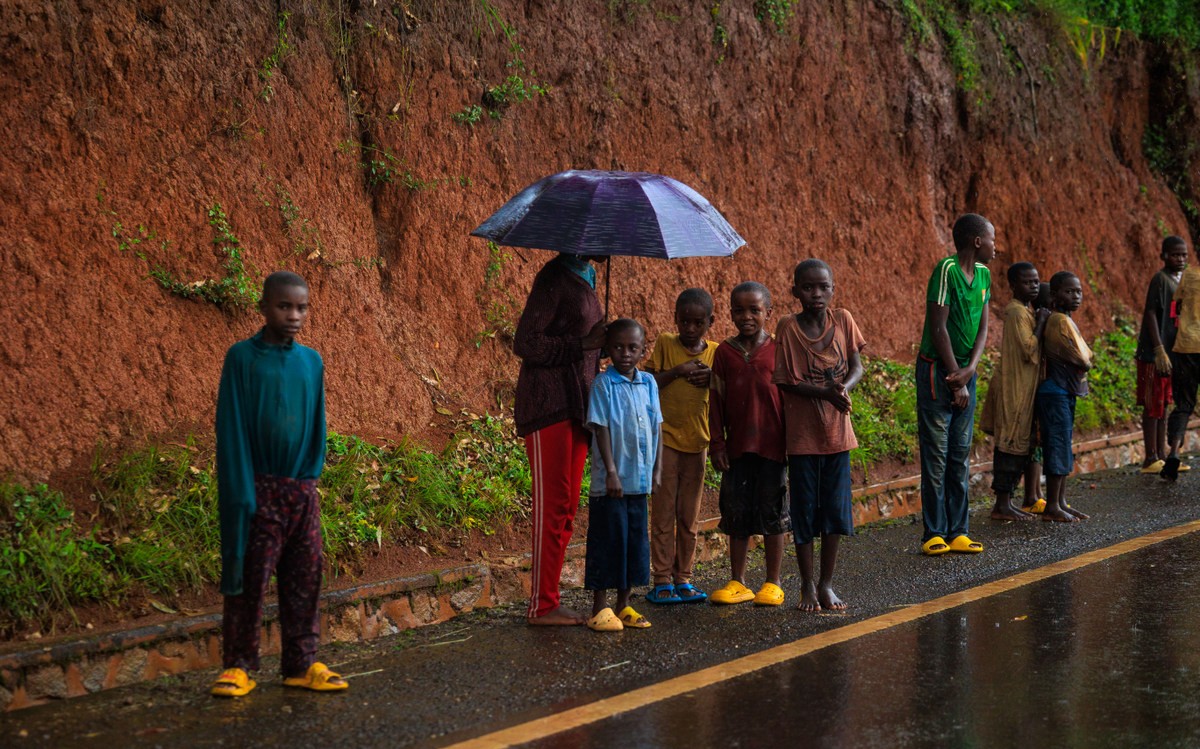
Young fans braved the rain along the Rukomo–Rwamagana route, their cheers capturing the passion and community spirit that define the Tour du Rwanda.
His victory earned him a 10-second bonus and the coveted yellow jersey. The second- and third-place finishers claimed six and four seconds respectively.
Stage One delivered a compelling mix of aggression, strategy and resilience. Breakaway specialists made their mark, sprint contenders asserted authority, and teams demonstrated depth and discipline.
If the opening act is any indication, the 2026 Tour du Rwanda promises a week of relentless racing, and the yellow jersey may yet change hands again.
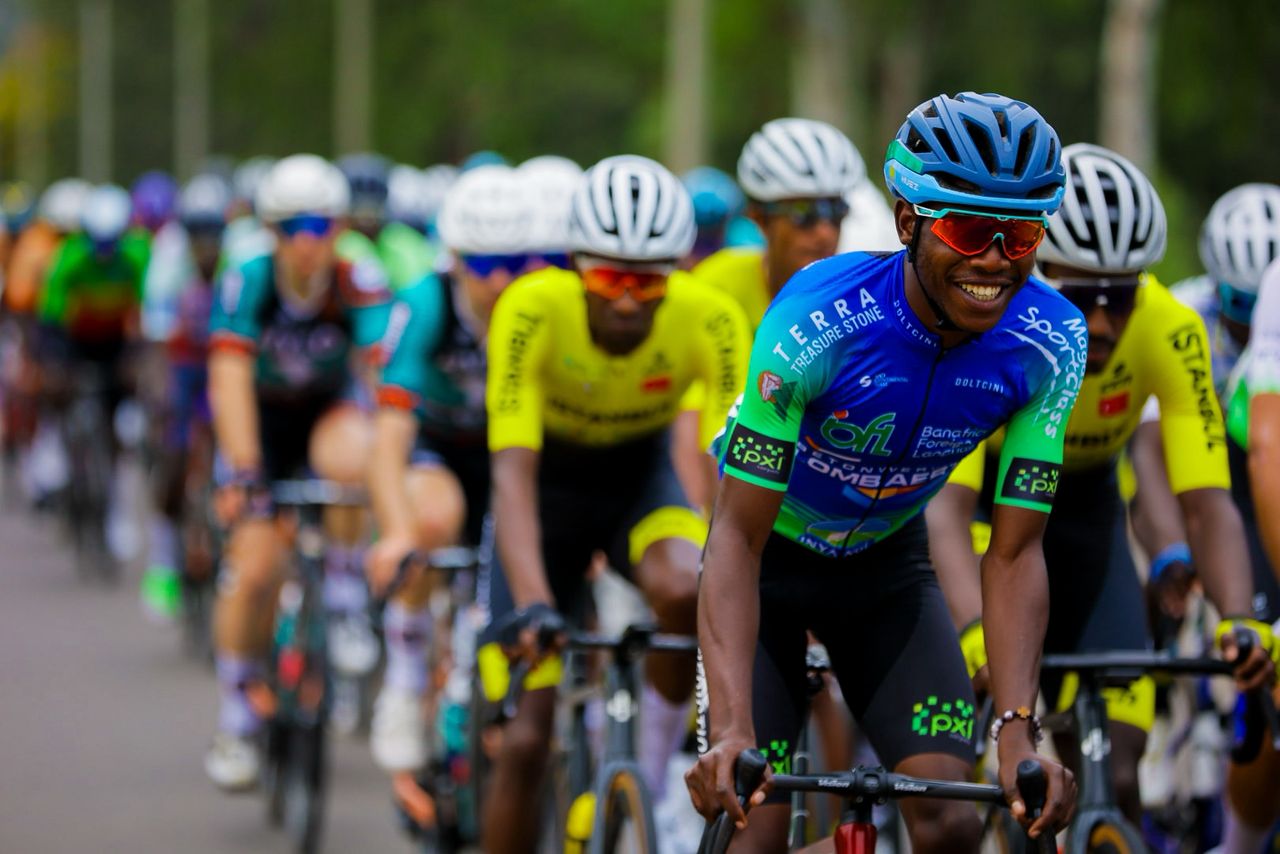
A rider maintains sharp focus within the tightly packed bunch, where positioning and teamwork proved decisive in the run toward Rwamagana.
