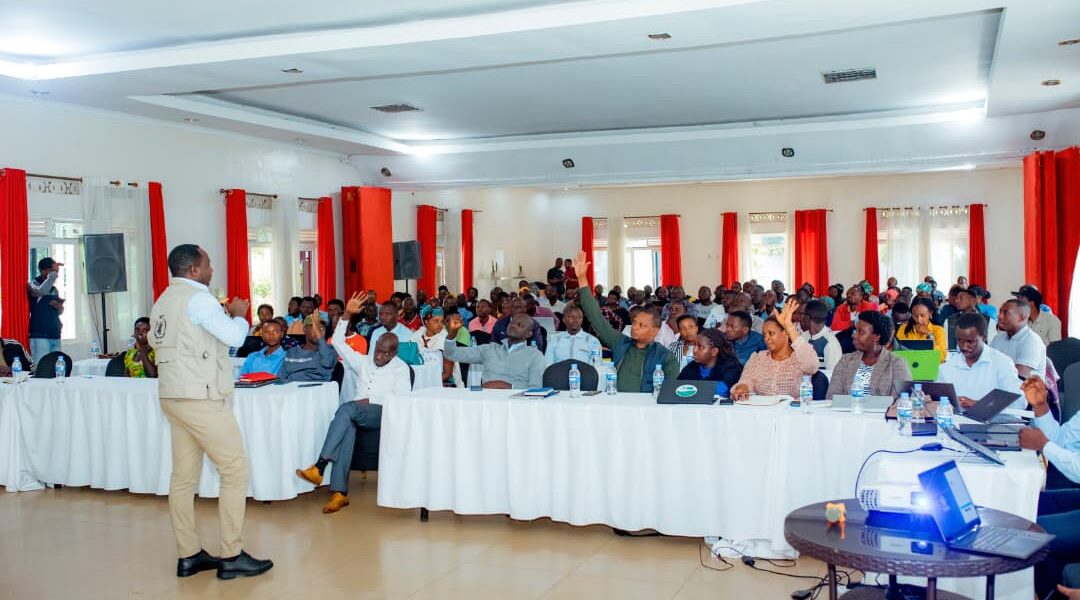
Maize buyers have assured farmers in Kayonza District of a consistent market for their produce, a move expected to cushion them against the effects of prolonged droughts and climate-related challenges.
The assurance was made during a stakeholders’ meeting held this week to assess progress and challenges in implementing the Food and Agriculture Resilience Mission Pillar 3 (FARM P3), launched in 2025. The programme focuses on strengthening maize and soybean value chains in Rwanda.
FARM P3 brings together public and private sector actors to improve the livelihoods of up to 4,000 smallholder farmers in Kayonza District by reducing food losses through improved post-harvest practices and strengthening market access.
With a total budget of $1.23 million, the initiative complements the IFAD-funded Kayonza Irrigation and Integrated Watershed Management Project Phase II (KIIWP2, 2021–2028), which supports more than 40,000 rural households to enhance food security and climate resilience.
Farmers noted that although production has increased despite unpredictable weather and fragile soils, post-harvest management remains a major challenge due to limited drying facilities and uncertainty over markets for produce that may not meet quality standards.
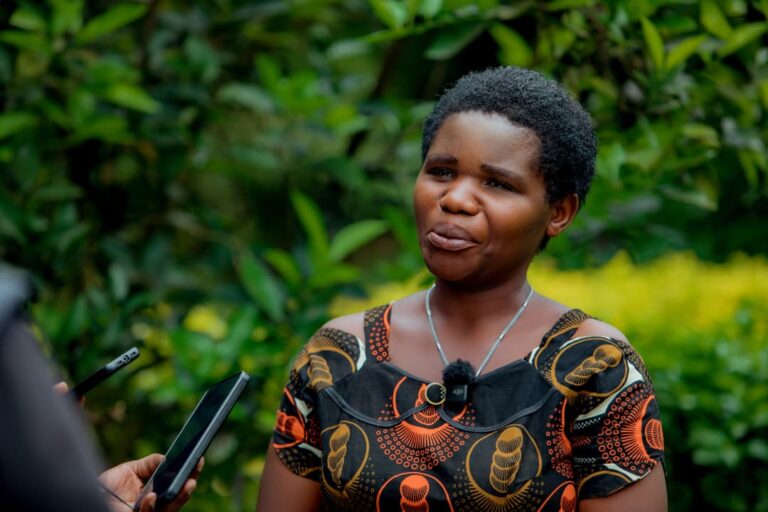
Agnes Mukamana
Agnes Mukamana, President of KOAISORWA Cooperative, which has 302 members cultivating 30 hectares of maize and soybeans, said production has risen from 100 kilograms to 350 kilograms per 10 acres. However, inadequate drying capacity continues to cause losses.
“Our yields have improved significantly due to project support, reaching four tonnes per hectare. But we lack sufficient hangers to dry seeds, leading to losses of up to 50 tonnes,” Mukamana said.
She added that although the cooperative invested Rwf 36 million in hangers, it currently has only three, while production requires a fourth hanger to dry more than 200 tonnes harvested each season.

Kenneth Kanazi
Kenneth Kanazi, Managing Director of Furaha Yetu Group, a Kayonza-based maize buyer, said the company has adopted a model of purchasing all grades of maize, provided they are free of aflatoxin.
“We buy all grades of maize at market prices, including those that do not meet standard requirements, and process them into animal feed,” Kanazi said.
He explained that through a farmer’s shop model, the company guarantees a ready market for farmers while ensuring food security by selling maize flour locally at affordable prices.
“At the farmer’s shop, we buy maize at good prices and sell the flour at factory prices so farmers can afford to consume what they produce,” he said, noting that the model benefits both farmers and buyers.
To sustain the initiative, Kanazi revealed that with IFAD support, the company plans to introduce a maize dryer to improve post-harvest handling.
“This dryer will be cheaper than market rates. If the market cost is Rwf 50, we will charge Rwf 20 to allow more farmers access to drying services,” he said.
With a storage capacity of 300 tonnes per day, the company also plans to expand maize flour production to reach more districts and reduce imports from Uganda.
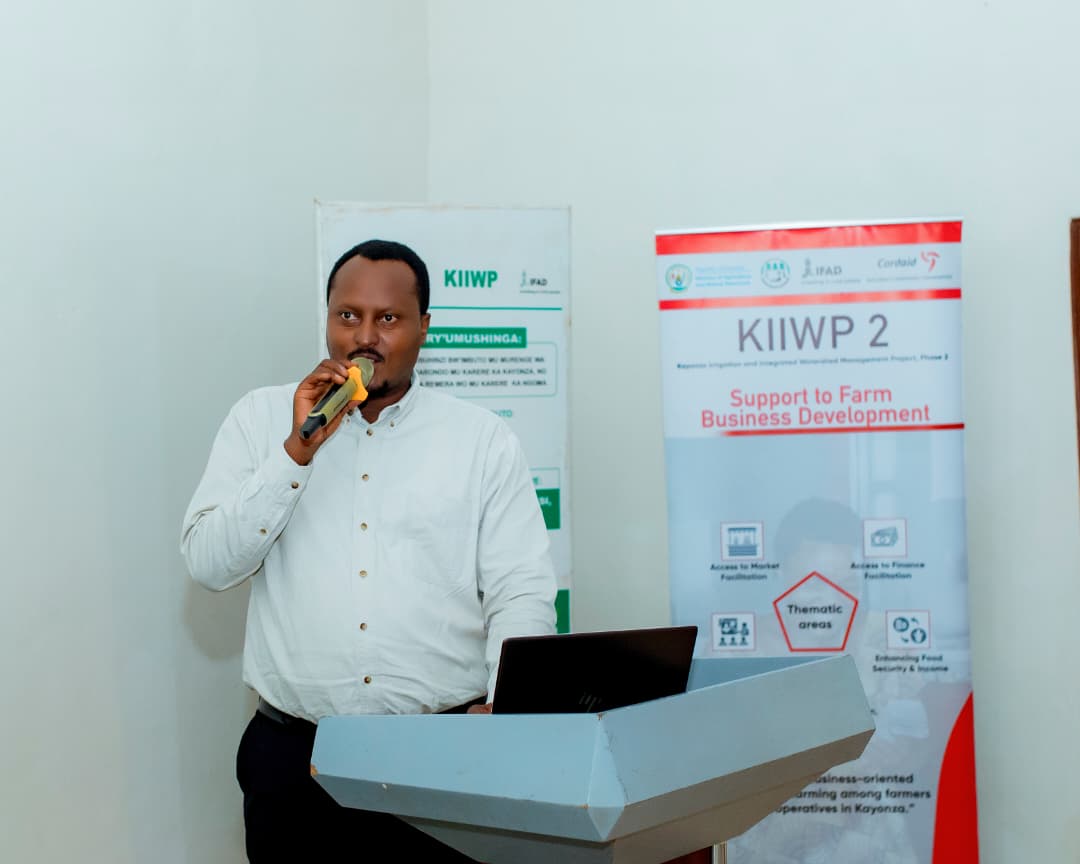
Dan Mandela
Dan Mandela, a KIIWP2 project specialist, said that with pre-season contracts and coordinated planting, maize farmers recorded good harvests during the 2026 Season A.
“Our focus now is linking farmers to buyers, encouraging contracts, and facilitating access to loans and insurance to protect them from losses,” Mandela said.
David Karangwa, a representative of the East African Exchange (EAX), one of Rwanda’s largest maize buyers, said the exchange will support farmers with proper crop management skills and improved post-harvest infrastructure to enhance quality and incomes.