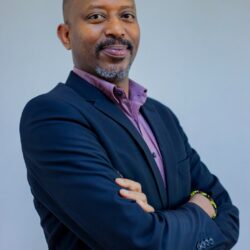
Minister Consolée Uwimana. She currently serves as Rwanda’s Minister of Gender and Family Promotion.
Before the 1994 Genocide against the Tutsi, Consolée Uwimana was a student in Kigali trying to make sense of a country that was quietly falling apart. She was in Senior Five at Lycée Notre-Dame de Cîteaux when political tension began to seep into everyday school life.
At first, the divisions were subtle, but they soon became visible. Groups formed, trust weakened, and fear began to replace normal routines.
“At our school, ethnic divisions were not very visible in the beginning. But later, people started separating, and even students became afraid of one another,” recalls Uwimana, who is now Rwanda’s Minister of Gender and Family Promotion.
Dormitories were abandoned for classrooms as insecurity grew. The school environment, once centered on learning, became shaped by caution and uncertainty. Yet, studies continued, even as the country outside edged closer to collapse.
She completed her secondary education in 1991 during a turbulent political period marked by the rise of multiparty politics and growing unrest. Soon after, she entered the workforce while still navigating a society under strain.
In 1992, she joined the African Continental Bank of Rwanda (BACAR), a job that she says reflected the political environment of the time. Public affiliation with political movements was common, and identities were increasingly tied to political alignment.
By 1993, she had married and started a family, but the calm was short-lived. The death of her father that same year added personal grief to an already unstable national climate.
Flight Through War and Years in Exile
When the Genocide against the Tutsi erupted in 1994, Kigali became a city of fear and survival. Uwimana was living in Kabeza at the time. The sound of gunfire replaced daily life, and movement became dangerous.
With help from a gendarme she knew, she fled toward the Kanombe military camp. The journey was marked by chaos, with bullets passing overhead and every step forward carrying deep uncertainty.
From there, her path fractured into a long journey of displacement. She moved through Muhanga and Rubavu before crossing into Goma, in what was then Zaire. Somewhere along the way, she was separated from her husband and children—a rupture that deepened the trauma of escape.
In Goma, life remained unstable. She was placed in the Mugunga refugee camp, where she stayed for two years. Conditions were harsh, and survival depended on whatever resources could be found. It was also in Mugunga that she gave birth to her second child. Even in moments of new life, uncertainty remained constant.
Fear, however, was not limited to hunger or hardship; it was also shaped by information. Refugees were told that returning to Rwanda meant danger, and the Inkotanyi were described as a threat. For many, including her, that narrative shaped every decision.
Driven by those fears, she continued deeper into the region, navigating the dense forests and remote areas of Tingitingi. Displacement became continuous, and stability remained entirely out of reach.
Mbandaka and the Moment Everything Changed
Her journey eventually led her to Mbandaka in Zaire (now the DR Congo). Exhausted and still guided by fear, she tried to erase any trace of identity that could link her to Rwanda.
“I removed anything that could show I was Rwandan,” she said.
Then came an unexpected moment. A man approached her and greeted her in Kinyarwanda. The question he asked changed everything. He asked why she was running, and what she was running from.
“I told him I was fleeing the Inkotanyi,” she recalled. His response was simple but striking. He asked if she thought she had escaped them in Goma, only to find herself far away from them in Mbandaka.
In that moment, fear collided with reality. The story she had carried for years no longer matched what she was seeing. Soon after, she was gathered with others for evacuation, and an aircraft carried them back to Rwanda.
Return, Healing, and a New Beginning

Consolée Uwimana says in Senior Five at Lycée Notre-Dame de Cîteaux when political tension began to seep into everyday school life.
Looking back, she describes the return journey in unexpected terms. “I thank the Inkotanyi for giving me a lift. I did not return on foot like I had fled. I returned by plane,” she said.
Coming back to Rwanda revealed another reality. Families were rebuilding, communities were recovering, and while life was not perfect, it was moving forward.
She was given opportunities to resume her education and later entered public service, but the transition was not immediate as trauma lingered.
Even during training in Nyakinama, she says her mind remained trapped in survival mode, and safety felt unfamiliar. “I was always alert. Even when I was safe, I felt like I needed to escape,” she said.
Over time, that fear gave way to stability, and stability to responsibility. Her journey eventually carried her into leadership positions in government.
Today, her story stands not only as a testimony of survival, but also as a reflection on memory, perception, and the long path from fear to understanding.
She now calls on Rwandans to protect the truth and resist narratives that distort the country’s history. For her, the past is not distant; it is a reminder of how fear can shape belief, and how reality can completely overturn it.