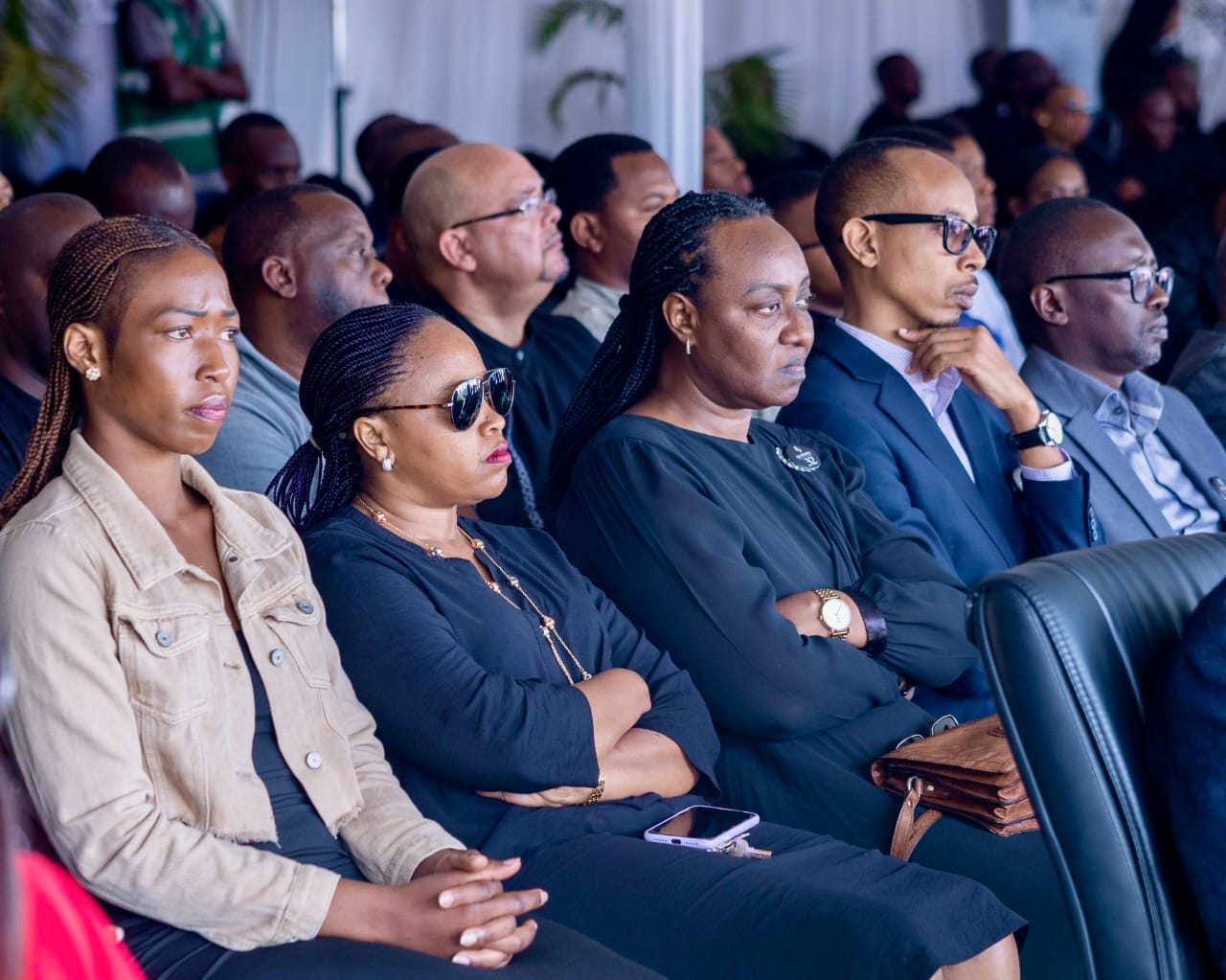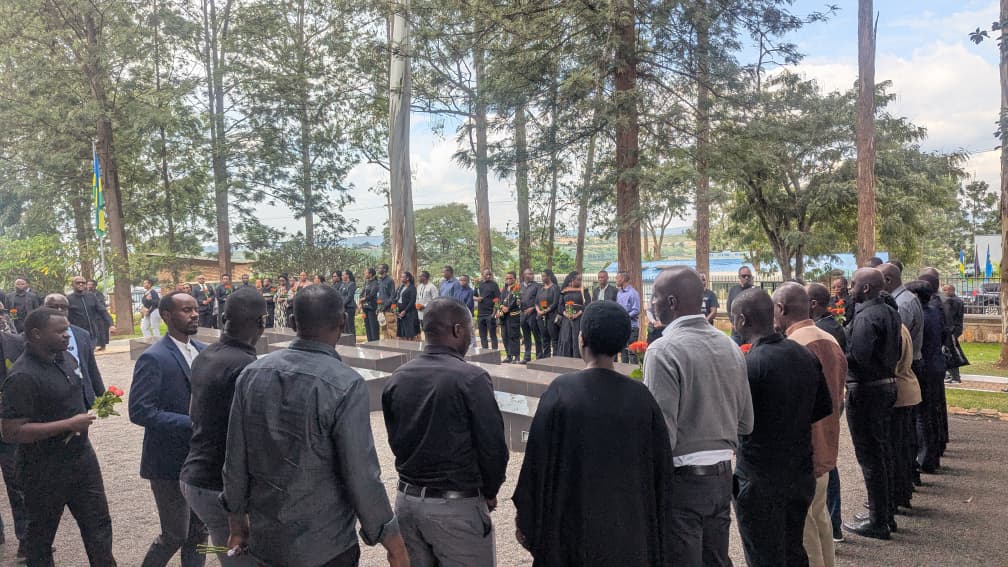
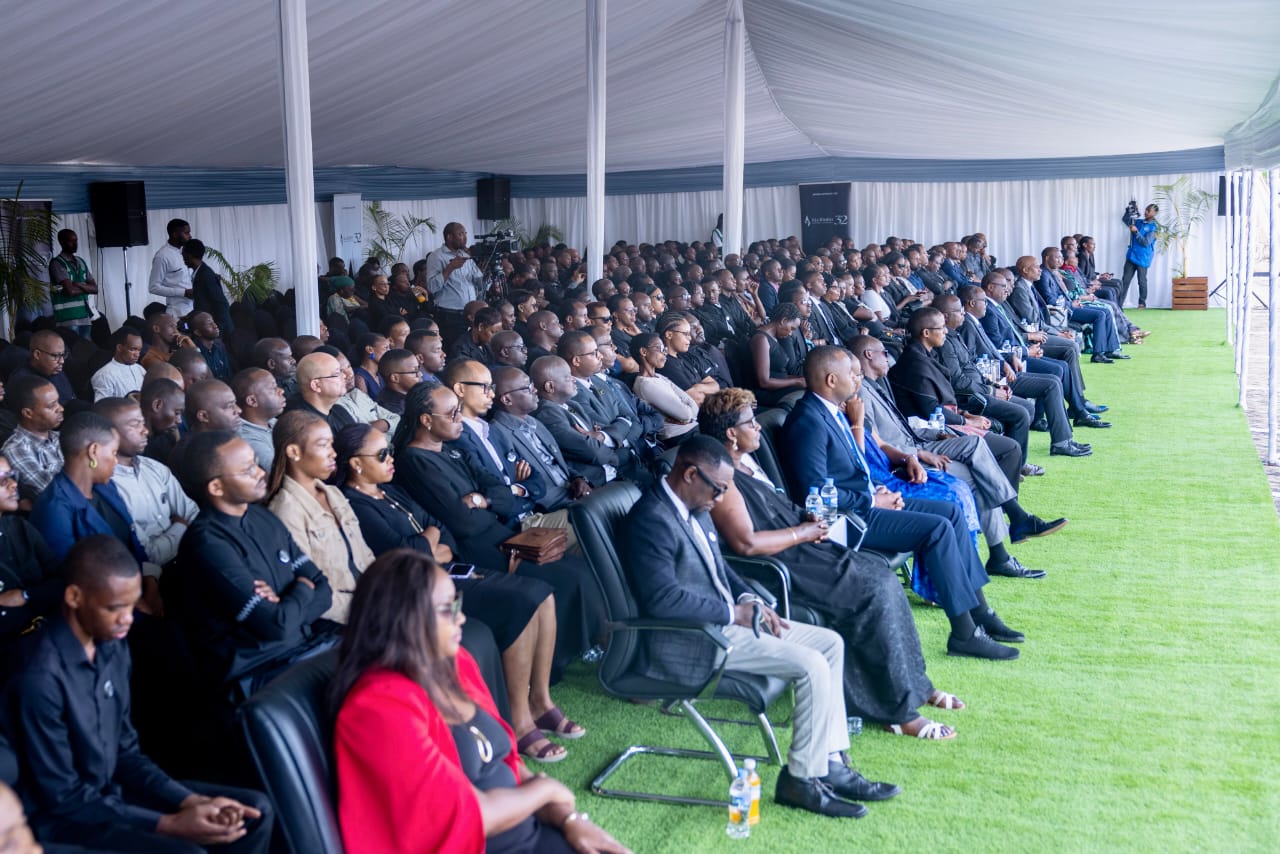
Some.of the families and ministerial staff at the commemoration event in Ntarama
BUGESERA — The dark history of Rwanda’s Bugesera region as one of the earliest and most systematically targeted laboratories for anti-Tutsi persecution was brought back into sharp focus during events marking the 32nd commemoration of the 1994 Genocide against the Tutsi. Leaders and survivors used the occasion to issue stark warnings against modern complacency and the rising tide of online genocide ideology.
The annual commemoration activities take place during Kwibuka (Remembrance), a 100-day period observed every year from April to July to mirror the actual duration of the 100-day slaughter in 1994.
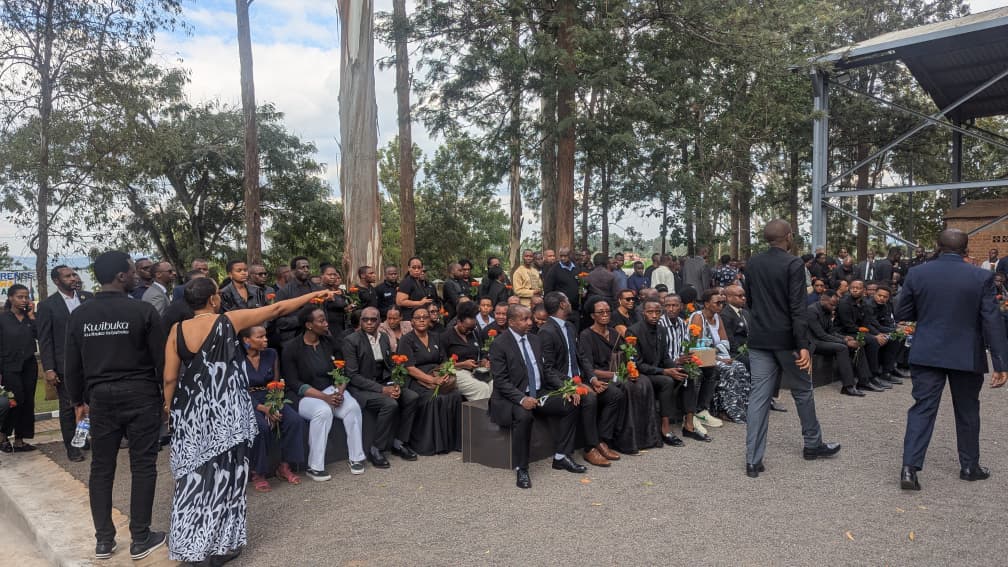
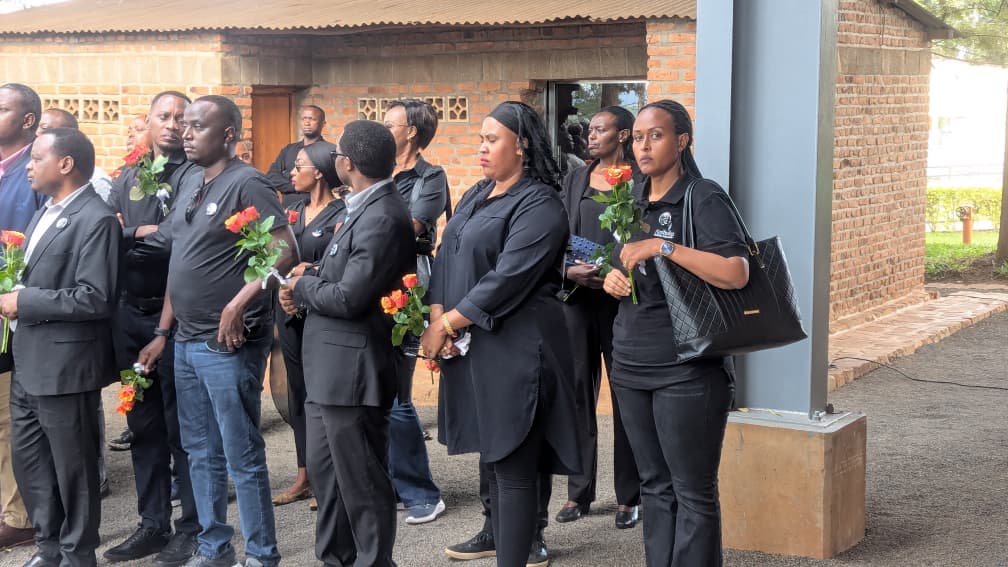
As part of these observations, the Office of the Prime Minister and its co-located institutions—including the Ministry of Infrastructure (MININFRA), the Ministry of Justice (MINIJUST), and the Rwanda Law Reform Commission (RLRC)—held a joint memorial event that included a solemn visit to the Ntarama Genocide Memorial in Bugesera District.
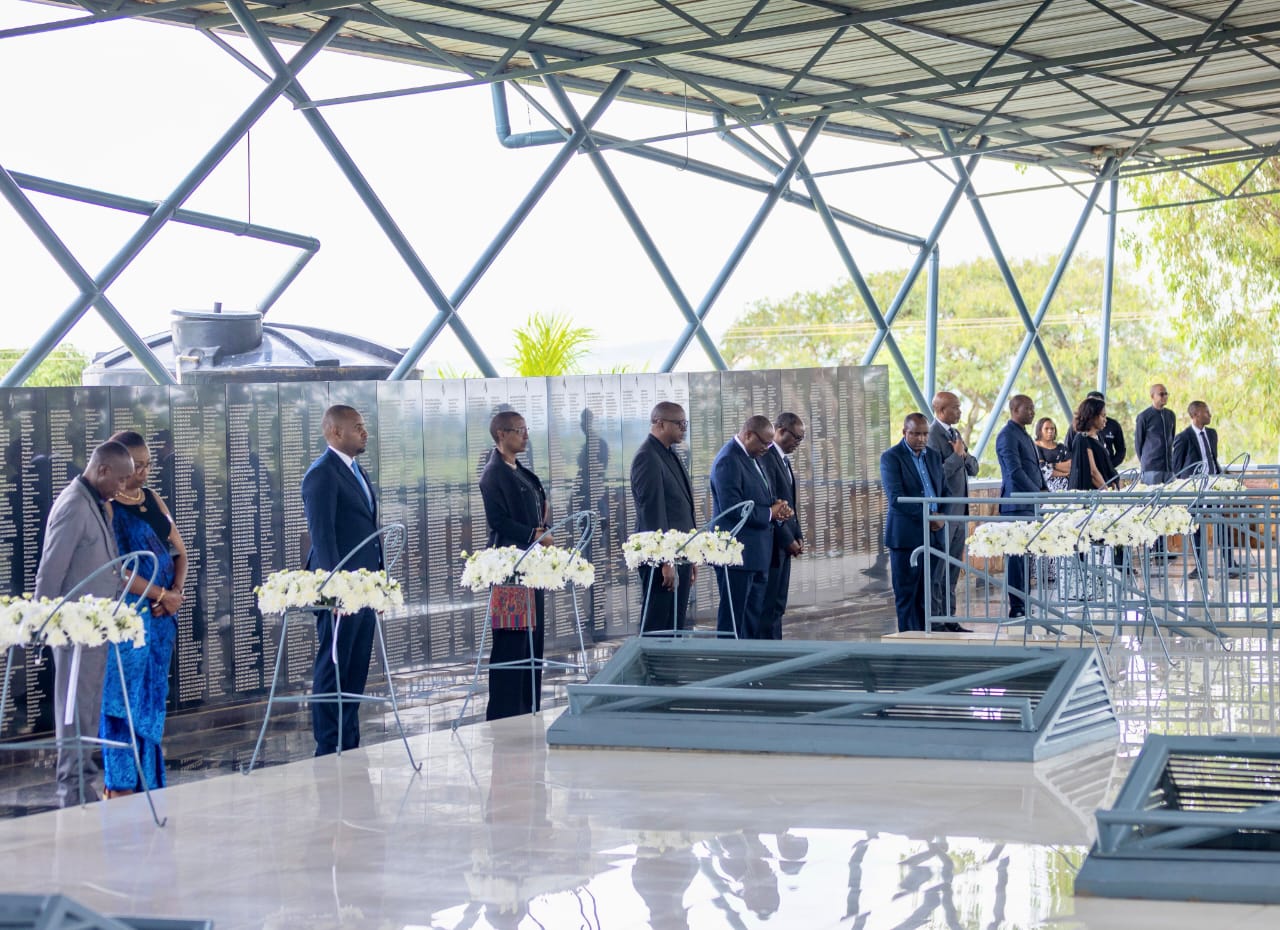
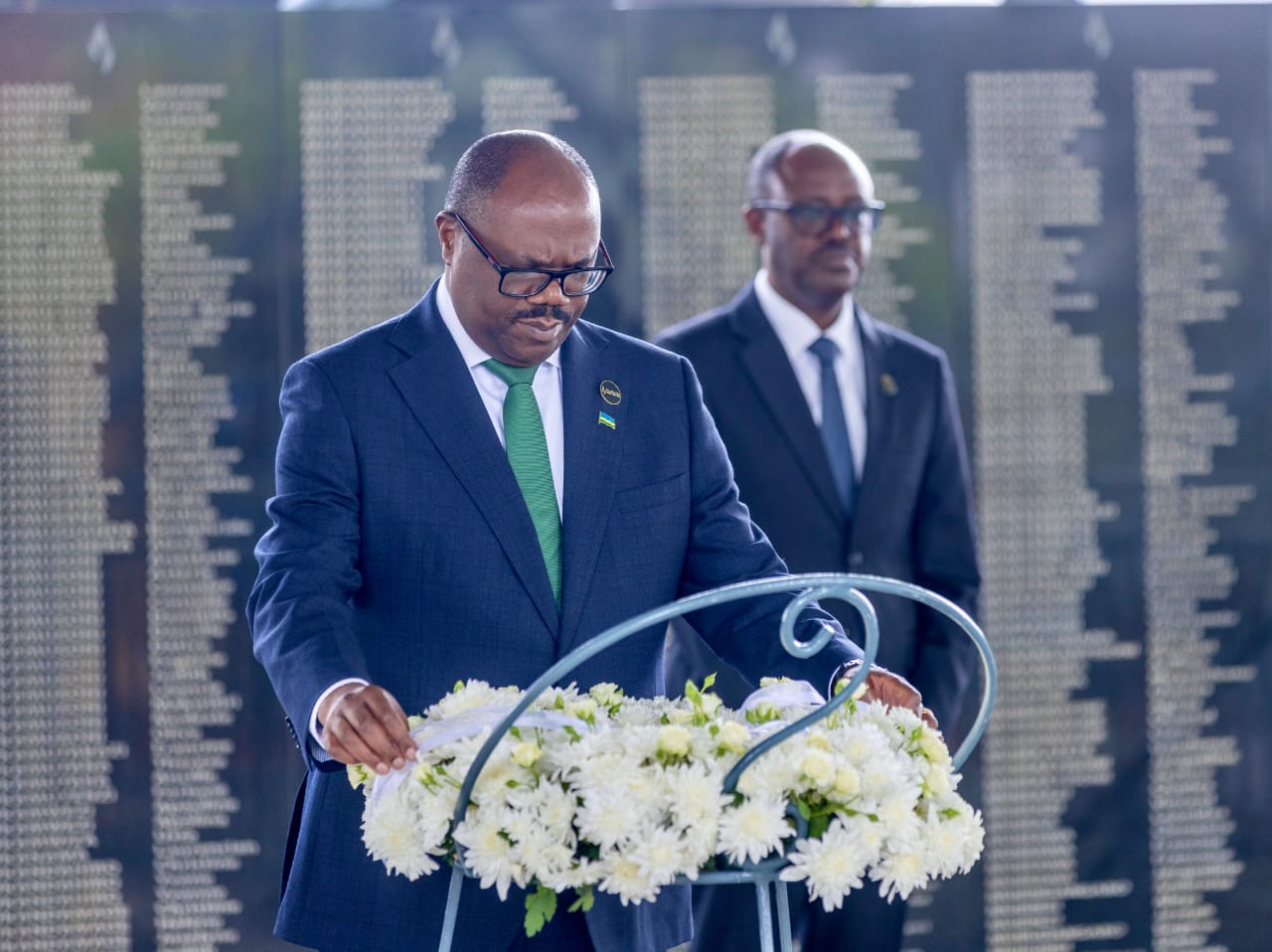
Led by Prime Minister Dr. Justin Nsengiyumva, the delegation paid tribute to the victims by laying wreaths at a memorial wall honoring former public servants. The monument specifically remembers employees of pre-1994 ministries—including MINITRANSCO (Transport and Communications) and MINITRAPE (Public Works)—who were targeted and killed by their own government.
From Exile to a Death Trap: The History of Ntarama
The commemoration later shifted to the grounds of Ntarama, one of the most horrific massacre sites in Rwandan history, where more than 5,000 victims are laid to rest. In April 1994, the local Catholic church and its adjacent school compound became a catastrophic death trap. Thousands of Tutsi fled there seeking historical sanctuary, only to be systematically massacred by the state-backed Interahamwe militia and government armed forces.
During an evening vigil held at the memorial, officials and survivors reflected on how Bugesera had for decades been deliberately engineered into a center of anti-Tutsi segregation long before the genocide erupted.
Dr. Jean-Damascène Bizimana, the Minister of National Unity and Civic Engagement, detailed how successive post-independence regimes intentionally used the Bugesera region to implement policies aimed at isolating and eliminating Tutsi communities.
Minister Bizimana described how, beginning in the late 1950s, displaced Tutsi families were forcibly relocated to Bugesera and Rukumberi. At the time, Bugesera was a harsh, uninhabited wilderness heavily infested with tsetse flies, where authorities actively expected the exiles to succumb to sleeping sickness. Severe restrictions were placed on their movement, education, and property ownership.
“Those who claim there was peace before the genocide ignore decades of organized persecution and killings,” Bizimana said, pointing to repeated state-sanctioned violence. He cited historical records showing that by 1956, thousands of Tutsi had already been killed or displaced, while in 1973, Tutsis purged from schools and jobs in Kigali were banished to Nyamata under inhumane conditions, where hundreds died of disease and forced isolation. This systematic marginalization culminated in March 1992 with a notorious “rehearsal” pogrom in Bugesera that left hundreds of Tutsis dead, previewing the efficiency of the 1994 cataclysm.
Bizimana also sounded an alarm regarding contemporary threats, noting that online extremism and historical revisionism should deeply concern all Rwandans.
“When you look at the hatred spread online today, it reminds us that darkness can return if people stop standing for the truth,” Bizimana warned.
A Childhood Shaped by Hatred: Liliane Murangwayire’s Testimony
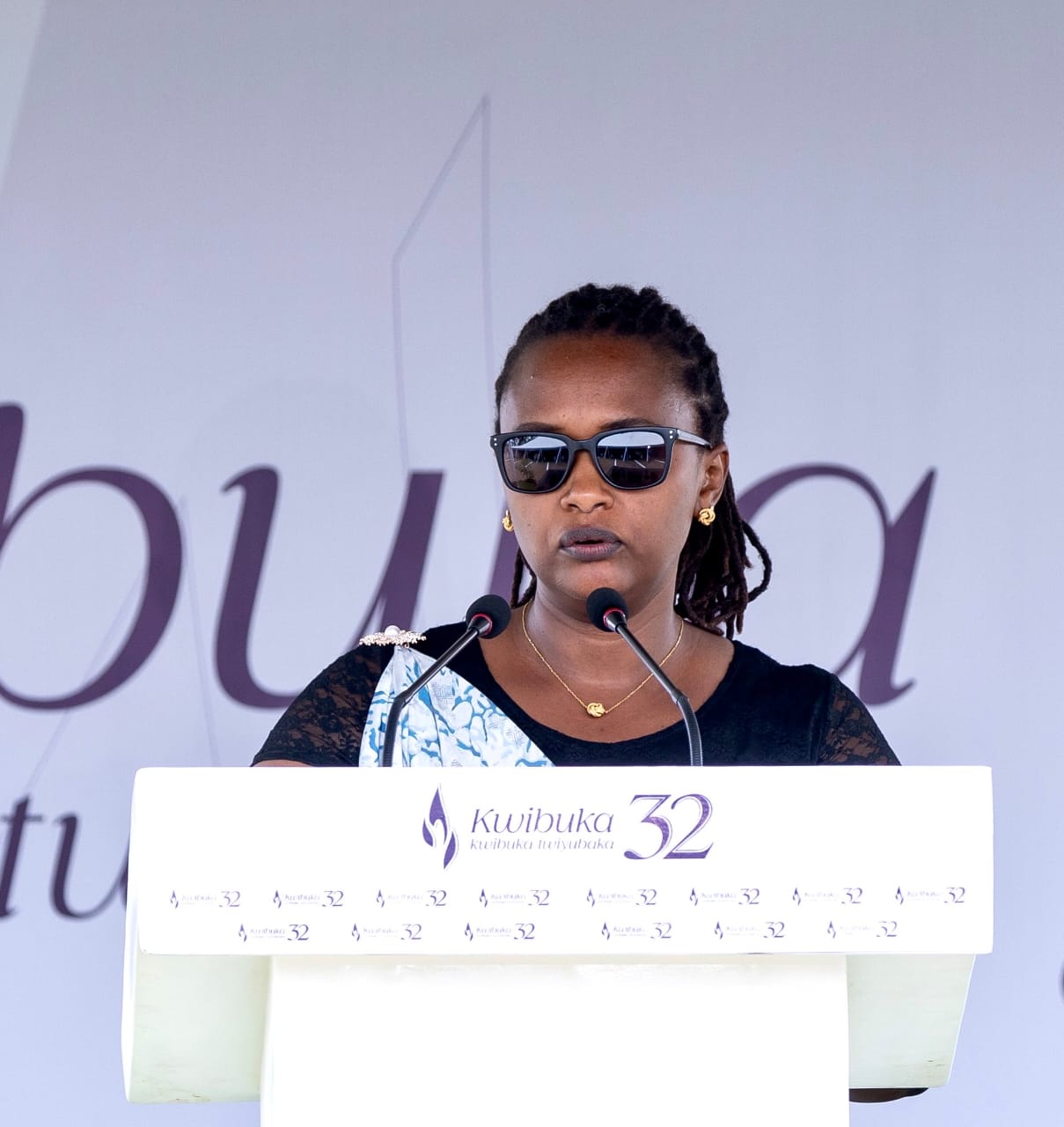
Liliane Murangwayire
The commemoration was marked by an emotional, gripping testimony from survivor Liliane Murangwayire, who recounted how state-enforced discrimination fractured her childhood long before 1994.
Murangwayire shared that she first experienced ethnic persecution in 1986 at just four years old, when neighbors began targeting her family simply because they were Tutsi.
“One child told me that no Hutu had a nose like mine,” she recalled. “I remember starting to pull my nose, trying desperately to reshape it so that I would not be killed.”
She described a childhood defined by fear: repeated attacks on their home, the arbitrary arrest and torture of her father, the destruction of their property, and multiple forced internal displacements.
When the genocide was officially triggered following the assassination of President Juvénal Habyarimana on April 6, 1994, her family joined the sea of desperate refugees fleeing across Bugesera. They sought refuge at Ntarama Church, where civilians attempted to defend themselves using nothing but sticks and stones against heavily armed, state-backed attackers.
“The killers came with nails, spears, and crude weapons because they were told openly not to waste expensive bullets on us,” she recalled. “That church was the last time I ever saw my mother and most of my family.”
Left for dead beneath a pile of bodies, Murangwayire miraculously survived her wounds and was rescued weeks later when soldiers of the Rwandan Patriotic Army (RPA) liberated the area. Today, she is married, a mother, and an accomplished author who documented her harrowing journey and path to healing in her memoir, “La lèvre sanglante” (The Bloody Lip).
Standing at Ntarama decades later, she described her survival as a miracle and urged the younger generation to aggressively protect historical facts.
Defending the Truth Beyond Annual Mourning
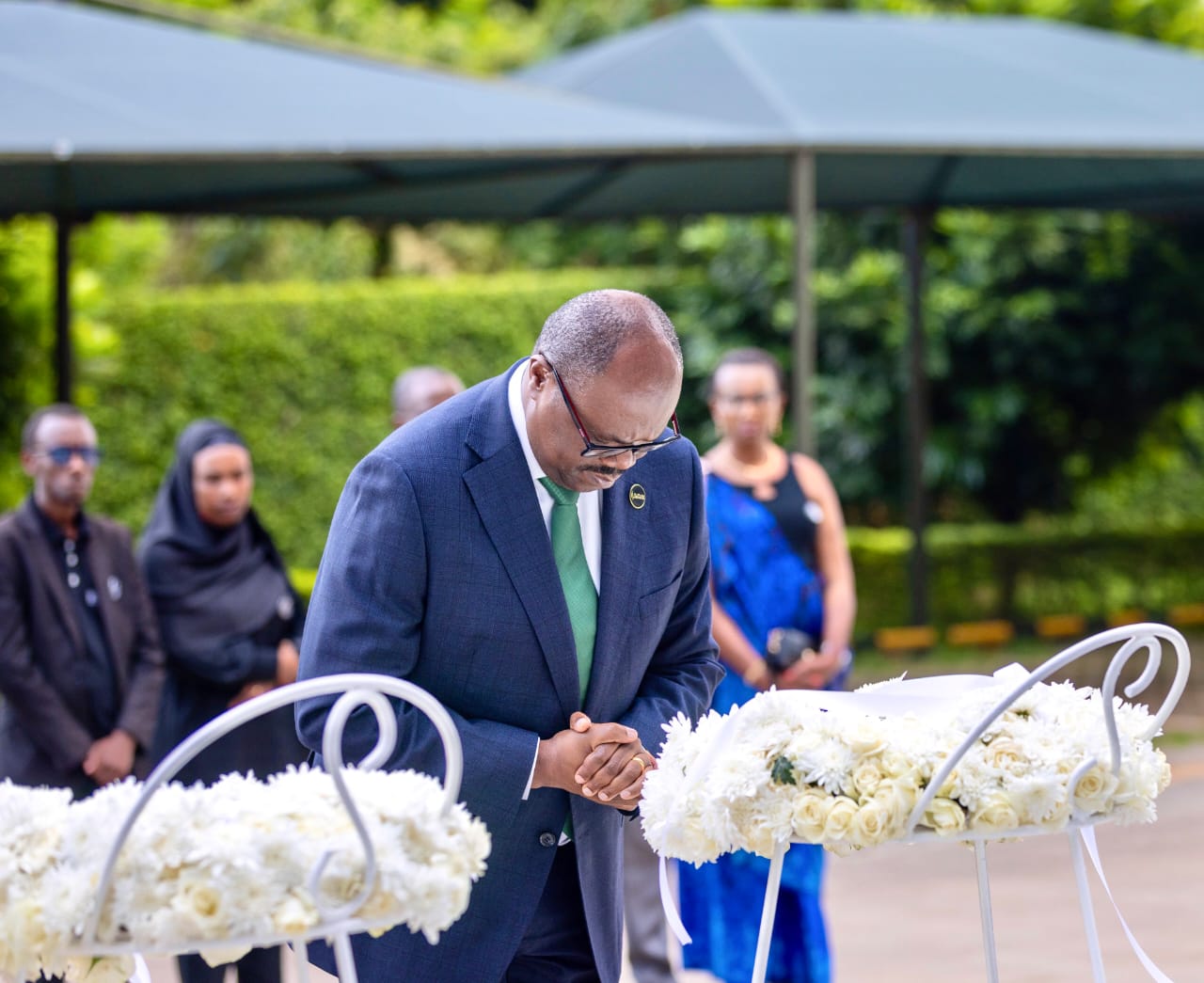
Prime Minister Dr. Justin Nsengiyumva pays his respects to victims at Ntarama site
Closing the event, Prime Minister Dr. Justin Nsengiyumva stated that the tragic history of Bugesera demonstrates why Rwanda’s commitment to “Never Again” must remain an active, daily practice rather than a slogan rolled out only during annual commemorations.
“The 1994 Genocide against the Tutsi was not an accident, a spontaneous outburst, or a side effect of war,” the Prime Minister said. “It was a meticulous, decades-long plan engineered by the government of that era through deeply harmful policies and institutionalized hatred.”
He warned public servants and citizens alike to remain vigilant against modern divisionism. “There are still actors actively attempting to distort our country’s history, rewrite the facts of the genocide, and sow toxic divisions among Rwandans. We must continue protecting the truth and preventing any ideology that could take us back to those dark times.”
The Prime Minister concluded by praising the young soldiers of the Rwandan Patriotic Front (RPF-Inkotanyi), led by President Paul Kagame, who put an end to the slaughter when the international community failed to act, ultimately restoring hope and a unified citizenship to survivors and perpetrators alike.
The history of Rwanda’s Bugesera region as one of the earliest and most systematically targeted areas for anti-Tutsi persecution was brought back into focus on Thursday during the 32nd commemoration of the 1994 Genocide against the Tutsi, with leaders and survivors warning against complacency in the fight against genocide ideology.
The Office of the Prime Minister and institutions operating within the same premises — including the Ministry of Infrastructure (MININFRA), Ministry of Justice (MINIJUST), and the Rwanda Law Reform Commission (RLRC) — held a commemoration event that included a visit to the Ntarama Genocide Memorial in Bugesera District.
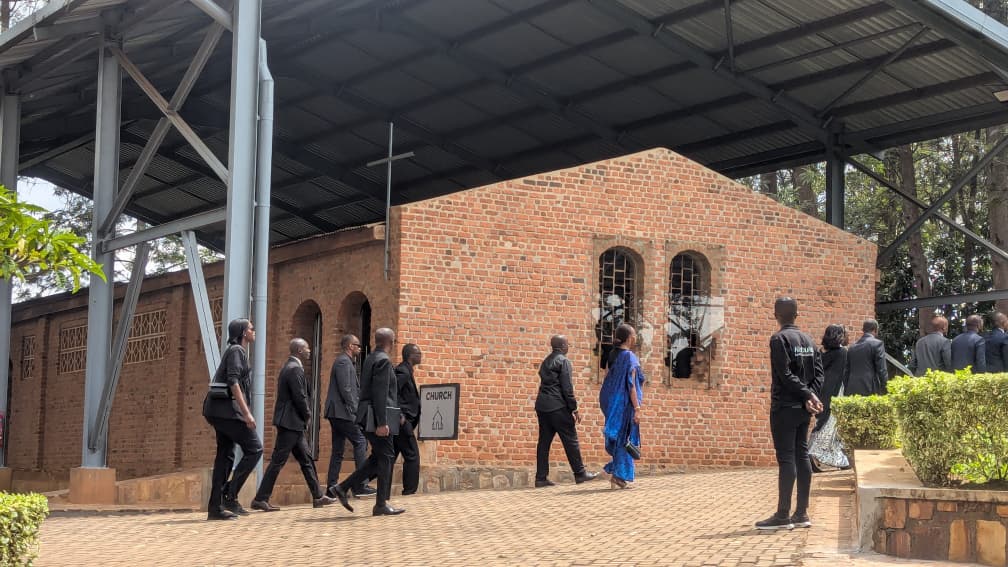
Ntarama genocide memorial site
Led by Prime Minister Dr. Justin Nsengiyumva, the delegation paid tribute to genocide victims by laying wreaths at a memorial wall honoring former employees of former ministries including MINITRANSCO, MINITRAPE and MINIJUST who were killed during the genocide.
The event later shifted to Ntarama, one of the most horrific massacre sites of the genocide, where more than 5,000 victims are buried. The former Catholic church and school became a death trap in April 1994 as thousands of Tutsi who had sought refuge there were massacred by Interahamwe militia and government forces.
During a night vigil held at the memorial, officials and survivors reflected on how Bugesera had for decades been deliberately turned into a center of anti-Tutsi persecution long before the genocide erupted in 1994.
Minister of National Unity and Civic Engagement Jean-Damascène Bizimana said Bugesera was among the regions intentionally used to implement policies aimed at isolating and eliminating Tutsi communities.
He described how displaced Tutsi families were forcibly relocated to Bugesera and Rukumberi under harsh conditions during earlier waves of ethnic violence, with restrictions placed on their movement and property ownership.
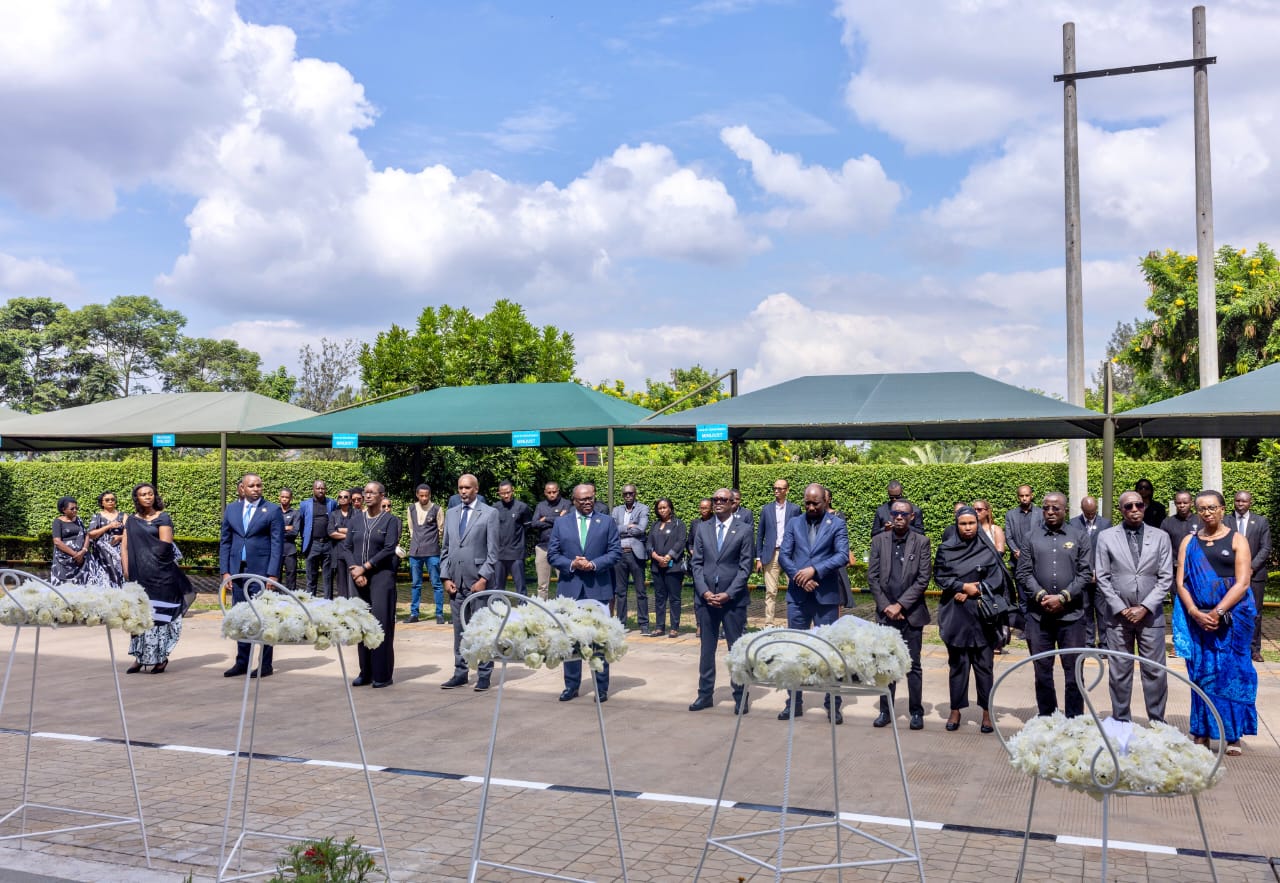
Ministers of Local government, Justice, Infrastructure and national unity join the PM to lay wreaths at the Office of the Prime Minister premises in Kimuhurura
According to Bizimana, anti-Tutsi directives and propaganda steadily normalized discrimination in the region, creating the foundation for later mass killings.
“Those who claim there was peace before the genocide ignore decades of organized persecution and killings,” Bizimana said, pointing to repeated attacks against Tutsi communities in Bugesera dating back to the late 1950s and 1970s.
He cited historical records showing that by 1956, thousands of Tutsi had already been killed, while in 1973 many Tutsi expelled from Kigali were relocated to Nyamata under inhumane conditions where hundreds died due to poor living conditions and exclusion.
Bizimana also warned about the dangers of genocide denial and hate speech in modern times, saying online extremism and revisionism should concern all Rwandans.
“When you look at the hatred spread online today, it reminds us that darkness can return if people stop standing for truth,” he said.
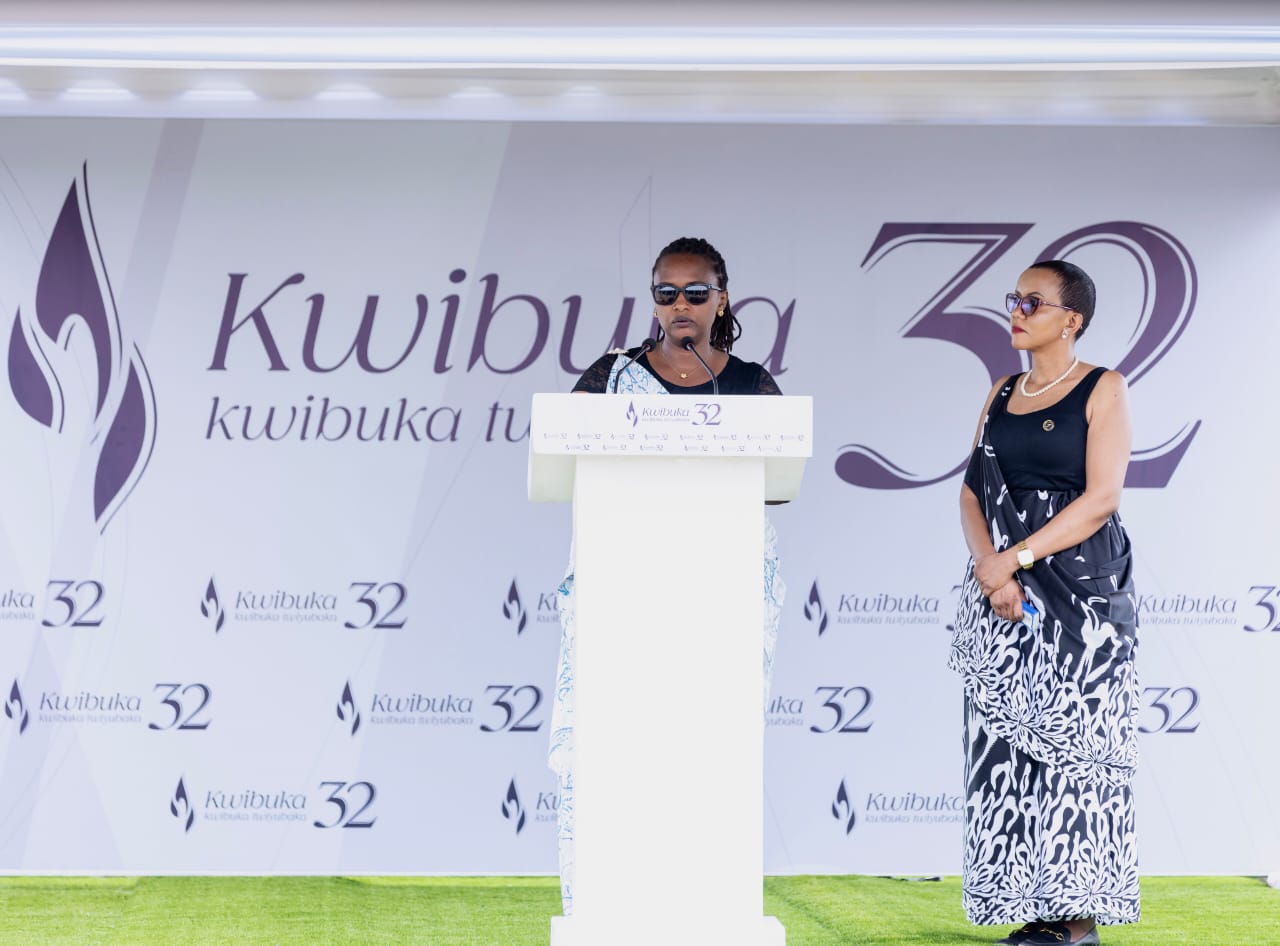
Liliane Murangwayire (leftI assisted to give her testimony
The commemoration was marked by an emotional testimony from genocide survivor Liliane Murangwayire, who recounted how anti-Tutsi discrimination shaped her childhood years before the genocide.
Murangwayire said she first experienced ethnic persecution at just four years old in 1986, when neighbors targeted her family because they were Tutsi.
“One child told me no Hutu had a nose like mine,” she recalled. “I started pulling my nose trying to make it look different so I would not be killed.”
She described repeated attacks on her family before 1994, including the arrest and torture of her father, destruction of family property, and multiple forced displacements.
When the genocide began after the assassination of President Juvénal Habyarimana on April 6, 1994, her family joined thousands fleeing through Bugesera in search of safety.
They eventually reached Ntarama Church, where desperate refugees attempted to defend themselves with stones against heavily armed attackers.
“The killers came with nails, spears and crude weapons because they were told not to waste bullets,” she recalled. “That was the last time I saw my mother and most of my family.”
Murangwayire survived after being left for dead among bodies before being rescued weeks later by soldiers of the former Rwanda Patriotic Army (RPA).
Today, she is married, has children and authored a book recounting her survival story.
Standing at Ntarama decades later, she described her survival as “a miracle” and urged younger generations to protect the truth about the genocide.
Prime Minister Nsengiyumva (left) and IBUKA president, Dr. Philbert Gakwenzire
Prime Minister Nsengiyumva said the history of Bugesera demonstrates why the “Never Again” commitment must remain active beyond annual commemorations.
“The 1994 Genocide against the Tutsi was not an accident,” he said. “It was planned by the government of the time through harmful policies and decisions.”
He warned that genocide ideology, denial and divisionism still exist and called on public servants and citizens alike to remain vigilant.
“There are still people attempting to distort our country’s history and sow divisions among Rwandans,” he said. “We must continue protecting the truth and preventing any ideology that could take us back to dark times.”
The Prime Minister also praised the former FPR-Inkotanyi forces led by President Paul Kagame for stopping the genocide and restoring hope to survivors.
As Rwanda continues the 100 days of commemoration, Thursday’s event in Bugesera served not only as a remembrance of lives lost, but also as a reminder of how systematic discrimination and hatred, if left unchecked, can evolve into catastrophe.
For survivors and leaders alike, Bugesera’s history remains a warning that “Never Again” is not simply a slogan, but a responsibility that must be defended every day.
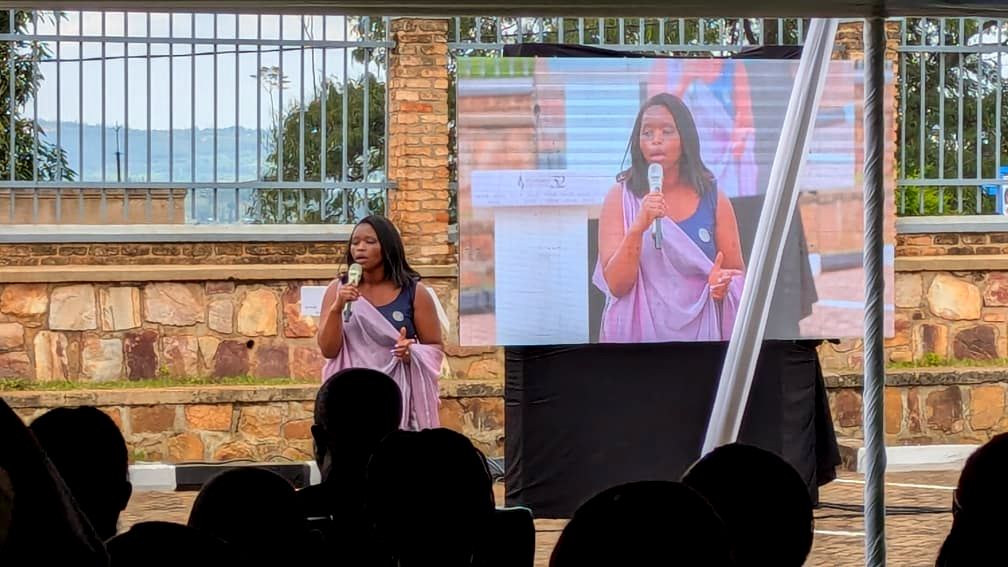
Genocide survivor and commemoration singer-Grace performs