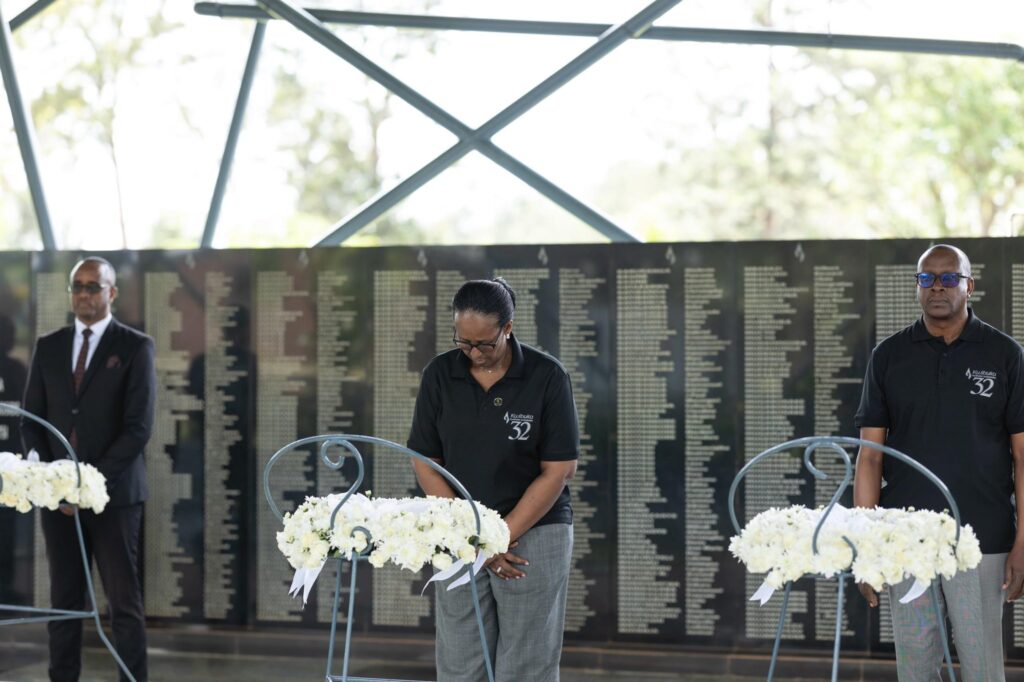
First Lady Jeannette Kagame (C) and the Minister of National Unity and Civic Engagement, Jean-Damascène Bizimana (R) lay wreaths at graves of victims buried at Ntarama Genocide Memorial.
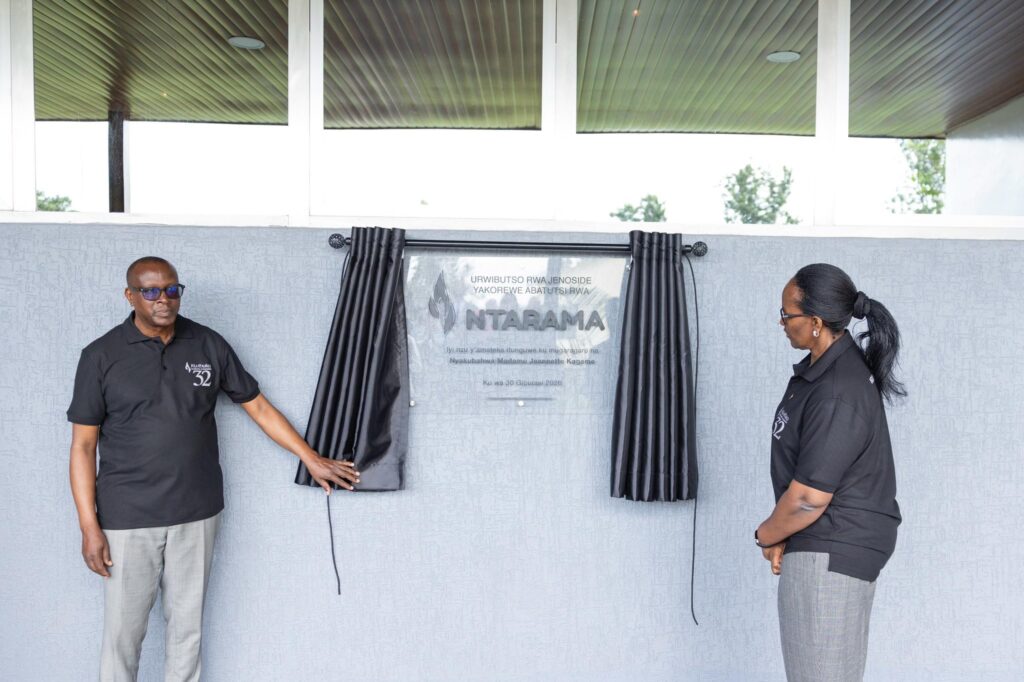
KIGALI – First Lady Jeannette Kagame on Saturday inaugurated a history center at the Ntarama Genocide Memorial, in a reinforced effort to strengthen how Rwanda preserves and teaches the history of the 1994 Genocide against the Tutsi.
The memorial center, located in Bugesera District, remains one of the country’s most significant spaces of remembrance, with more than 5,000 victims laid to rest there.
It is a place where history is not interpreted from a distance, but encountered directly through preserved evidence and collective silence. At Ntarama, memory is not abstract; it is anchored in the ground, in the preserved structures, and in the absence that defines the space.
The Historical Context of Ntarama
Ntarama stands out because the Genocide against the Tutsi unfolded inside a Catholic church that had traditionally been chosen as a place of refuge.
For decades leading up to 1994, Tutsis fleeing sporadic outbreaks of state-sponsored violence had sought safety within church walls, where local authorities and religious sanctity historically offered a layer of protection.
However, when the planned extermination campaign “officially” began on April 7, 1994 after the downing of President Juvénal Habyarimana’s plane, that precedent was systematically weaponized.
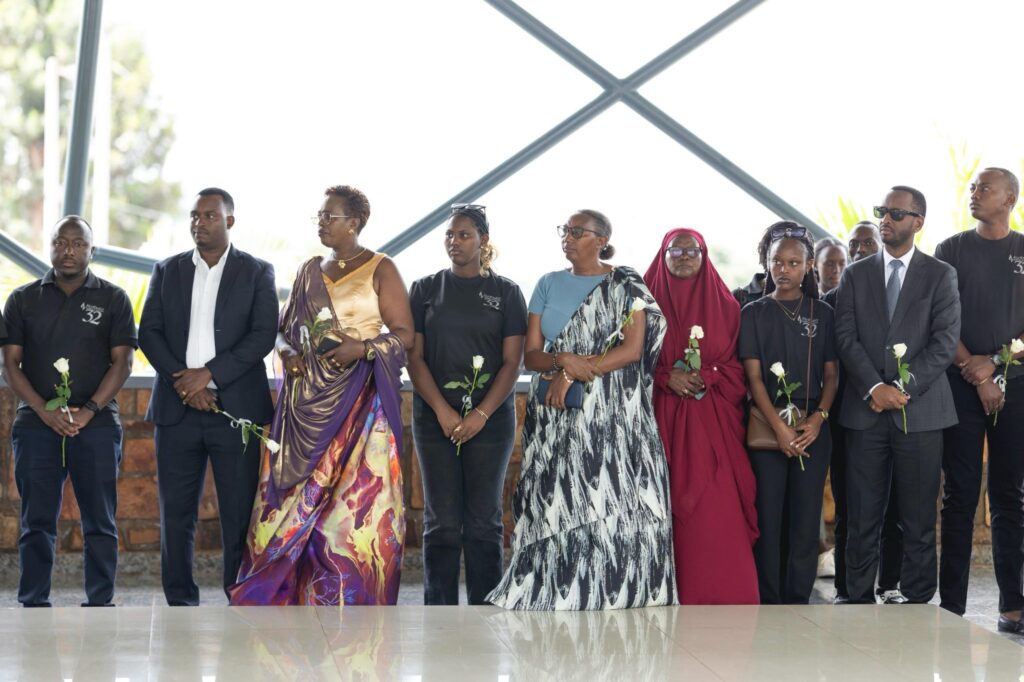
Mourners pay respect to the more than 5,000 victims laid to rest at Ntarama Genocide Memorial.
In mid-April, thousands of civilians gathered at Ntarama Church, only to find the doors turned into a trap. Interahamwe militia forces and government soldiers used grenades and guns to breach the brick walls before moving in with traditional weapons. The sacred space was entirely transformed into a site of mass killing.
The memorial has been preserved largely in its original post-1994 condition, with personal belongings such as clothing, identity cards, and everyday items still in place.
This leaves the site as direct physical evidence of how quickly and completely ordinary life was destroyed during the 100-day tragedy that claimed more than one million lives across Rwanda.
On Saturday, the inauguration of the history center began with a wreath-laying ceremony, followed by a moment of silence. The gesture, simple but weighty, set the tone for a site that demands reflection before explanation.
From Remembrance to Structured Learning
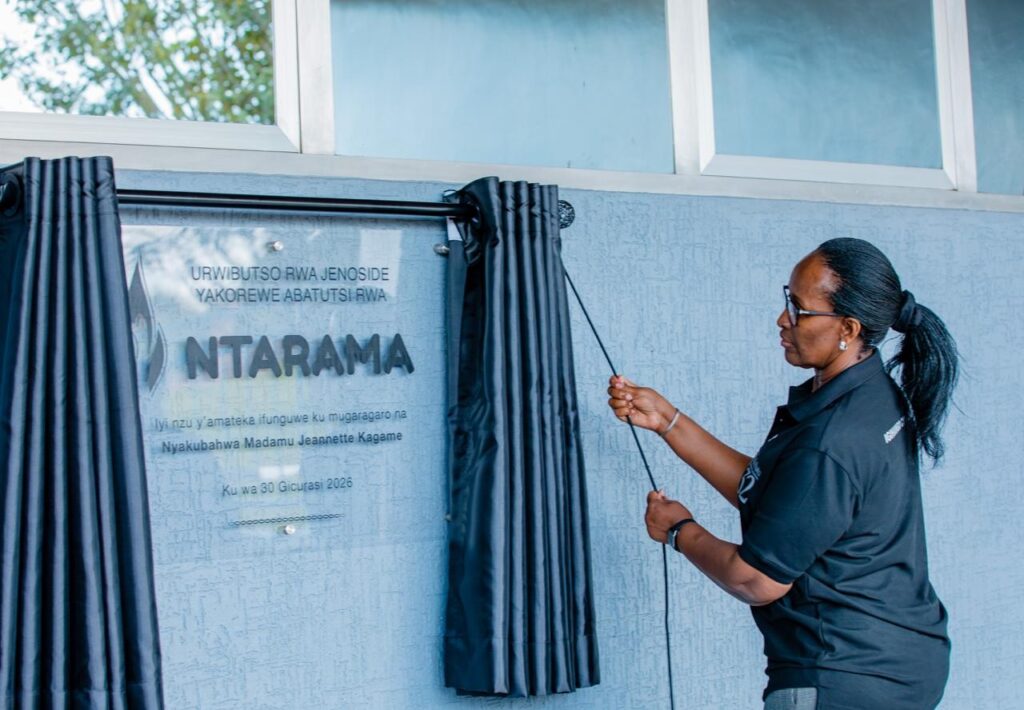
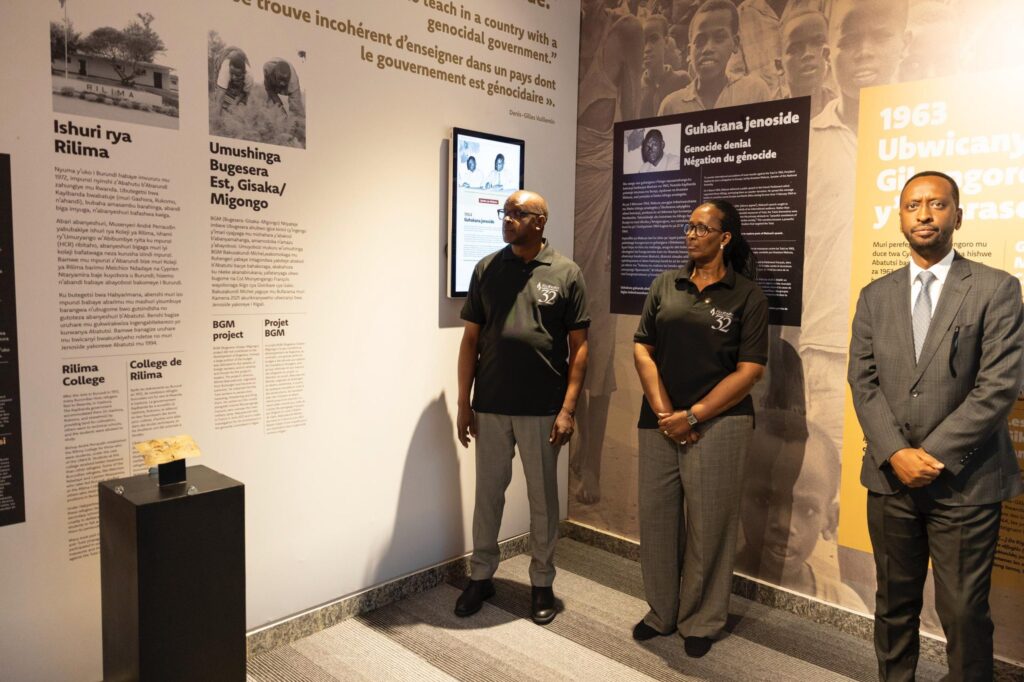
First Lady Jeannette Kagame on Saturday inaugurated a history center at the Ntarama Genocide Memorial.
The newly opened history center is intended to transition the memorial experience from reflection alone to structured understanding. It was developed through a partnership involving Liquid Intelligent Technologies Rwanda, Unity and Memory Rwanda, and Imbuto Foundation.
Together, the partners refer to the project as a national investment in preservation and education, aimed at ensuring that the history of the Genocide against the Tutsi is documented, safeguarded, and made accessible to future generations.
Inside the center, historical material is organized into guided narratives, testimonies, and records that help explain how the genocide unfolded and how Rwanda rebuilt in its aftermath. The focus is not only on preservation but on clarity, especially for visitors born long after 1994.
This transition is subtle but important. The memorial site remains a place of direct encounter with history, while the center introduces structure to that encounter.
The Weight of What Remains
The more than 5,000 victims laid to rest at Ntarama give the site its permanence. Each visit carries the same reminder: the scale of loss is individual and collective at once.
For survivors and families, the memorial is not simply a historical location. It is a space where absence is continuously present, and where remembrance is part of everyday national consciousness.
The addition of the history center extends that responsibility. It does not replace the memorial experience; it organizes it, ensuring that what is witnessed on-site is supported by documented history and verified accounts.
Memory as a Civic Responsibility
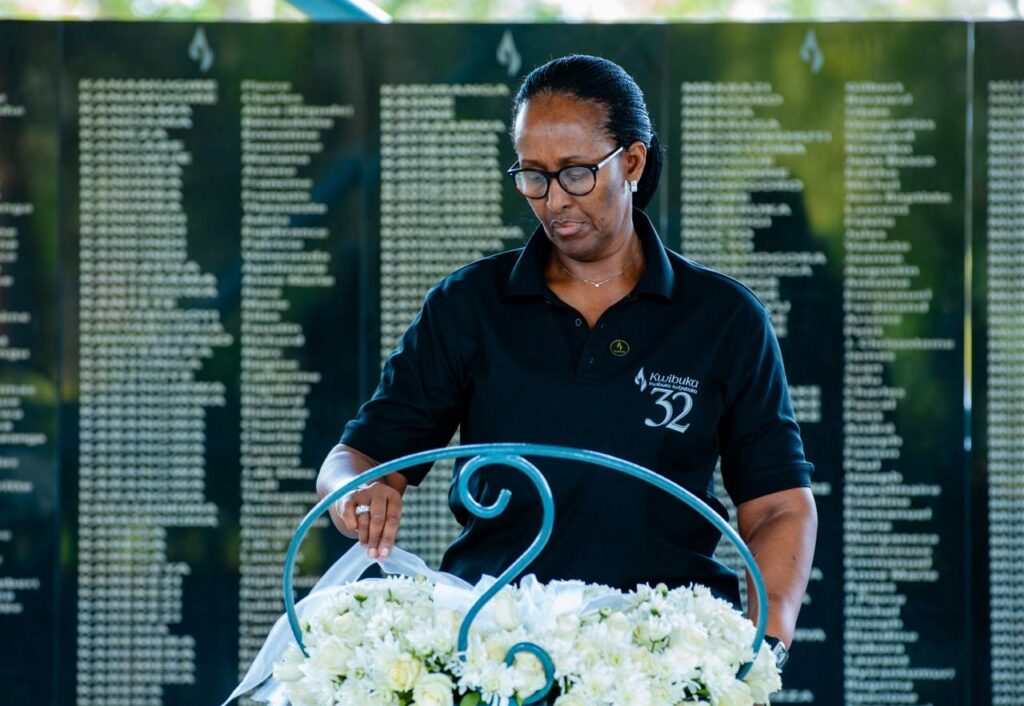
First Lady Jeannette Kagame has consistently framed genocide remembrance as a vital pillar of Rwanda’s long-term national rebuilding. Her presence at Ntarama underscored the government’s commitment to ensuring that history is neither forgotten nor distorted.
Later in the day, at the Igihango cy’Urungano (Generation Covenant) forum held at the Intare Conference Arena, she reinforced this message, linking memory preservation directly with education and unity.
She called on Rwandans to visit Ntarama and other genocide memorials across the country, stressing that memory must serve the broader purpose of strengthening unity and reinforcing collective responsibility in building the country.
Memory in Rwanda is not being left to time. It is being maintained through institutions, education, and public engagement.
The history center at Ntarama ensures that remembrance is not only preserved in physical form but also carried forward through structured learning that remains accessible to new generations.
At the end of each day, Ntarama Genocide Memorial returns to silence, but it is not an empty silence. It is one shaped by presence, by documentation, and by an insistence that history remains visible and understood.