



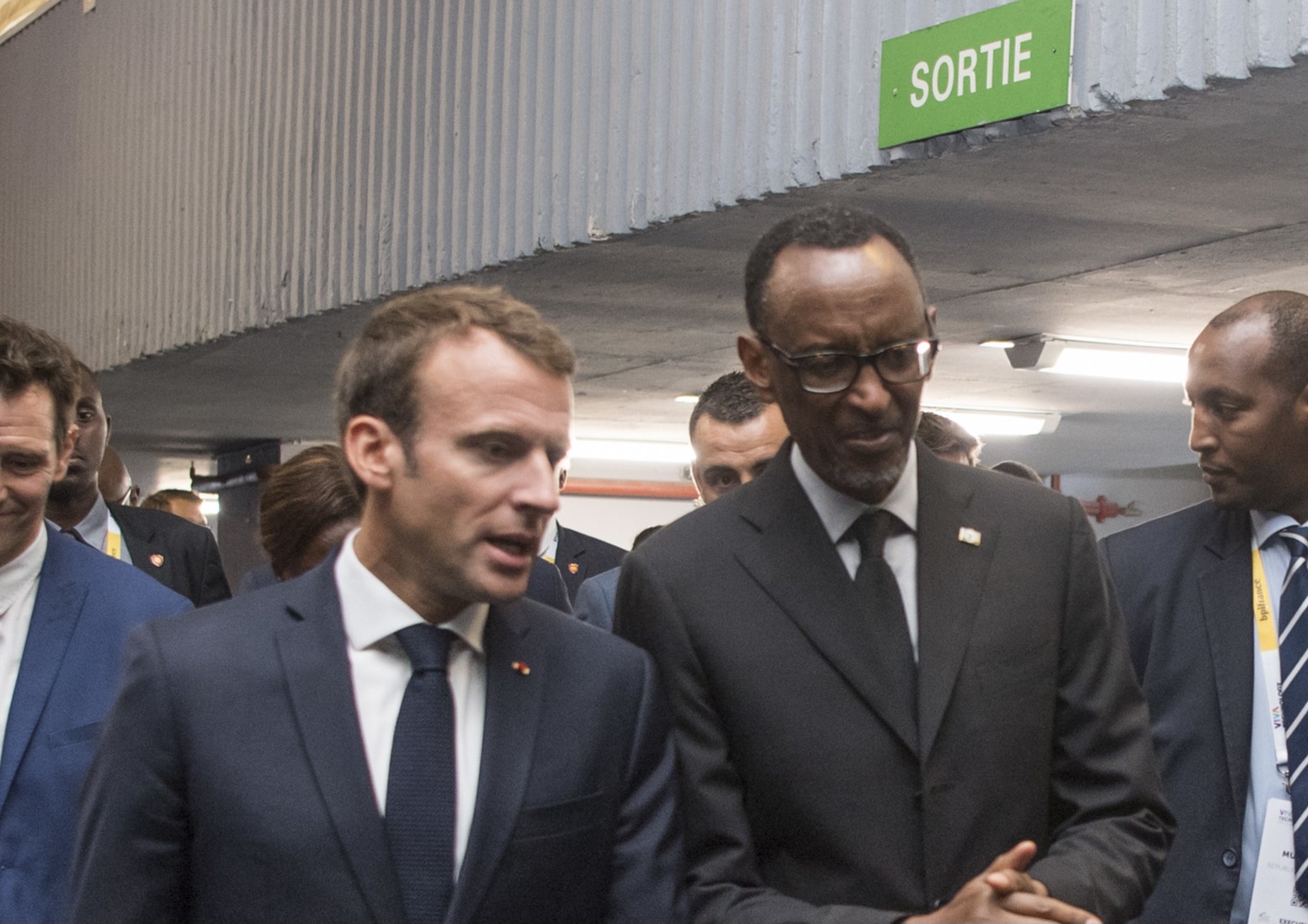
President Kagame and French counterpart Emmanuel Macron will preside over the inauguration
PARIS — President Paul Kagame is expected in Paris at invitation of French President Emmanuel Macron to jointly inaugurate a new memorial site dedicated to victims of the 1994 Genocide against the Tutsi this Tuesday, June 2, in Paris.
The memorial, named “L’Archive” (The Archive), has been installed on the Esplanade Habib-Bourguiba along the banks of the Seine in the Quai d’Orsay area of the French capital.
The project was initiated by the French State and the City of Paris as part of ongoing remembrance and reconciliation efforts between France and Rwanda.
Designed by Berlin-based Portuguese artist Grada Kilomba, the memorial consists of two large black brass steles mounted on white and black lava stones.
According to organizers, the structure symbolizes an archive of voices, memories, experiences and hopes linked to victims and survivors of the genocide. Inscriptions appear in French, English, Kinyarwanda and Swahili.
The site is intended to serve as a permanent public place of remembrance and reflection for the over a million Tutsi killed during the genocide between April and July 1994.
The inauguration ceremony is expected to include remarks by Presidents Kagame and Macron, alongside Paris city representatives and genocide survivors. Jeanne Uwimbabazi, a survivor of the genocide, is among those scheduled to speak.
Franco-Rwandan musician and writer Gaël Faye is also expected to participate through a reading of a poem written by Franco-Rwandan author and genocide survivor Beata Umubyeyi Mairesse.
The event will be followed by an official dinner at the Élysée Palace.
The unveiling marks another step in the evolving relationship between France and Rwanda, particularly following Macron’s 2021 visit to Kigali, during which he acknowledged France’s “responsibilities” during the genocide period while stating France had not been complicit in the killings.
The memorial’s opening has been widely viewed in Rwanda as a significant moment during the 32nd commemoration period, Kwibuka32, and as part of broader efforts to preserve memory for future generations.
