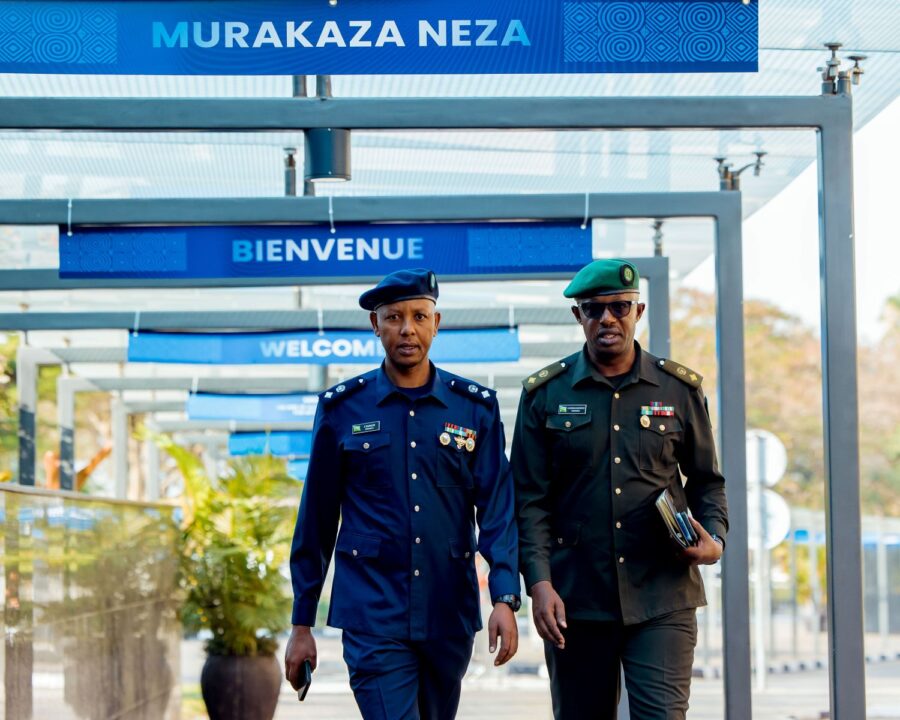
Officers arrive for the International Security Conference for Africa (ISCA).
KIGALI – Africa risks turning the rapid rise of autonomous military technology from a potential strategic advantage into a new source of vulnerability unless countries move quickly to develop their own capabilities, Rwanda’s security officials have warned.
The concern came up during a high-level discussion in Kigali on the rise of autonomous systems and their implications for defence and security in Africa.
More than 300 delegates from at least 50 countries gathered to examine how artificial intelligence and autonomous technologies are reshaping warfare, border security and national defence.
Col. (Rtd) David Kanamugire, CEO of Rwanda’s National Cyber Security Authority, underscored that the fundamental nature of military power is changing, and so, should Africa’s approach.
As machines acquire the ability to perceive their surroundings, analyze information, make decisions and act with increasingly limited human intervention, the continent is urged not to lag behind.
“The question for Africa is, one, are we just going to continue to be a consumer of this technology? Or are we going to invest in capabilities that can help shape this technology that is going to be instrumental in the future?” Kanamugire said.
For African countries, the race to understand and develop autonomous systems is becoming closely linked to sovereignty, strategic independence and the ability to respond to emerging security threats without relying entirely on capabilities developed elsewhere.
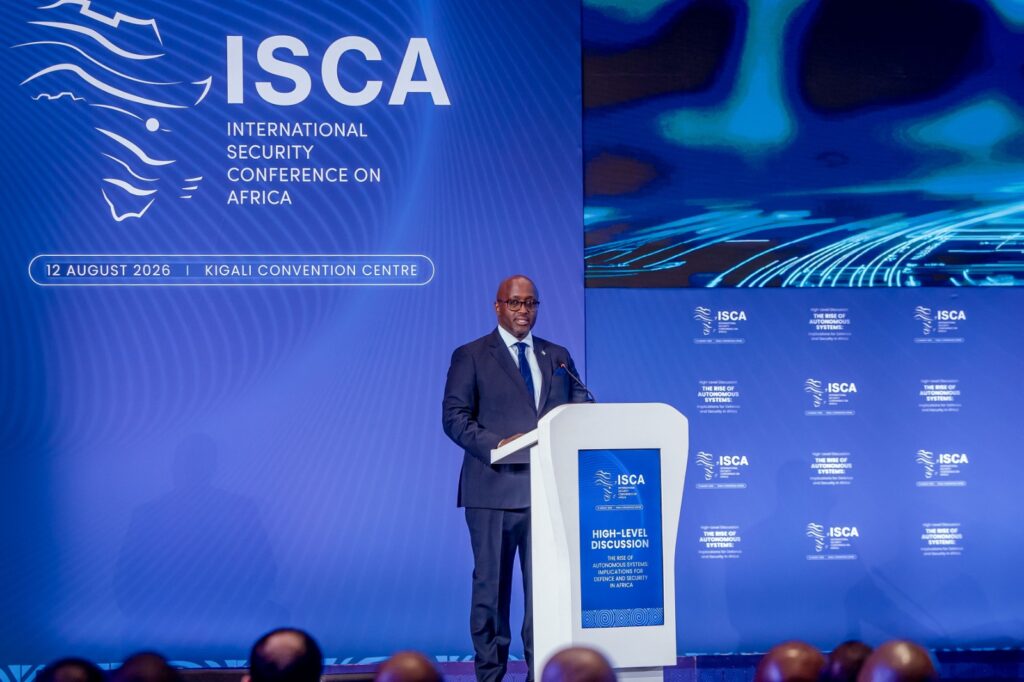
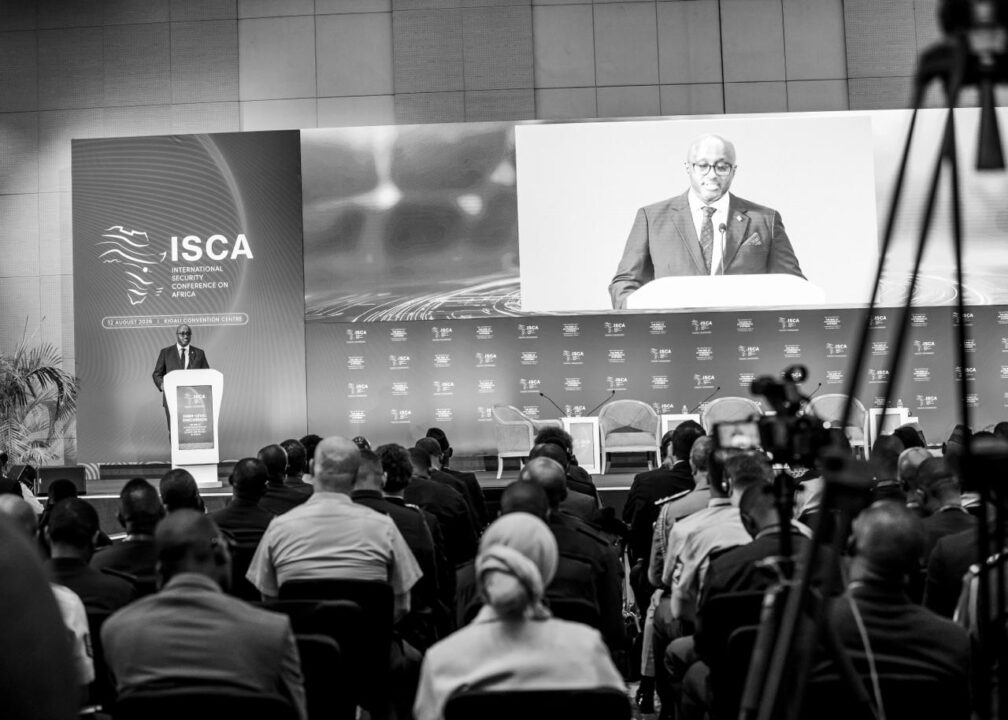
Rwanda’s Foreign Minister Olivier Nduhungirehe gave opening remarks at the International Security Conference for Africa (ISCA).
Rwanda’s Foreign Minister Olivier Nduhungirehe said the speed at which autonomous systems and artificial intelligence are becoming accessible, means African defence and security institutions can no longer afford to treat the technologies as a distant concern.
“Africa cannot afford to fall behind as these technologies continue to evolve,” Nduhungirehe said, stressing that countries must understand what the technologies mean not only for security, but also for “sovereignty and strategic autonomy.”
Autonomous and AI-enabled systems can potentially strengthen intelligence gathering, border surveillance, maritime security and protection of critical infrastructure, while reducing the exposure of military and security personnel to danger.
But the same technologies can also create new risks, particularly as sophisticated tools become available to non-state actors.
Lt. Gen. (Rtd) Frank Mushyo Kamanzi, the Executive Director of the International Security Conference on Africa, said autonomous systems are rapidly redefining the character of warfare, border security and national defence.
“Autonomous systems, once considered the technology of the future, is now shaping strategic and operational realities of the present,” Kamanzi said.
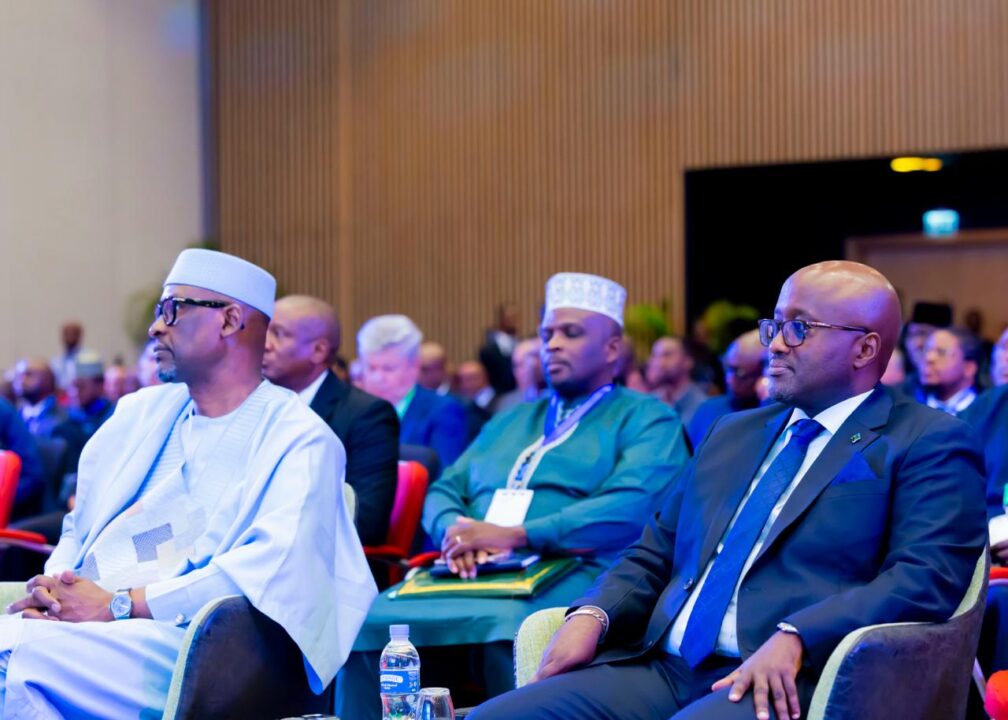
Mali’s Foreign Minister Abdoulaye Diop alongside his Rwandan counterpart Olivier Nduhungirehe at the International Security Conference for Africa (ISCA).
That concern is forcing African militaries to reconsider not only the weapons they acquire, but also the people and institutions required to operate them.
Military strength has historically been measured through troop numbers, weapons and industrial capacity to produce ammunition and other military equipment.
But that model is being disrupted by systems capable of performing tasks that previously depended almost entirely on human operators. In this new era, the question then is no longer whether autonomy or autonomous systems are coming, because they’re already here.
According to experts, the change could eventually make the size of a military less important than the quality of its personnel.
As autonomous systems become integrated into military operations, Kanamugire said armed forces will require fewer personnel in some areas but far greater technical expertise among those they recruit.
Militaries will need specialists who can operate autonomous systems, engineers capable of building them and commanders who understand both their capabilities and limitations when planning operations.
This represents a major institutional challenge for Africa, where defence organizations have traditionally relied on strict hierarchies and established chains of command.
The structures that were once a strength could become a weakness in an environment where technological change demands rapid adaptation.
The war in Ukraine is an example of how rapidly military technology and battlefield innovation can evolve and African defence institutions need to rethink how they develop capabilities.
Rwanda has an advantage because its leadership has consistently pushed defence and security institutions to anticipate future threats and invest in research and development. But the challenge extends beyond Rwanda.
Artificial intelligence, unmanned systems and autonomy are not interchangeable. A remotely controlled drone, for example, may be highly sophisticated but remains under human control.
A truly autonomous system must be capable of perceiving its environment, processing information, considering possible actions and acting independently, although there are different levels of human involvement.
The distinction is becoming increasingly important as governments confront difficult questions over accountability and the use of force.
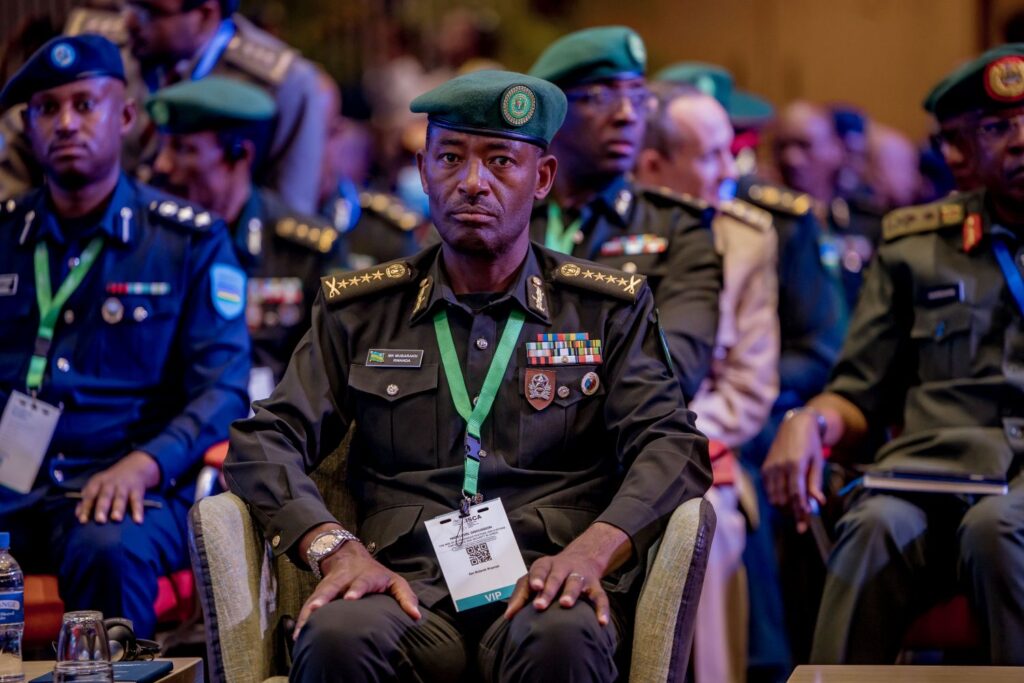
RDF Chief of Defence Staff Gen Mubarakh Muganga attending the International Security Conference for Africa (ISCA) is underway in Kigali.
For Mali’s Foreign Minister Abdoulaye Diop, however, the debate goes beyond technology. He argued that autonomous systems must be viewed within the broader struggle for African sovereignty and the ability of states to secure their own territories.
“As long as we do not control our territory, we will not be able to ensure security,” Diop said, linking the question of autonomous systems directly to Africa’s wider pursuit of strategic autonomy.
Diop said this is particularly important for countries confronting terrorism, armed insurgencies, separatism and other security threats, where the ability to exercise authority across the entire national territory remains fundamental to state security.
The spread of autonomous technologies presents a new dimension to the challenge because tools once associated largely with states are increasingly accessible to terrorist and other non-state groups.
The continent can either remain dependent on technologies designed and controlled elsewhere, or invest in the people, institutions, research and capabilities needed to shape the next generation of defence technology.
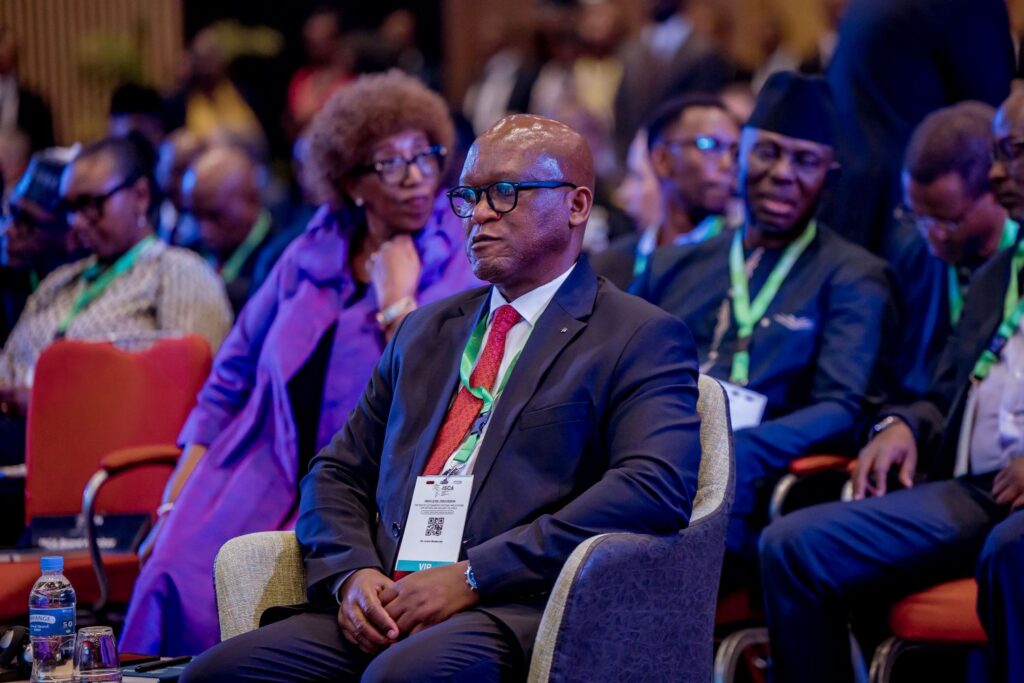
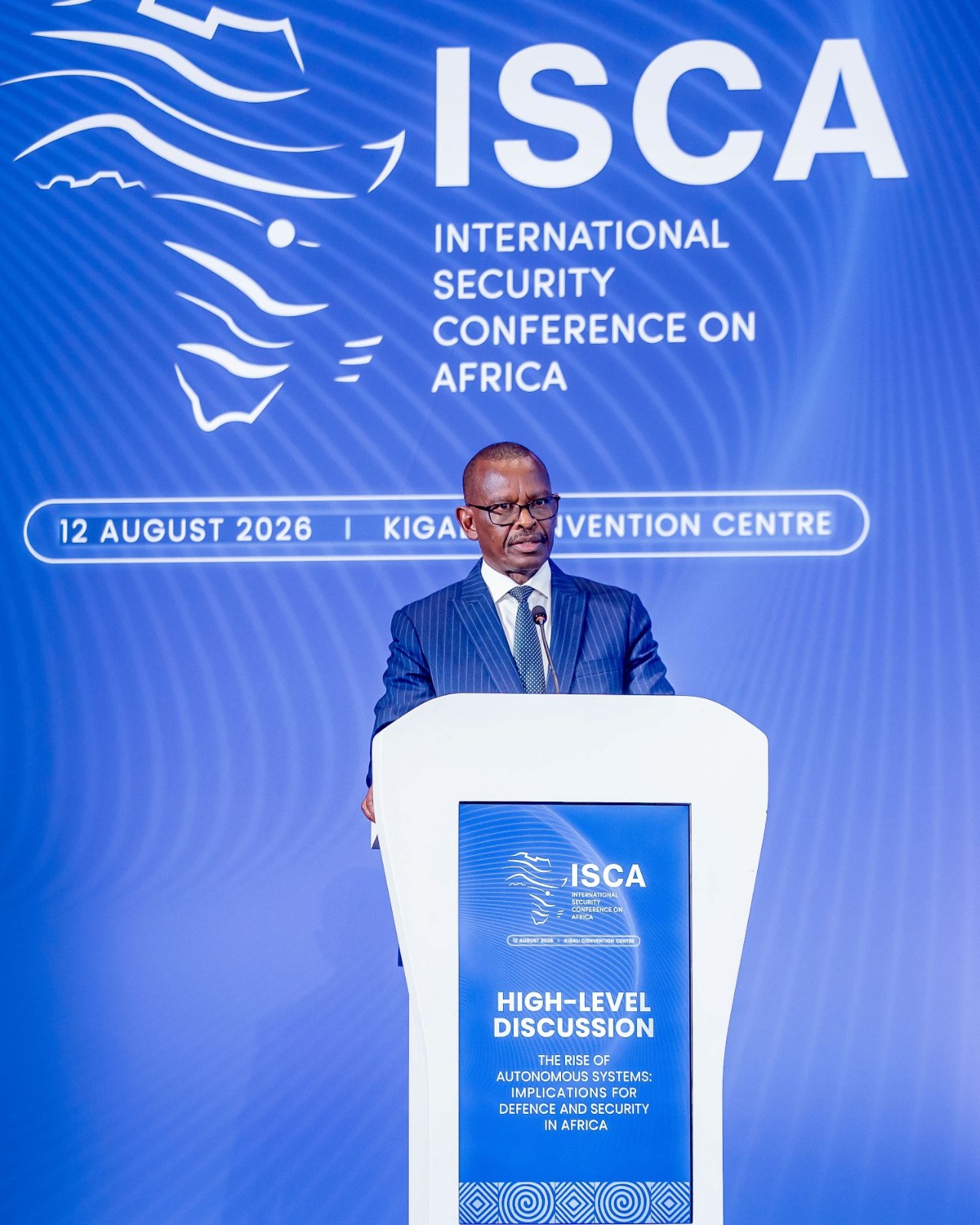
Rwanda’s Defence Minister, Juvenal Marizamunda, during the session on Wednesday
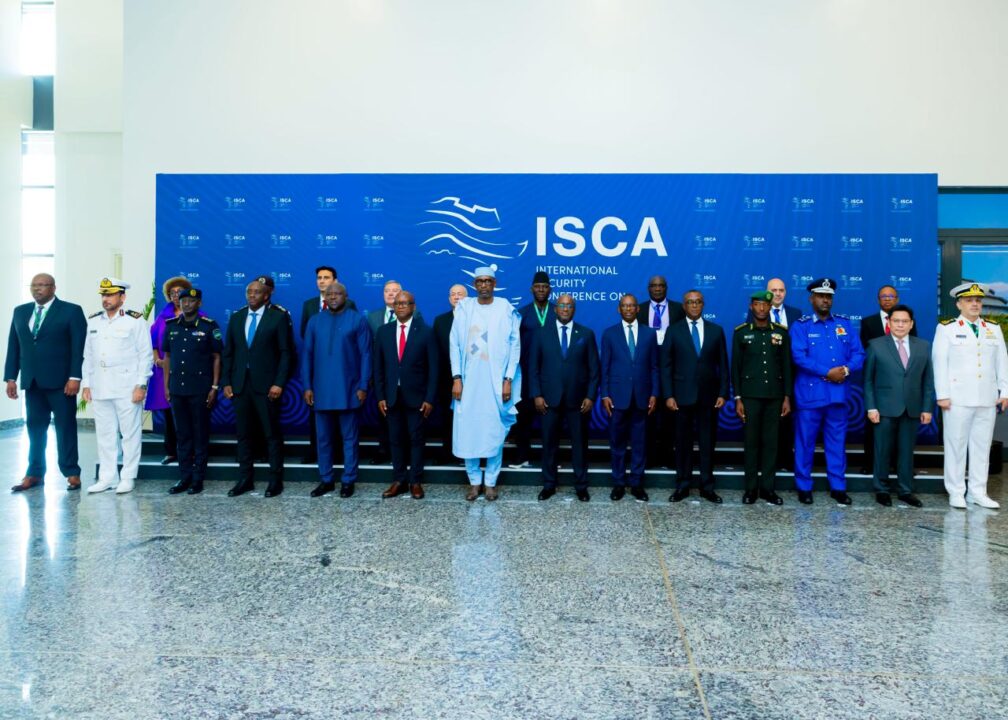
High-level delegates including Ministers and senior military officials at the symposium