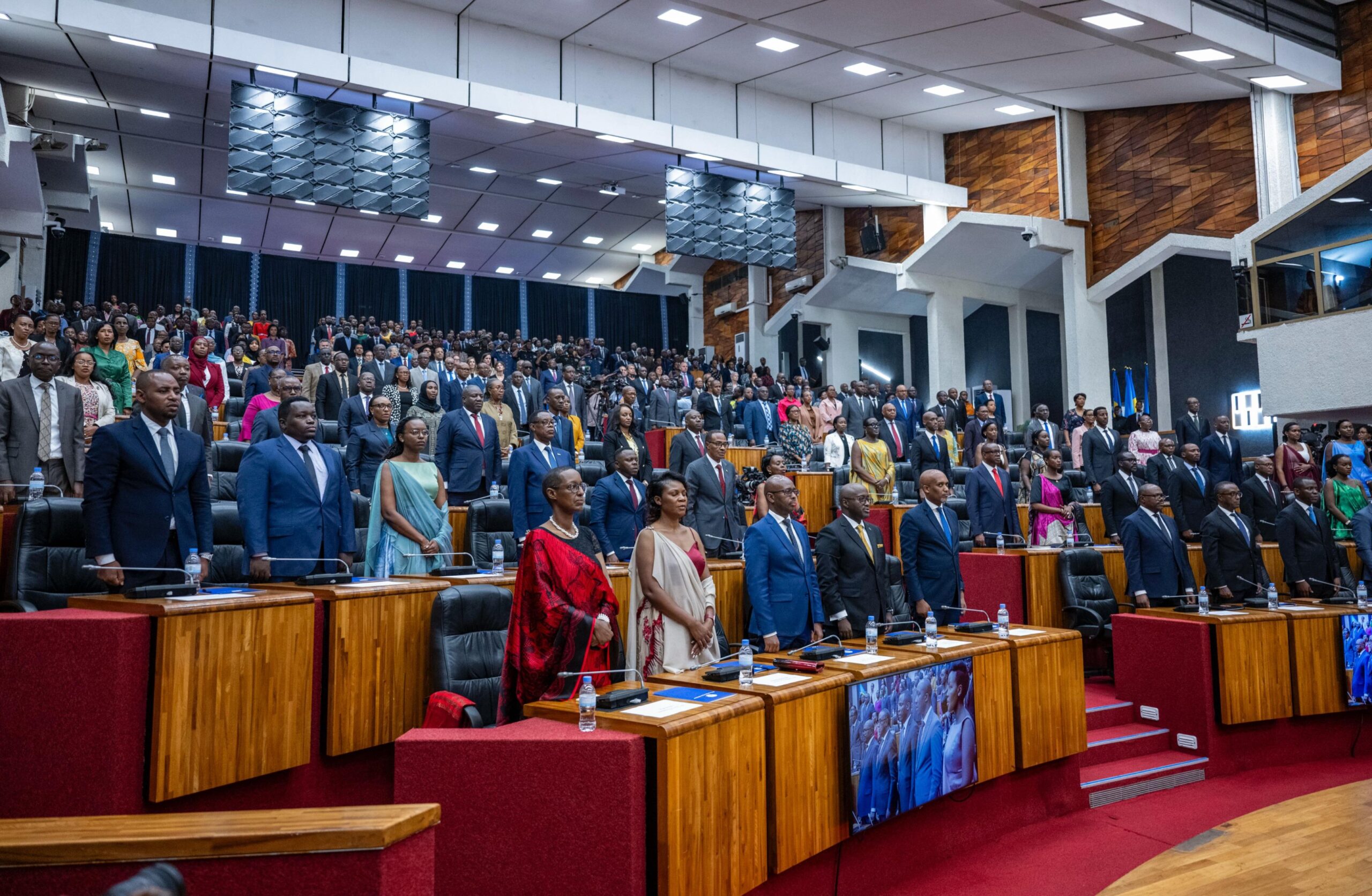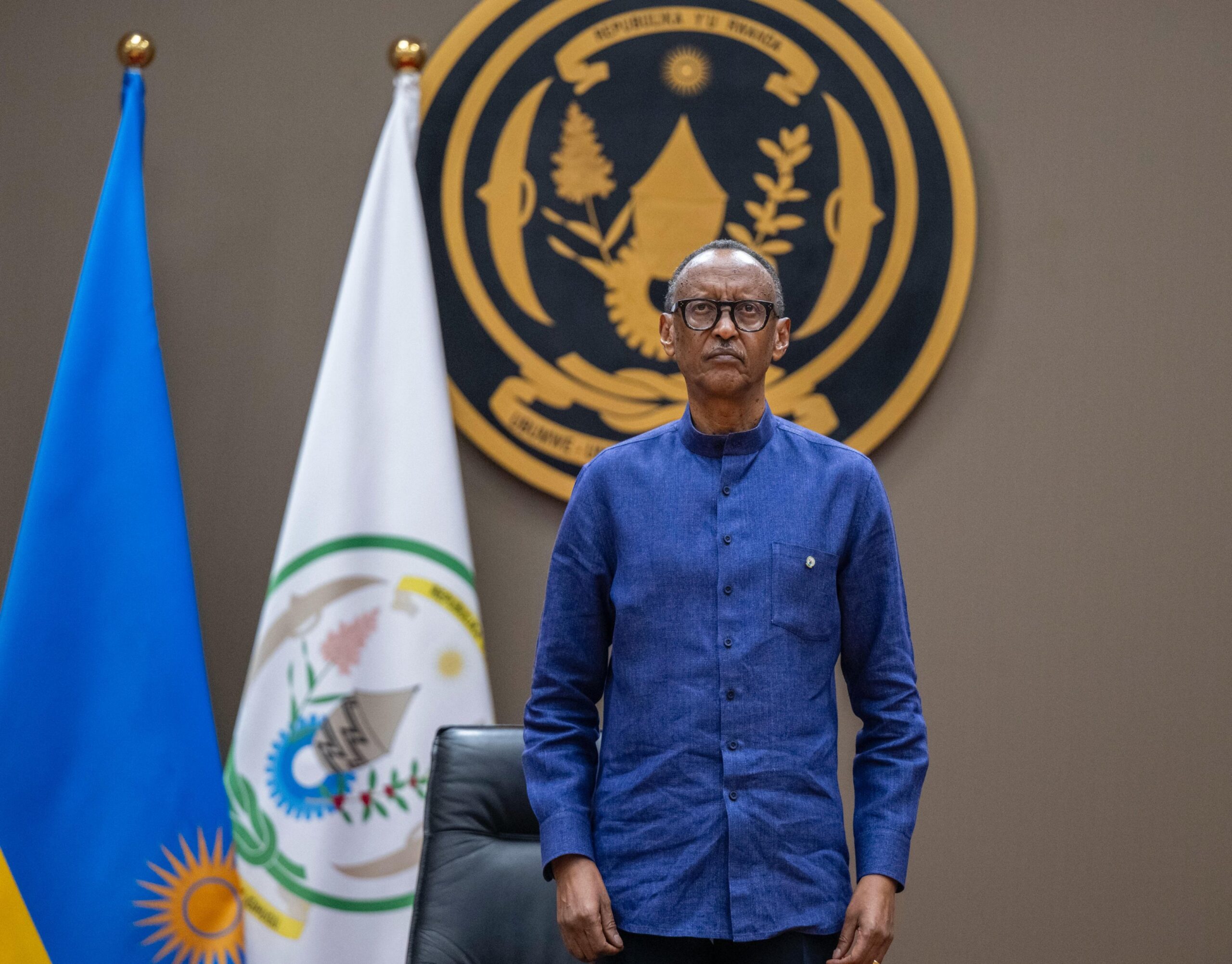
President Kagame presiding over the swearing in of new Prime Minister Dr Justin Nsengiyumva and members of the cabinet
KIGALI — President Paul Kagame, while presiding over the swearing-in of the newly appointed Prime Minister Dr. Justin Nsengiyumva and cabinet, issued a powerful message directed at the youth of Rwanda: stop complaining and start acting.
Speaking at the Parliament Buildings in Kigali, President Kagame addressed the newly constituted Cabinet with a tone that was both motivational and challenging. As the youngest members of the government took their oaths, he emphasized the responsibility that comes with education, opportunity, and leadership.
“You young people, educated, traveled all over the world… you know your history, where you are coming from,” President Kagame said. “And yet, you just behave and move forward like nothing happened.”
The President emphasized the importance of young people learning from past generations and taking proactive steps to address current issues rather than merely complaining.
Drawing parallels with historical struggles, he noted that previous generations had faced significant challenges but questioned whether the current youth were truly building upon those foundations.
“You people, I think I’m the oldest in the cabinet. Most of you have 30s, 40s, and it is for a purpose,” he stated, highlighting his deliberate effort to create a youthful cabinet that could break from old patterns.
President Kagame strongly criticized the tendency of the youth to blame others for their problems without taking responsibility or action.
He challenged the younger generation not to fall into the trap of blame and complaint—patterns he suggested were characteristic of previous generations who failed to bring about necessary change.
“You then start breeding a generation that just complains about things, blaming so and so, blaming this for this, blaming that,” he remarked. “No, why are you? Why don’t you deal with the matter that you are complaining about, especially when you are given an opportunity like this?”
The President stressed the need for self-awareness, appreciation of one’s own capabilities, and the willingness to fight back with ideas and values. He emphasized that true leadership begins with internal transformation rather than external excuses.
“Appreciating yourself and being aware that you can do something for yourself, and you have the capacity to fight back—with ideas, with values,” he said, underscoring that young leaders possess all the tools necessary for meaningful change.
However, the President’s remarks revealed his concern that despite their education and global exposure, many young people often lack the mindset and self-reliance necessary to effect real change.
He said: “Young people educated, carrying a lot of degrees, academic degrees, PhDs, but you are just… I don’t you get this, but you can’t do it unless there’s something in you. You have to correct the mindset.”
It is not the first time President Kagame has called on young people to rise up and be heard. He has consistently urged them not to look on while things go wrong.
Drawing from his own experience, he has pointed to his own journey as an example—he himself, in his early 20s back in Uganda, rose up to try to change the governance direction. He would go on to lead the liberation of Rwanda in 1990 from the ethnic political extremism that eventually culminated in the 1994 genocide against the Tutsi.
This personal history underscores his belief that young people have the power to shape their nation’s destiny when they move beyond complaint to action.
President Kagame was addressing young people in the context of telling the whole nation and the new cabinet that they should work for a Rwanda that is free from the humiliation of begging from outsiders, called “partners,” who are also people like Rwandans.
He emphasized that it is this “savior mentality” which makes the country vulnerable to external interference in its governance, with these so-called partners preaching human rights and dictating the direction of the country.
President Kagame’s comments also come at a time when social media has become such a vicious place, where young people, and others are routinely complaining about different things including service delivery by some agencies.
In some cases, the young people are also in places of authority, but simply complain. In other instances, young people, or other Rwandans just look on passively as external forces undermine their country, or create instability, which has previously destroyed the country.
This is where Kagame is coming from. He would like to see young people vigorously standing up against all ills, not just be spectators.
He warned against adopting a mindset of dependency or passivity, urging the youth to reject the role of “beggar” or follower who waits for direction on every move.
“You don’t find being a beggar every day or being dictated towards what you must do, how to do every day, you don’t find it wrong. You accept it,” he said, expressing deep concern over a lack of internal drive and initiative.
In his remarks, President Kagame called for a fundamental shift in thinking—a kind of “injection” or “medicine” that awakens the spirit of innovation, accountability, and proactive citizenship among the youth.
“You have yourselves to blame—but that is if you are conscious of what you should be blaming yourself for,” he concluded.
The President’s speech resonated deeply with those present, as it underscored a consistent theme in his governance philosophy: the importance of personal responsibility, national ownership, and generational transformation.
With many in the new Cabinet now under the age of 40 or slightly above, the President’s words served not only as a charge to the new ministers but also as a clarion call to the broader youth population across the country—to rise up, take ownership, and lead with purpose.
As Rwanda continues its journey toward Vision 2050, President Kagame made it clear: the future belongs to those who dare to build it—not just talk about it.
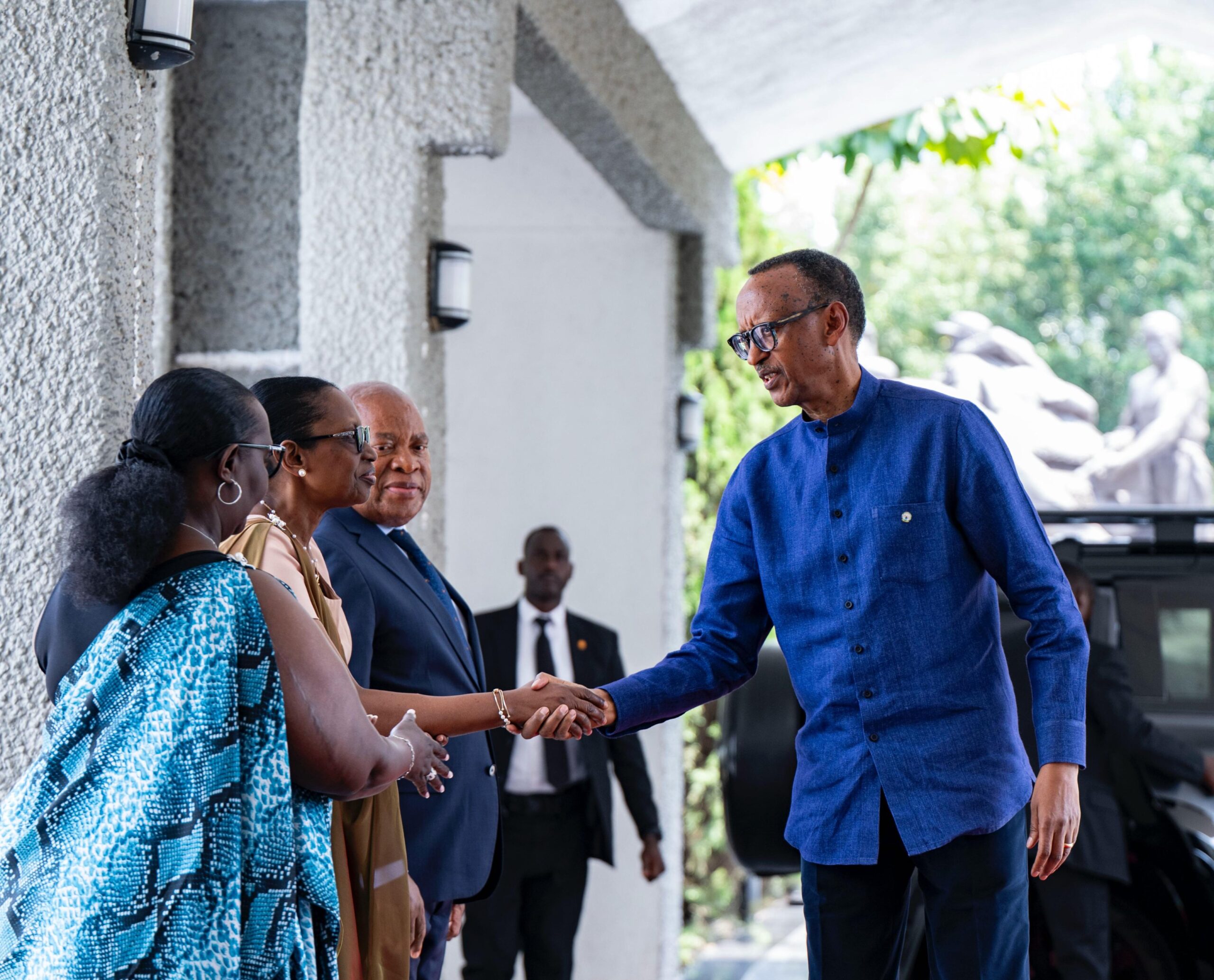
President Kagame shakes hand with Speaker of Chamber of Deputies, Gertrude Kazarwa. President of the Senate, Dr François-Xavier Kalinda (male) and Chief Justice Domitilla Mukantaganzwa, look on, as President Kagame arrived for swearing in of Prime Minister and new cabinet