For several weeks of the dry season, conversations in Kigali were dominated by water shortages, “irrational rationing,” and electricity blackouts in some towns. But now the headlines have shifted: national examination results have taken center stage.
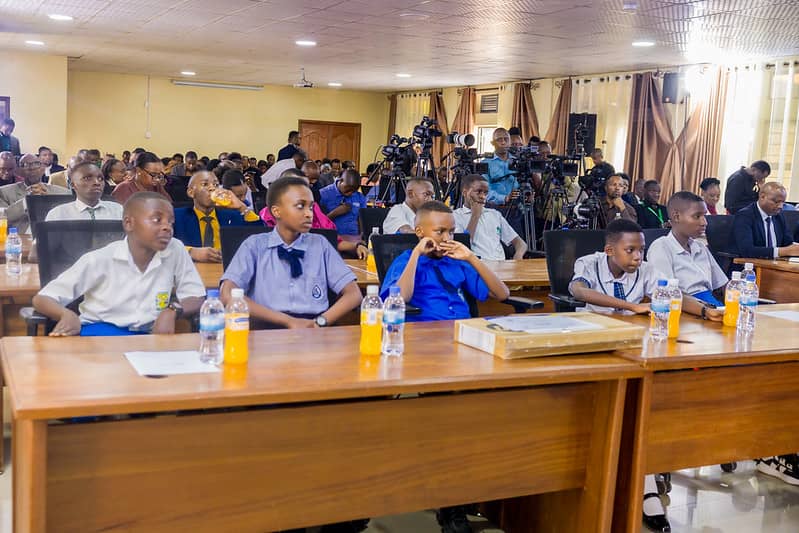
August 19 was a big day for candidates who sat the Primary Leaving Examinations (PLE) and Ordinary Level (O’Level) exams. The Ministry of Education and the National Examinations and School Inspection Authority (NESA) convened the media, parents, and students to announce the results.
There were many surprises, especially among the top candidates. In PLE, one student from a private school in Musanze nearly swept the board, missing only six-tenths of the total marks. The five candidates who followed closely all scored 98.8%.
Four of them came from Bugesera (three from the same school), while the fifth was from Huye District in Southern Province. This means Bugesera District can boast of four candidates on the “high table.” Gasabo also performed strongly, producing three top O’Level candidates.
The striking detail is that, except for the first student in O’Level, all of the top-performing students came from private schools, fueling the perception that “private means quality.”
During the results announcement, Education Minister Joseph Nsengimana acknowledged this as a reality.
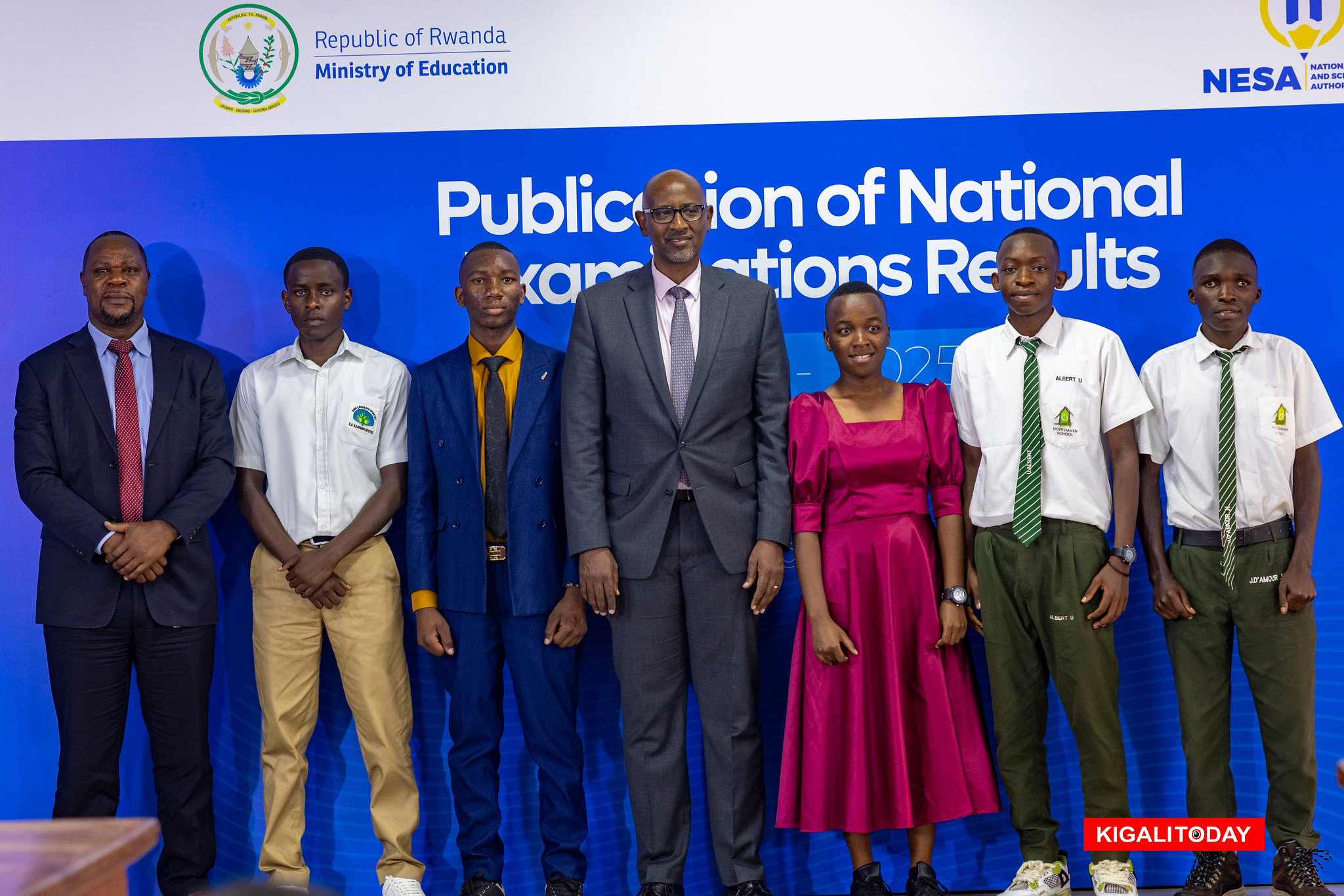
Education Minister Joseph Nsengimana (Center) and Dr. Bernard Bahati, the Director General of the National Examination and School Inspection Authority (NESA) pose for a photo with the best students from PLE and O’Level 2024-25
“We are putting in place a remedial program so that government schools, or those subsidized by the government, may catch up and do way better than usual,” he said.
He explained that the program will give students who failed certain courses extra coaching to address gaps and raise quality.
“With the remedial programs, we hope to see students from public schools being recognized by next year,” the Minister added.
In the past, some public schools—particularly Catholic institutions in Southern Province (Huye, Nyanza, Ruhango, and Muhanga) as well as similar schools in Kigali—were expected to dominate the high table. These schools carried a legacy of producing top students.
But the trend is shifting, as newly established private schools gain the confidence of parents and attract more enrollments.
The Ministry of Education is banking on remedial programs to close performance gaps, but deeper challenges remain. School feeding, for example, is a concern raised by parents who say children are not receiving enough food—something that directly affects performance.
Teacher-student ratios are also a problem: in 2022, public schools had an average of 55 students per class, compared to 29 in private schools.
With exam results now public, attention has turned to placement. The Ministry revealed that only 7% of PLE candidates secured spots in boarding schools.
Last year, placement caused controversy after parents claimed the process did not align with student performance. In earlier years, high-performing students could be confident of winning slots at the country’s best schools, but this is no longer guaranteed. Even students rated “Excellent” sometimes found themselves placed in schools they had not listed among their top three choices—sparking disputes.
Responding to the concerns, Minister Nsengimana said: “We are doing placement in daylight. You might see that there are not enough places in boarding for all students. The best approach is not to find many boarding schools for students, but to lift up the quality of day schools.”