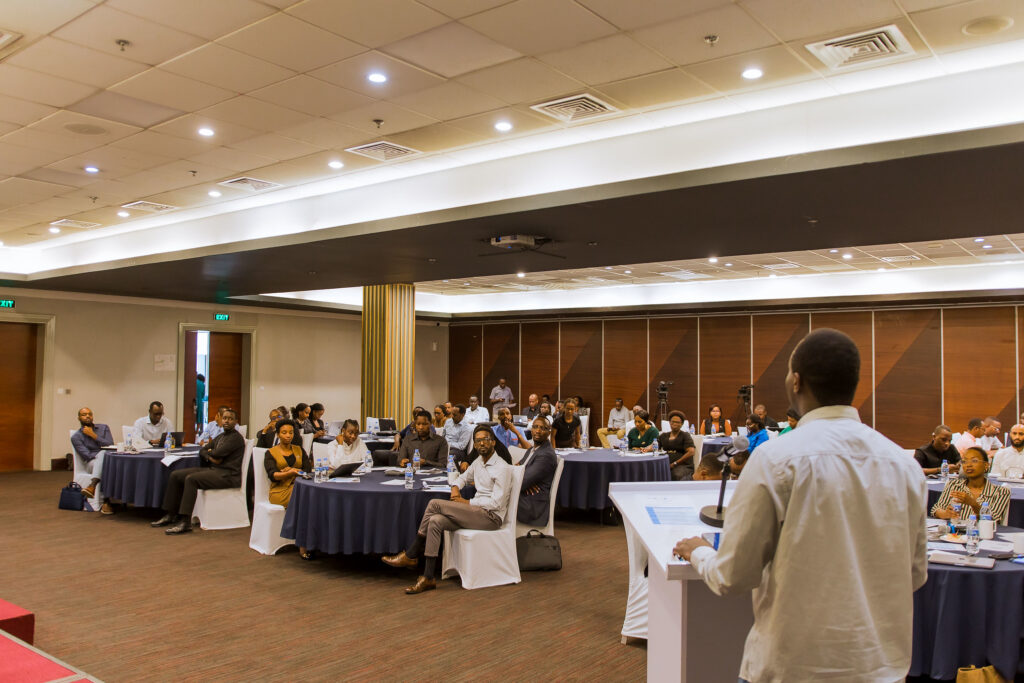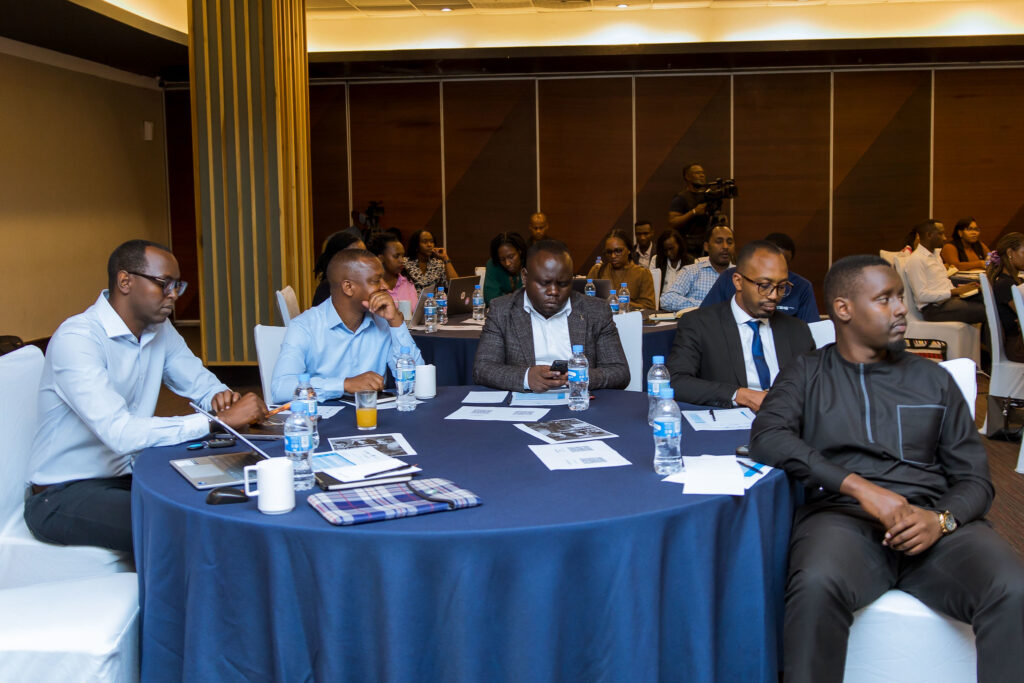
Guests at the launch of the third phase of the Twagiye Cashless campaign, which aims to reach nearly 50,000.
KIGALI – Rwanda has reached 96 percent digital and financial inclusion but government officials say the country’s next challenge is ensuring that the use of digital services improves the livelihoods and full participation in the digital economy.
Just days after the East African Community (EAC) convened its 2026 Digital for Development Forum to accelerate the creation of a Single Digital Market serving more than 330 million people, Rwanda is expanding its own cashless campaign.
Speaking during a stakeholder consultation in Kigali, Esther Kunda, Director General of Innovation and Emerging Technologies at the Ministry of ICT and Innovation, said Rwanda’s headline figures do not tell the whole story.
“Most of our population is only using one form of financial service. What we want to continue promoting is enhancing livelihoods and increasing socio-economic opportunities through digital payment literacy, supporting SMEs to become digitally included and building confidence in digital financial services,” she said.

Esther Kunda, Director General of Innovation and Emerging Technologies at the Ministry of ICT and Innovation speaking during a stakeholder consultation in Kigali.
While previous efforts focused on expanding connectivity and financial access, the emphasis is now shifting towards helping citizens and businesses make better use of digital tools.
That ambition underpins the third phase of the Twagiye Cashless campaign, which aims to reach nearly 50,000 beneficiaries in 642 cells across eight districts, supported by almost 600 digital ambassadors working directly with communities, schools, cooperatives and small businesses.
The campaign builds on encouraging results from its first two phases. Working in just four districts, it engaged 577 cooperatives, 226 savings groups and 527 schools, directly reaching more than 14,500 people through digital literacy and awareness programs.
During the campaign period, mobile money transaction values increased from Rwf 3.1 billion to Rwf 3.9 billion, while person-to-person transactions rose from approximately Rwf 8.8 billion to Rwf 10 billion, reflecting growing confidence in digital payments.
The latest phase introduces a digital readiness assessment for micro, small and medium-sized enterprises (MSMEs).

Digital ambassadors will visit businesses to assess their digital capabilities before linking them with financial institutions, fintech companies and other service providers that can help them adopt appropriate digital solutions.
Kunda said success will depend on sustained engagement rather than one-off awareness campaigns, calling on banks, fintech firms and payment providers to work alongside digital ambassadors in communities.
Yet stakeholders acknowledged that technology alone will not deliver that outcome.
Benjamin Karenzi, Chief Executive Officer of IT Consortium Rwanda, said licensed fintech companies still encounter operational challenges when engaging local authorities, despite being regulated by the National Bank of Rwanda.
“Reaching citizens is one of the most challenging parts,” he said, urging stronger coordination between national institutions and local government so digital innovators can work more effectively within communities.

Benjamin Karenzi, Chief Executive Officer of IT Consortium Rwanda, says licensed fintech companies still encounter operational challenges when engaging local authorities.
Although East African countries have made significant progress in expanding digital infrastructure, the EAC says cross-border payment systems remain fragmented, digital platforms are not yet fully interoperable and regulatory differences continue to slow innovation and trade.
Those challenges were central to discussions where policymakers, regulators and private sector leaders committed to translating regional digital strategies into practical investments that will make it easier for citizens and businesses to trade, transact and access public services across borders.
TIna Uwase, the Head of Digital Entrepreneurship and International Relations at Rwanda Information Society Authority (RISA), underscored Rwanda’s growing reputation as a continental model for digital transformation.
“Rwanda has made tremendous progress in advancing its digital agenda and continues to lead by example in Africa. The policies under NST2, Vision 2050, and strong national performance frameworks have positioned Rwanda as one of Africa’s leading digital economies,” she said.

TIna Uwase, the Head of Digital Entrepreneurship and International Relations at Rwanda Information Society Authority (RISA).
She added that Rwanda’s experience is increasingly being referenced across multiple markets.
“Rwanda is an example of what can and should be done in building a digital economy. A responsible digital payments ecosystem is the foundation of any modern digital economy, and Rwanda is showing how public-private partnerships can make that vision real,” Uwase said.
While previous efforts focused on expanding connectivity and financial access, the emphasis is now shifting towards helping citizens and businesses make better use of digital tools.