The use of solar-powered irrigation systems in the Eastern Province has enabled farmers to adapt to climate change and increase their hopes of having bumper harvests.
The province is known as Rwanda’s food basket; however, due to long droughts, agriculture, especially horticulture production, has depended on the availability of rainwater, even when most districts have water bodies that remain underutilized.
In Nasho, Kirehe district, the example of using solar-powered irrigation already exists and is in use on a community irrigation project co-funded by the government of Rwanda and American billionaire Howard G. Buffet, where heavy large-scale machinery is used to water maize and soybean plantations in the area using water from Lake Nasho.
For residents, this has been a far-fetched possibility, even though many own arable land near water. They say that they have tried to use water bodies by manually fetching buckets of water, but this is an expensive and hectic task that has left them with one choice: to resort to depending on the unreliable natural rainfall, which also means the possibility of low harvests.
The ‘Buffett of Kirehe’:
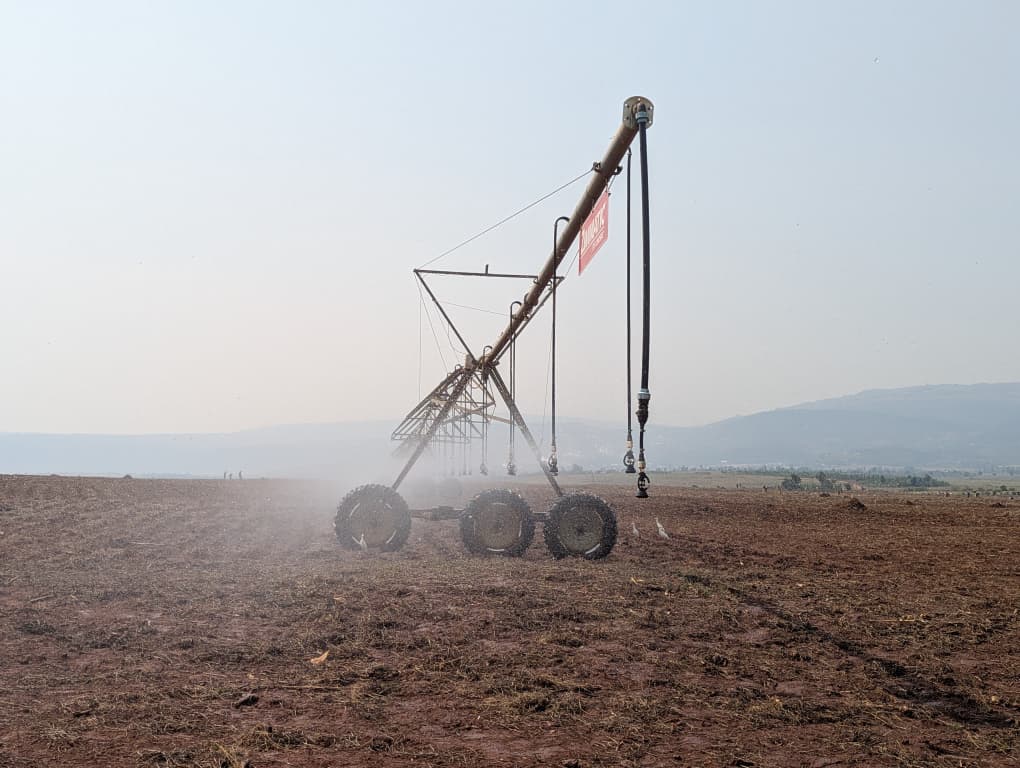
Heavy irrigation machinery on the the Buffett farms in Nasho sector
Joan Asiimwe, the head of Nasho HASS Organic Ltd (a female farmer’s company in Rubirizi cell, which owns 28 hectares along the lake), said that their land was idle and uncultivated since 1994 because it was difficult to afford systems that can get the water to the uphill farms.
However, this changed in 2024 when they learned about the SAIP-SSIT project, which provides opportunities to acquire subsidized large-scale and small-scale irrigation systems, including dams, water pumps, and canals.
These women (3 youth, 3 elderly) saw this as an opportunity to solve the challenge of access to water, and they applied for a SAIP 2 project grant of Rwf126 million with 25% (over Rwf31 million) as their contribution, solicited under the women’s business financing portfolio from the Development Bank of Rwanda (BRD).
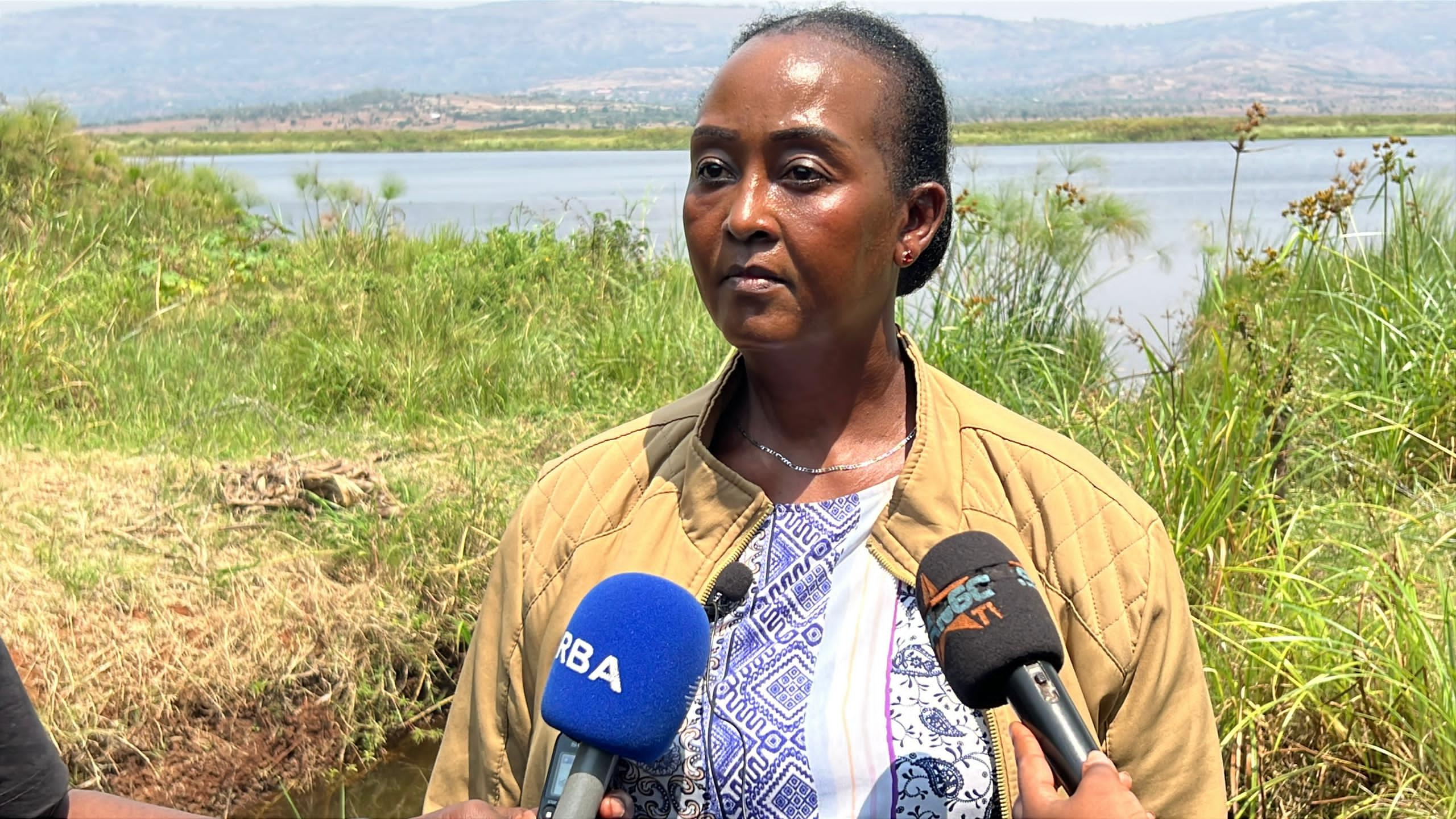
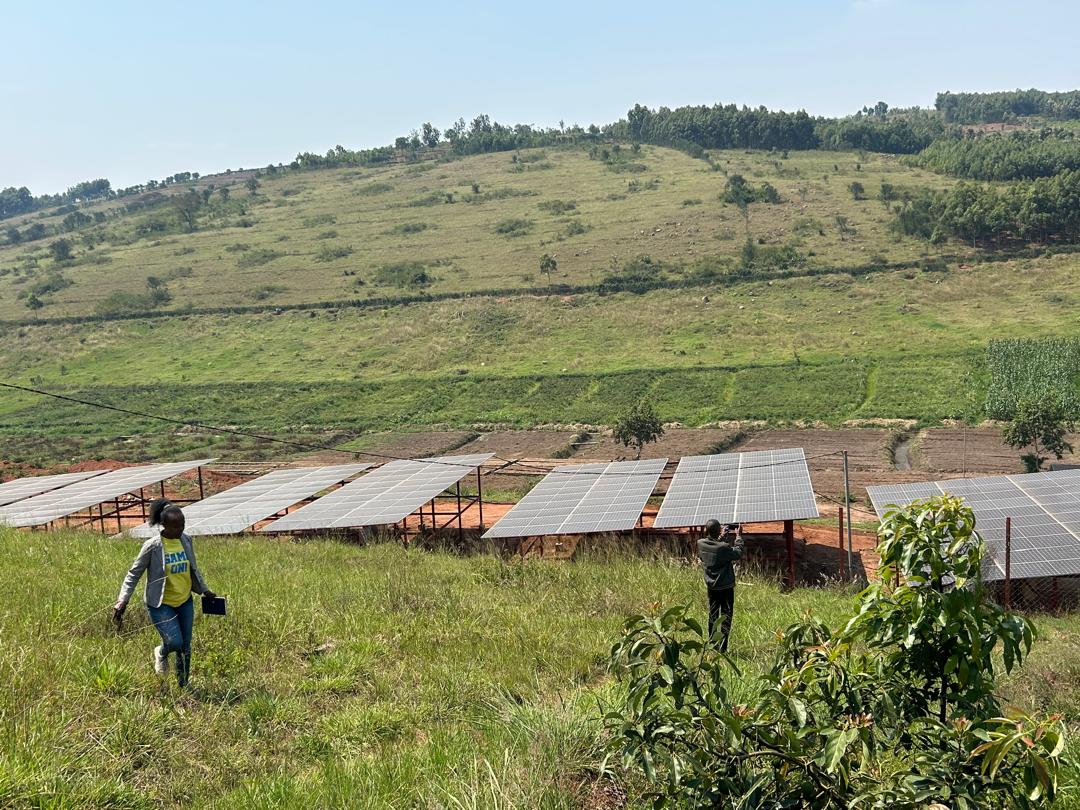
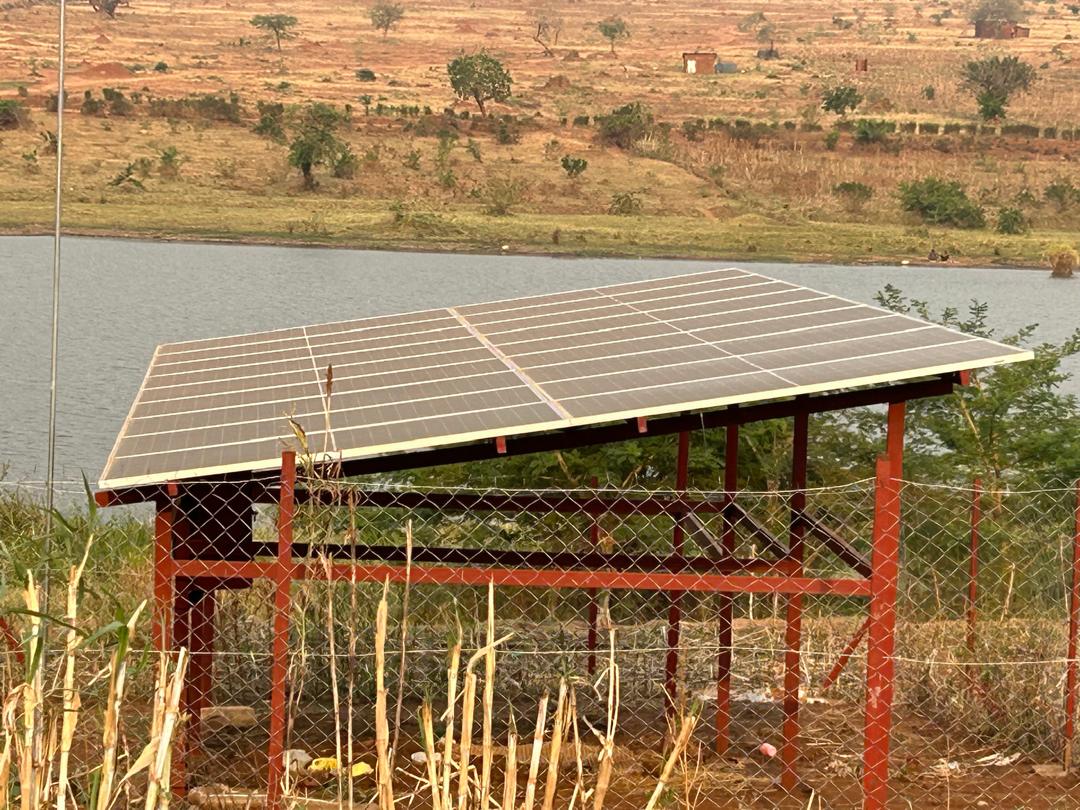
Joan Asiimwe standing next to a solar powered water pump meters away from Lake Nasho
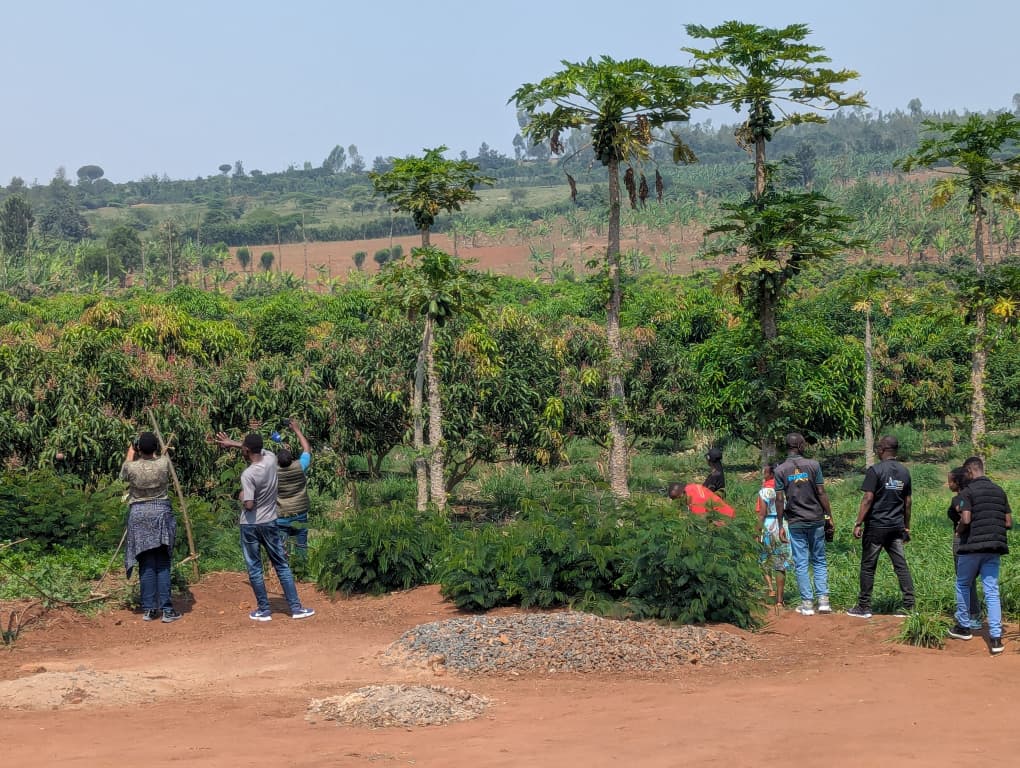
For the last six months, the group has planted 5,200 avocado trees (on 10 of the 28 Ha), which will harvest in the next three years, with each tree producing 30 kilograms twice a year.
“This is a costly investment but one that will put our land to proper use now and in the future, and we have already started getting buyers contacting us,” Asiimwe said.
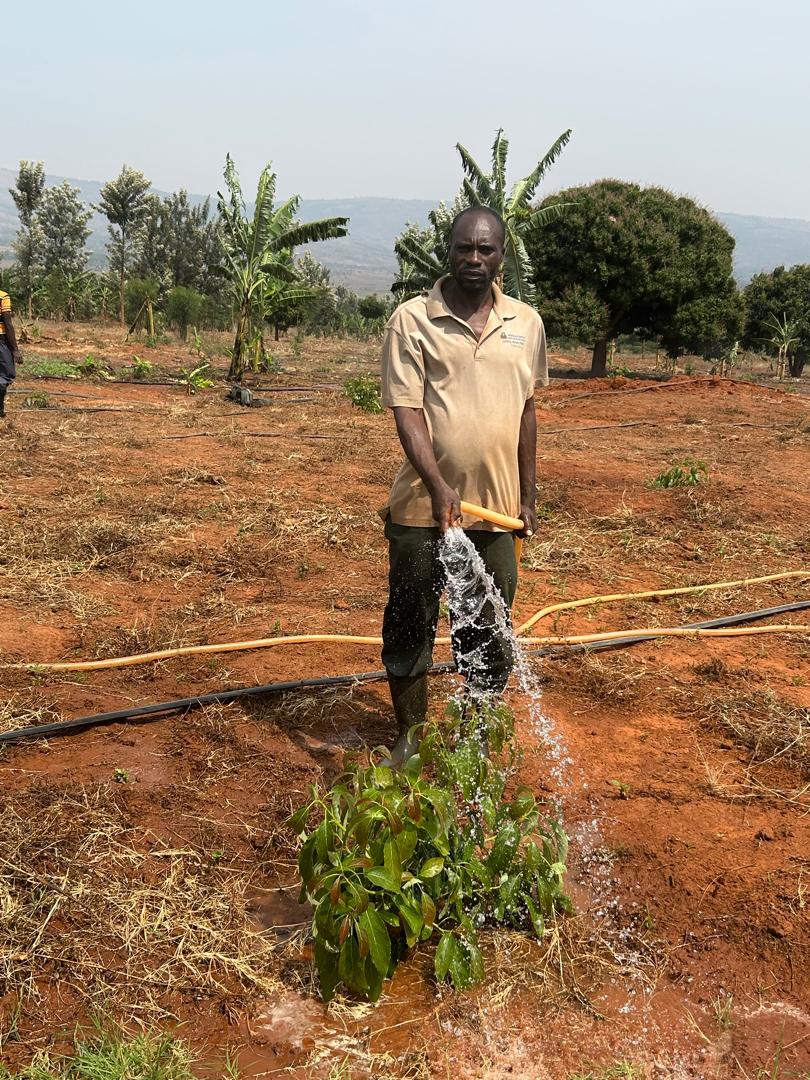
Damascene Mbarubukeye, a farm manager at Nasho HASS Organic Ltd says he has also learnt irrigation skills to plant 50 ovacado and mango trees in his home, nearby the farm
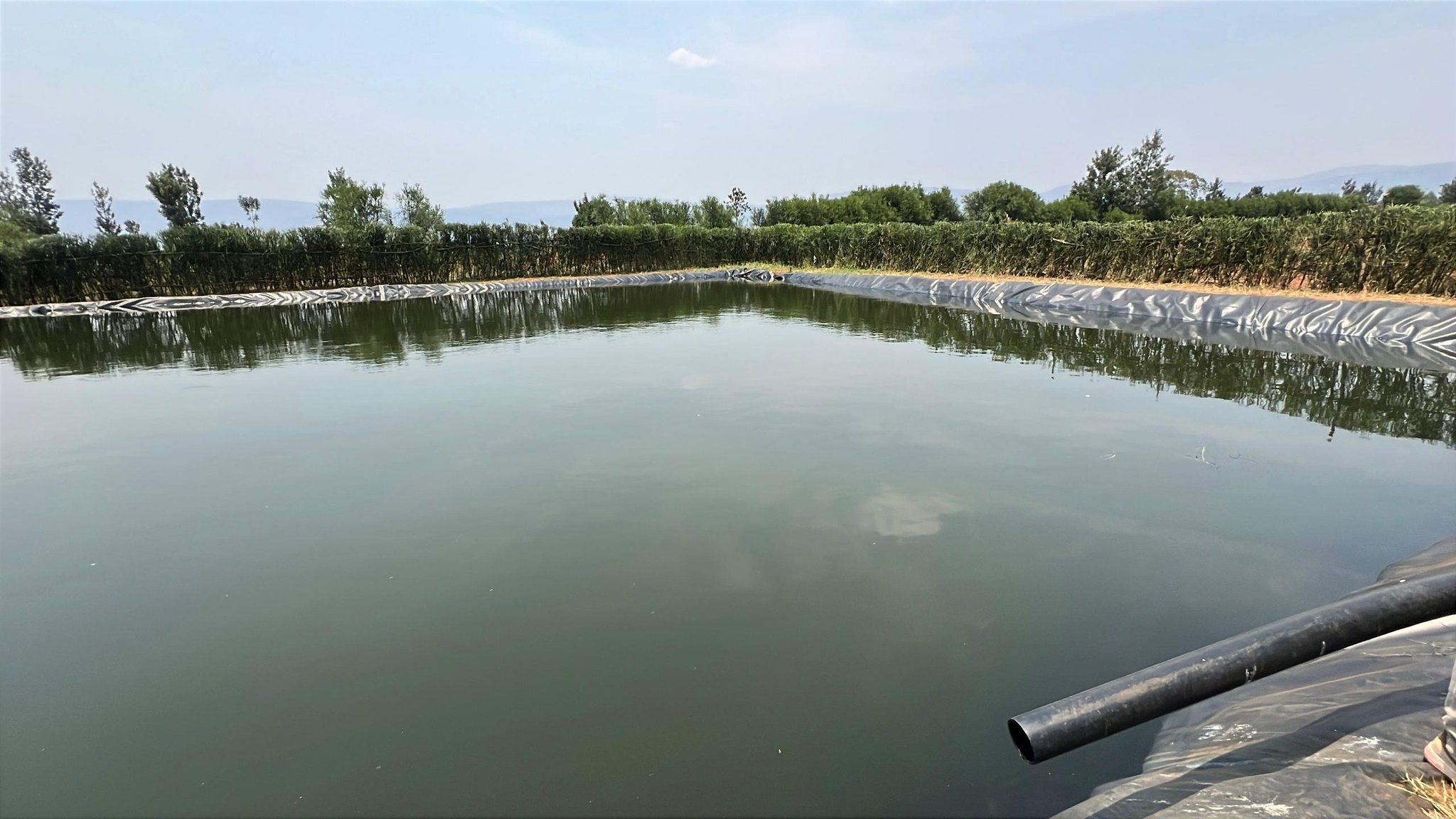
Currently, this project fetches and stores at least 960 cubic meters, which is used in the new avocado plantation, and the surplus is used by the community to construct development activities such as the nearby newly constructed Rwabubare Health Center.
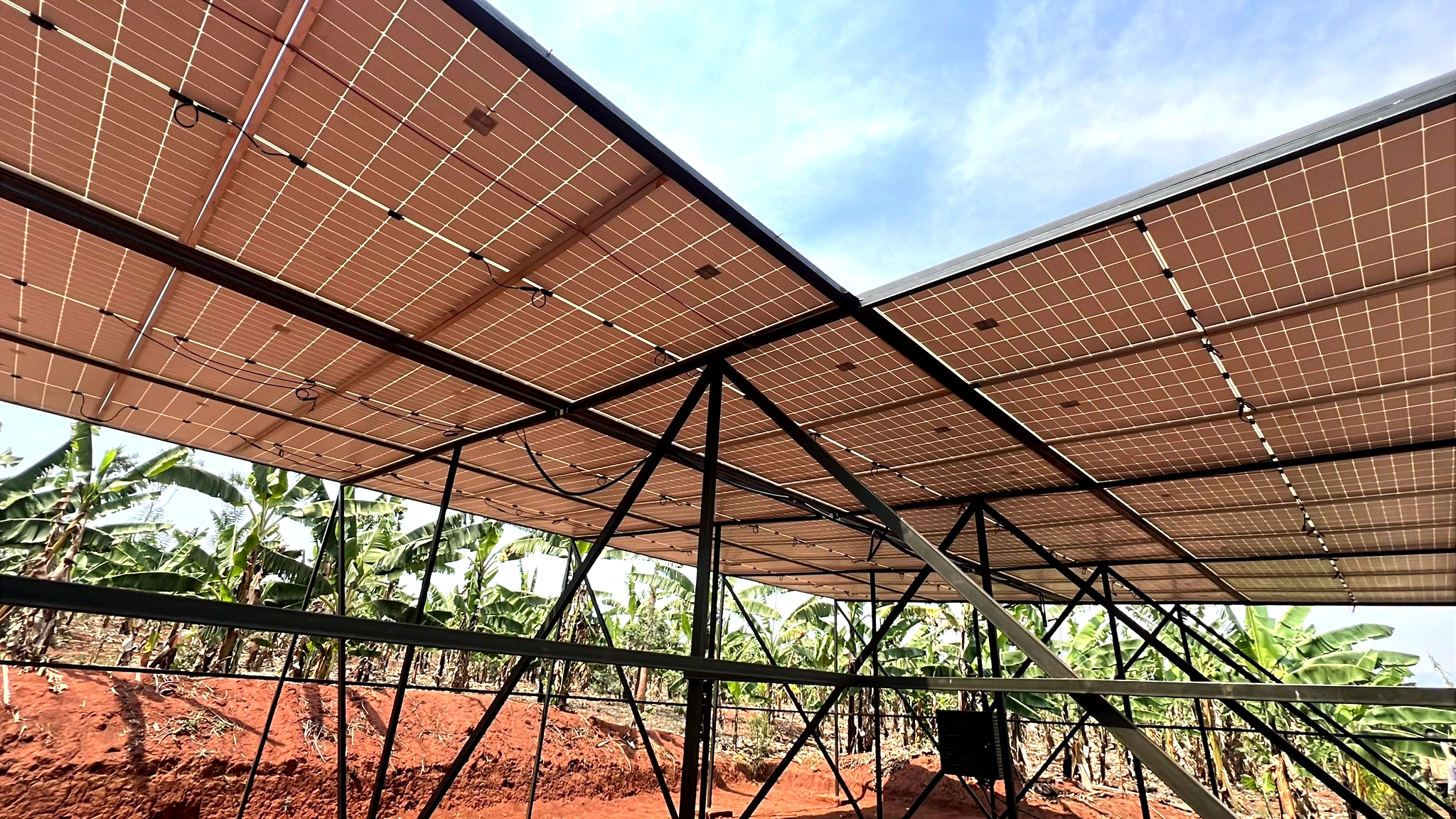
Picking lessons of large-scale machinery used at a nearby Howard G. Buffett owned farmland, Asiimwe jokingly says she aspires to be the Rwandan Buffet in Nasho to, in future, have larger mechanised irrigation equipment but also build a daycare center for farmers’ children who are seen taking shelter under one of the solar panel stands powering the farms irrigation in timely sequences by the hour.
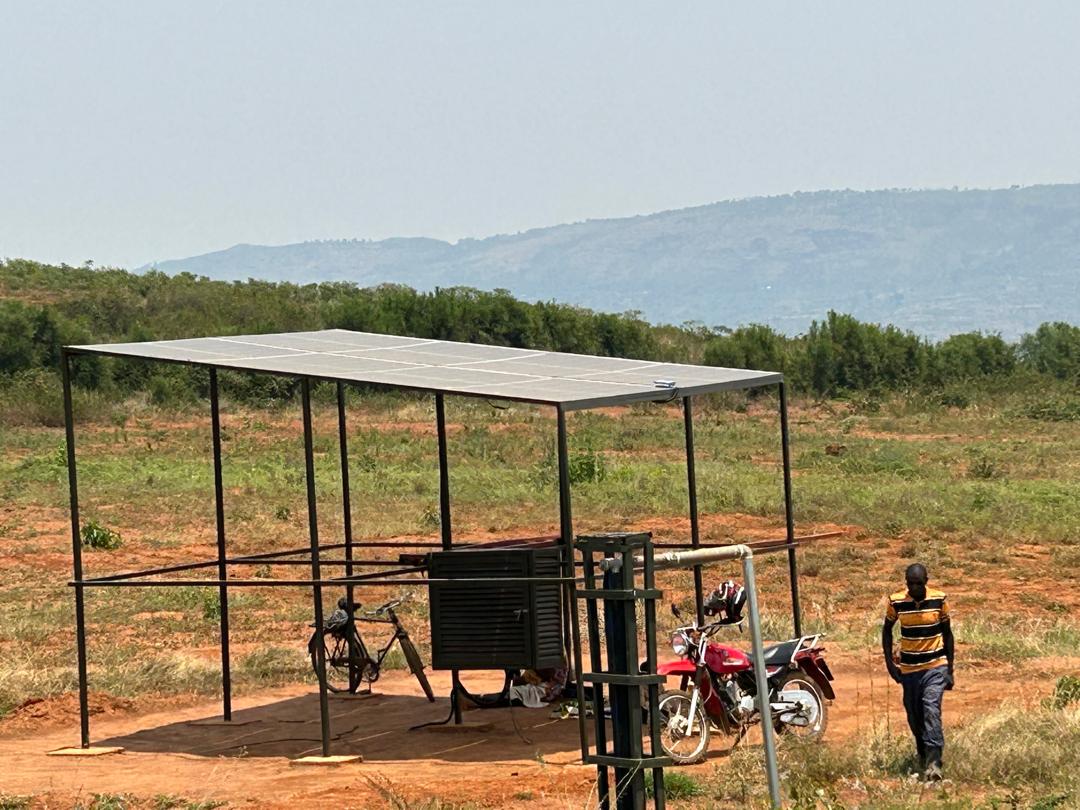
Farmers’ children seen seated under a solar panel shed
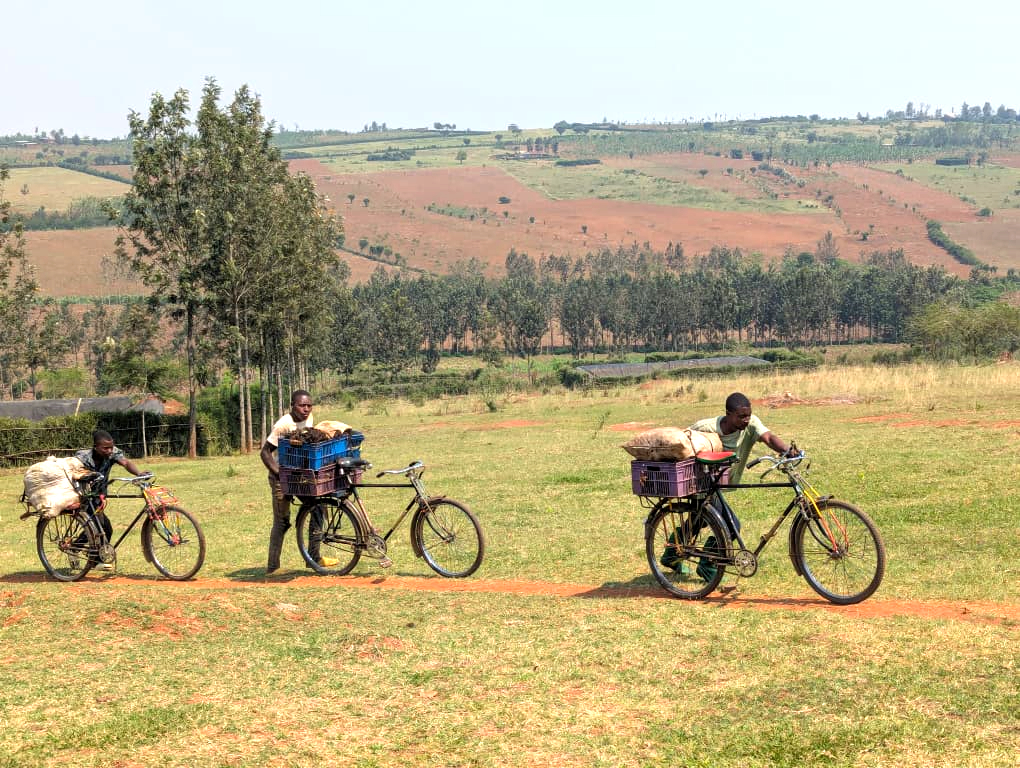
Dry spells in the Eastern Province affect residents in all seven districts: Bugesera, Gatsibo, Kayonza, Ngoma, Kirehe, Nyagatare and Rwamagana
Despite the fact the demand for irrigation water remains a challenge for other low income earner farmers- who continue to depend on rainy seasons, Asiimwe has managed to share the water sources with nearby farmers, community and skills with other farmers (employees). 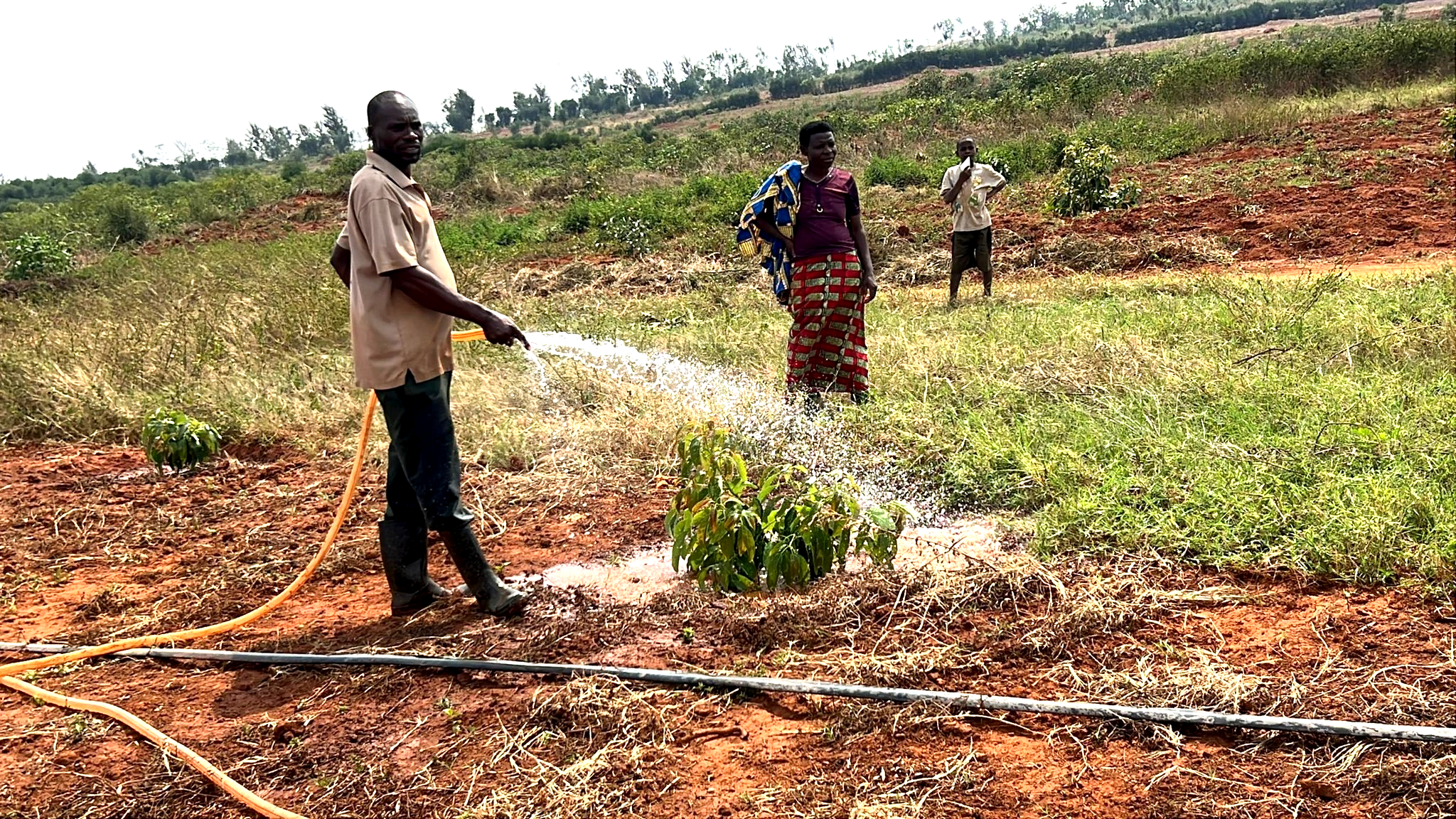
One, Damascene Mbarubukeye, a farm manager at Nasho HASS Organic Ltd says he has also learnt irrigation skills to plant 50 ovacado and mango trees in his home that is near the farm he manages.
Climate Resilient Food Basket:
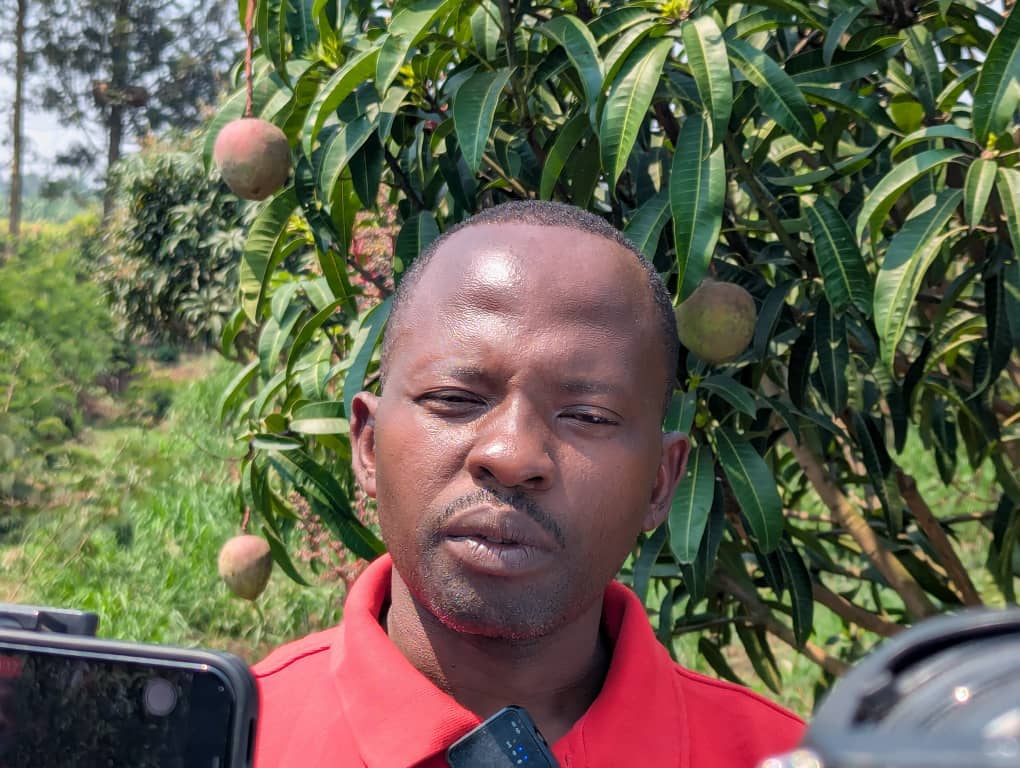
Diogene Kimenyi sees hope against climate change odds hitting Kayonza farming plains
Diogene Kimenyi, Elim Plus Farm Manager in Nyagatare district, which deals in agro and livestock (on 30 Ha) but ventured into the mango growing business, forgot to consider the water shortages caused by long dry weather.
“We made a loss because we didn’t consider a key aspect of water. Each tree produced between 50 to 80 kgs, but this has changed ever since we got irrigation equipment from SAIP. Today we can harvest between 200 to 250 kgs on a single tree,” Kimenyi explained.
Kimenyi says that without the SAIP support (especially irrigable water), they would continue making losses and focus on other perennial crops in their portfolio.
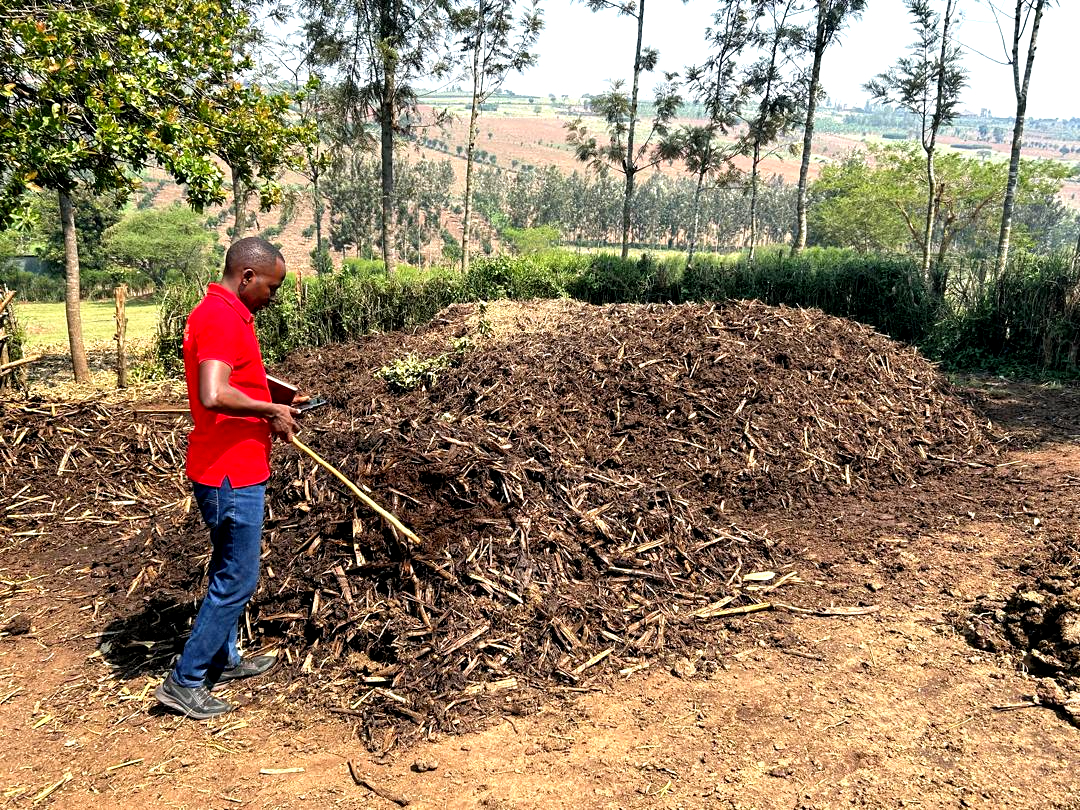 “Without water access, we wouldn’t be in the circular economy business of growing fruits and using farm residues to produce fertilizers, of which water is a key decomposition component,” he said.
This assurance of water has made Elim Plus believe that with 640 trees planted, they can produce 128 tons (throughout all three seasons) and avail mangoes on the local market with profits.
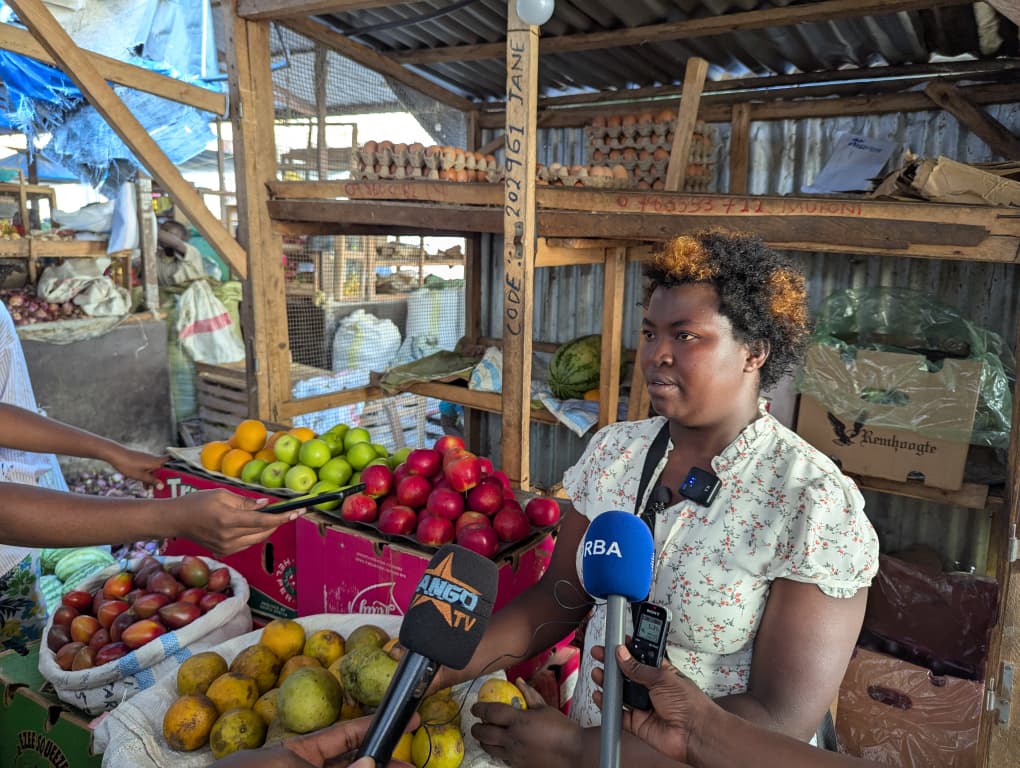
Jane Mutoni speaking to local media
Fruit sellers in Nyagatare market, like Jane Mutoni, who have benefited from farmers’ bumper harvests, are selling a kilo of mangoes at Rwf2,000 compared to Rwf4,000 in Kigali prices, saying that these prices could fall in the next harvest season.
Another new career farmer who has realized the power of water in agriculture is Emmanuel Mupenzi, a Gahini-based watermelon farmer in Kayonza district who has owned land along the Gatindo water dam for years but farmed using generator pumps which were costly compared to using solar irrigation systems.
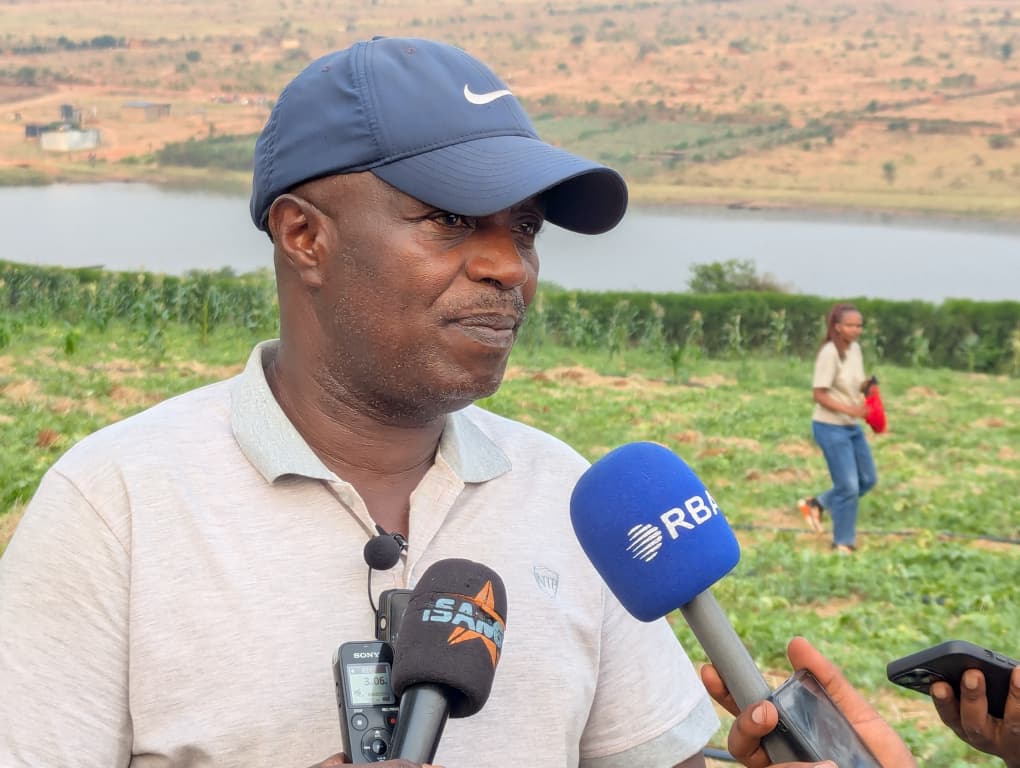
Emmanuel Mupenzi, a co-owner of Kabasinga Margrette Farm
Though Mupenzi had lost appetite for using solar irrigators following an incident where a private supplier enticed him to purchase panels that are not resistant in storing electricity for long hours during the wet seasons, thus facing more losses, he believes that the consistent water supply from the dam is an opportunity to try another chance.
Mupenzi said that he chose to apply for a SAIP-SSIT grant starting with 3 Ha of land because the expense of fetching water was always higher and an additional expense to the losses caused by dry spells.
Mupenzi noted that since the government has done a good job to preserve the wetland, which now supplies consistent water, the SSIT installation (worth Rwf80million) has reached 7 Ha and this is a solution to boosting farming, which has for years been considered a ‘lost cause’ due to the long dry seasons.
“In fact, we are no longer afraid of the dry spells and would rather have the dry seasons all through because we have solar-powered pumps that are a solution,” he said.
SAIP Project Gaps And Solutions:
The SAIP I (2018–2023, extended) and SAIP II (2024–2026) are funded by the Global Agriculture and Food Security Program (GAFSP) through the World Bank and implemented by the Rwanda Agricultural and Animal Resources Board (RAB) to directly benefit 3,369 farmers (1,916 men and 1,453 women).
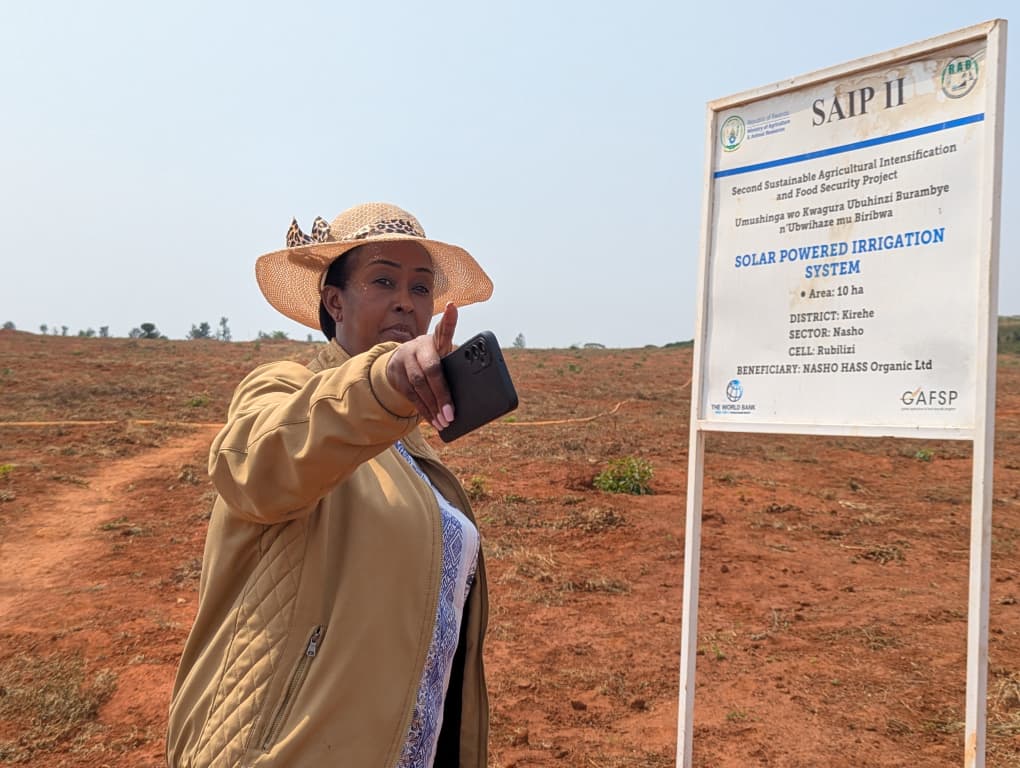
While beneficiaries of the project are not afraid of the dry seasons and climate change, many in the province still rely on rainwater, and this has largely been caused by a lack of financial ability to afford subsidized solar-powered equipment.
However, a young solar irrigation entrepreneur, Alphonse Sirumwe, and his teammate have established a mobile irrigation for hire business scheme – Building and Irrigation Engineering Consultancy (BIEC Ltd), which is expected to fill this gap.
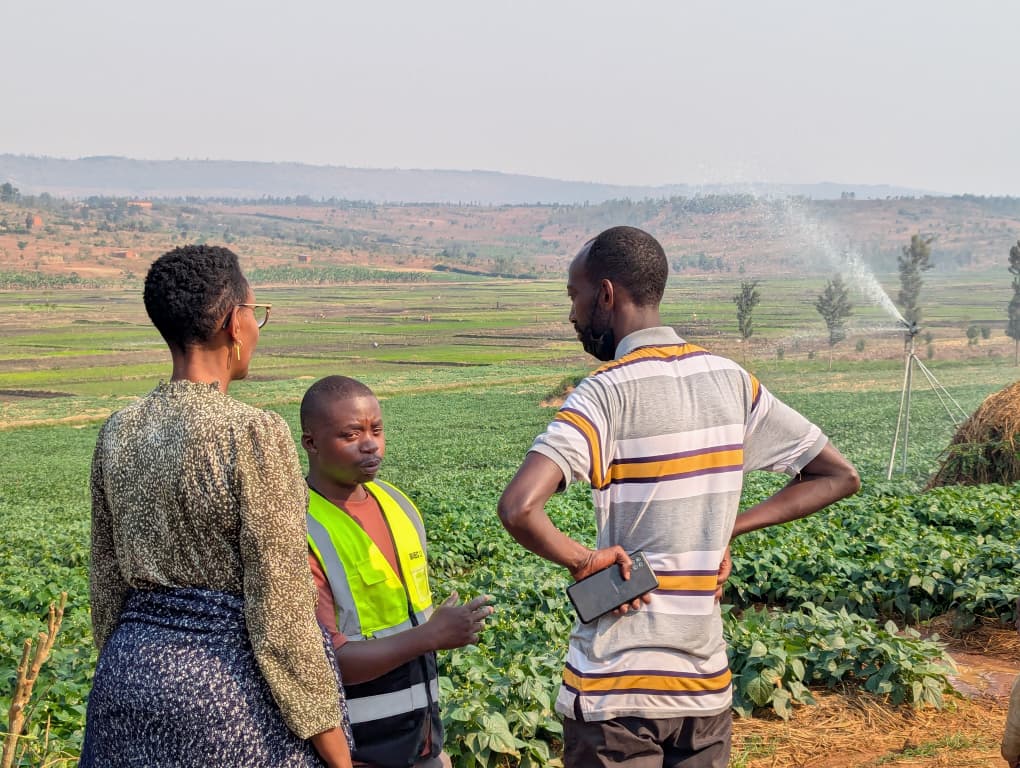
Alphonse Sirumwe (middle) with a client (right) and SPIU RAB communication officer, Viviane Akili
Sirumwe, BIEC Managing Director and a former irrigation technician for a foreign company, says that after noticing this financing gap, demand for irrigation tools, and learning of the availability of SAIP-SSIT calls for proposals, they decided to take advantage by providing mobile pumps (for hire).
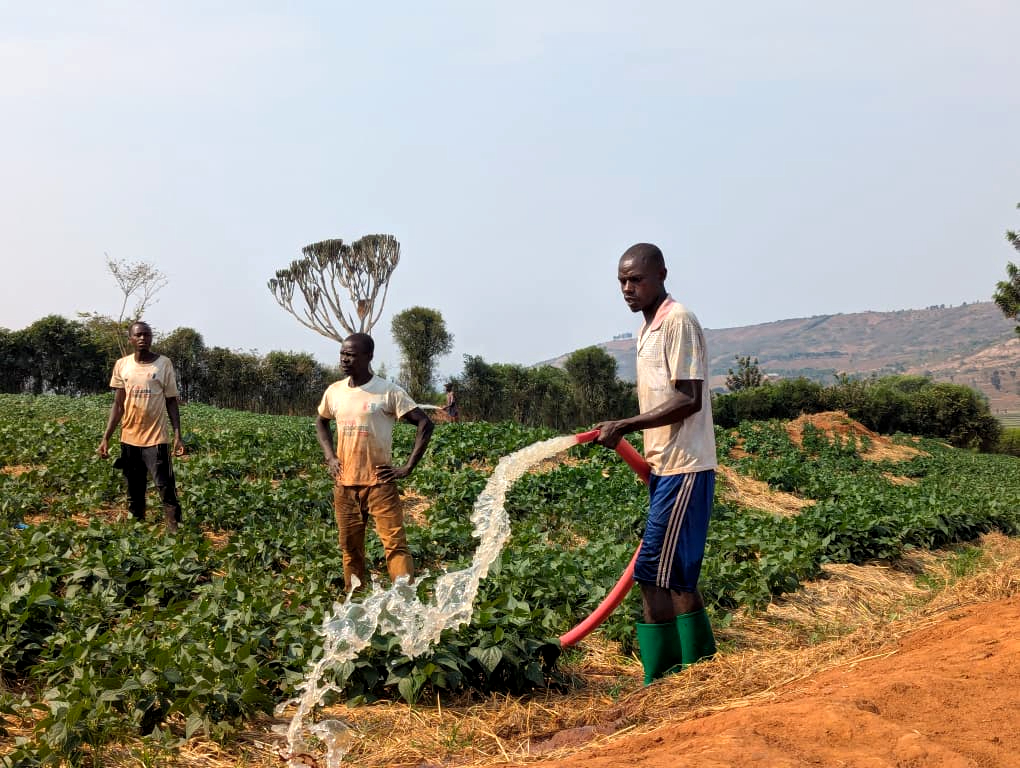
They charge farmers Rwf20,000 per day or Rwf360,000 per month on a contract basis and the business is booming while employing many technical education (TVET) trained casual laborers to deliver recyclable swamp water from the massive 12,000 hectare Rwinkwavu consolidate wetland used for growing maize, beans and soya.
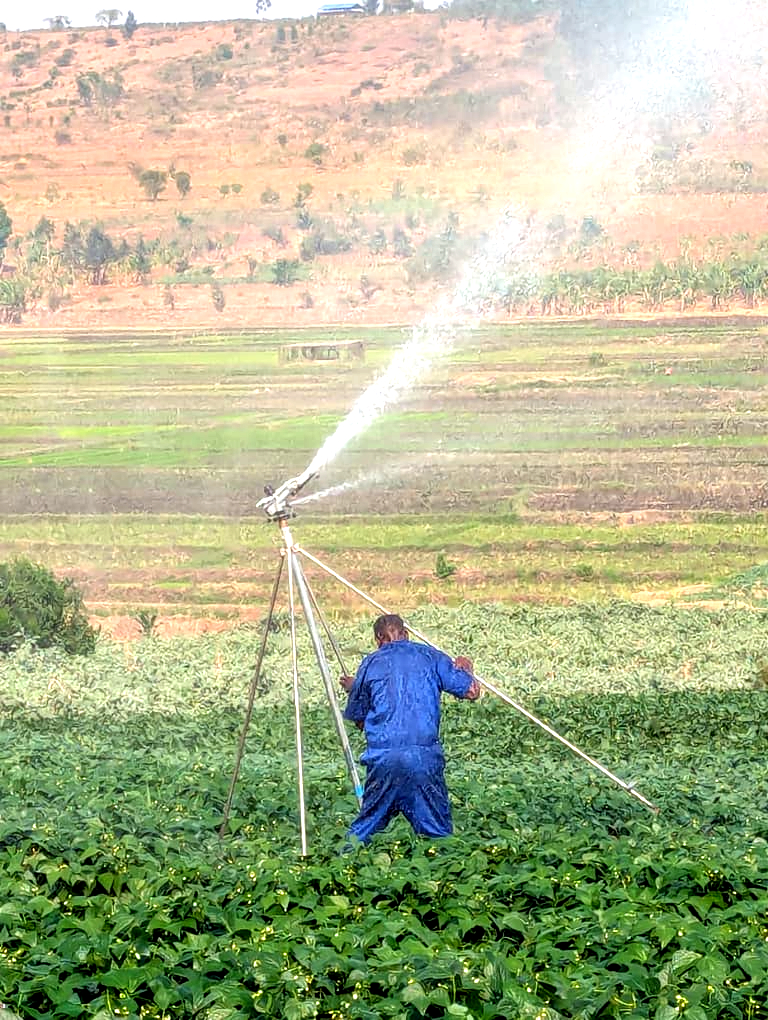
From March 2025, when they got a SAIP 2 grant (for 27 pumps worth Rwf22 million), they have largely served Nyagatare and Kayonza districts, but Sirumwe says the demand remains big, thus a need to increase equipment to reach more farmers.
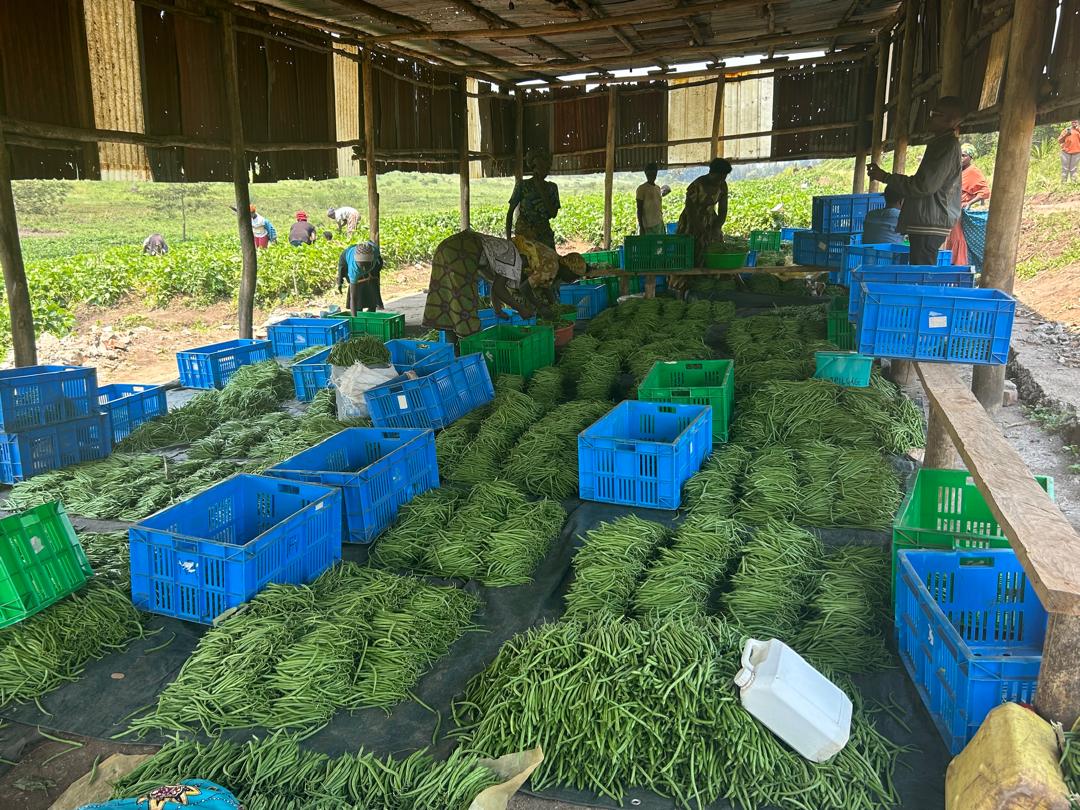
Just above the farm where BIEC is sprinkling farms with solar-powered pumps is another farmers who uses casual labors to sprinkle a bean plantation using cheap and affordable horse pipes which many farmers cannot afford despite the evident demand for water in farms and even for home use generally.
This demand is confirmed by SAIP Project Manager, Ezra Mutabaruka, who said that despite increasing the project reach from nine to 20 districts, there is a need for more funding to realize the potential of water irrigation.
However, Nyagatare district Vice Mayor in charge of Economic Affairs, Matsiko Gonzague, says that the contribution of the SAIP-SSIT project and other agriculture-based development partners in access to reliable irrigation water is expected to increase the availability of fruits in the province despite its long dry seasons.
For example, Matsiko says that planting in all three seasons has not been the usual case since the area is largely affected by long dry seasons and the impact of climate change.
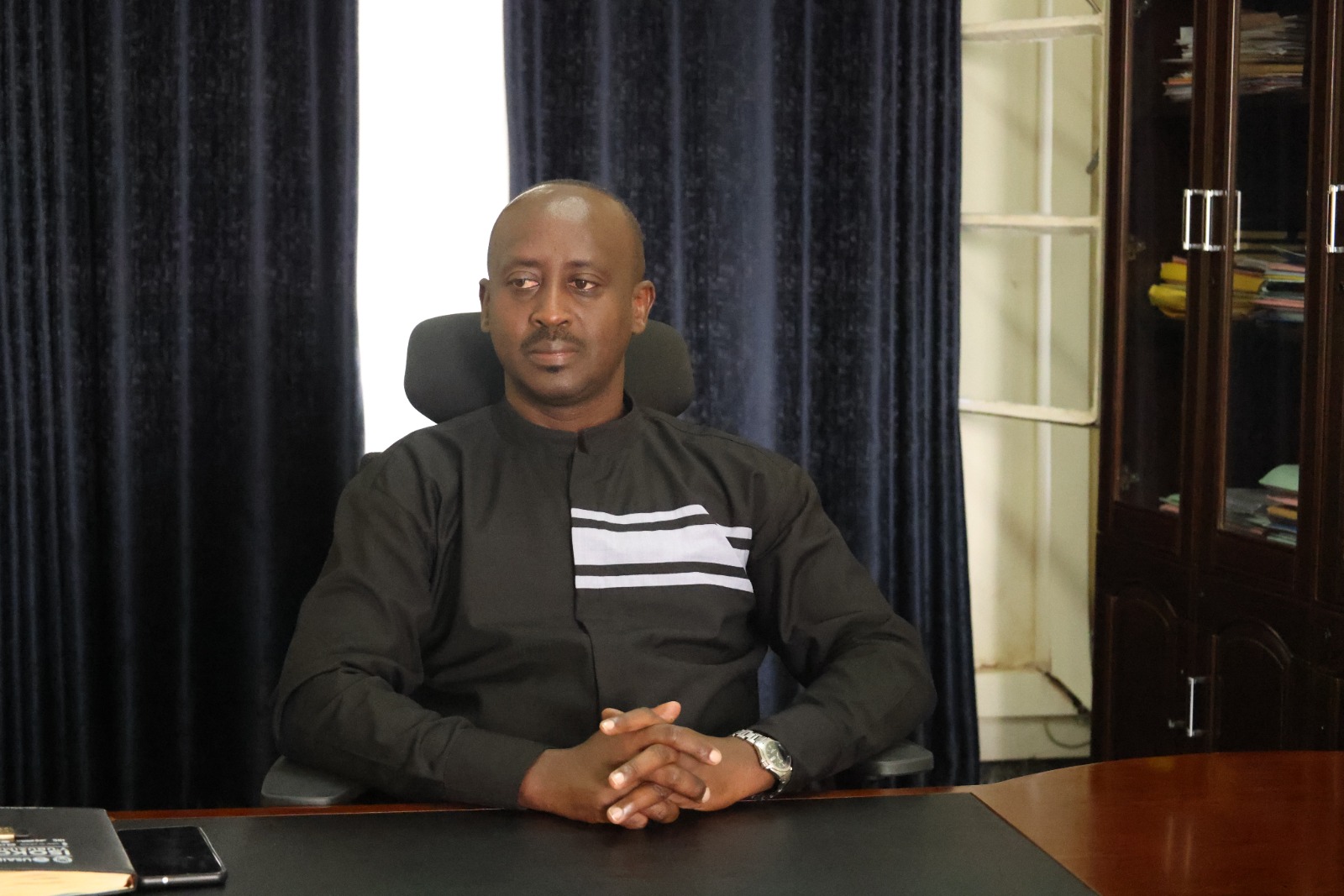
Matsiko Gonzague
“We normally plant two seasons (1&2) which have rains but not the third season (June to August) which is a dry season. Today, our farmers can plant and have 100 percent hope to have a buffer harvest in all three seasons because of using irrigation systems,” Matsiko said.